


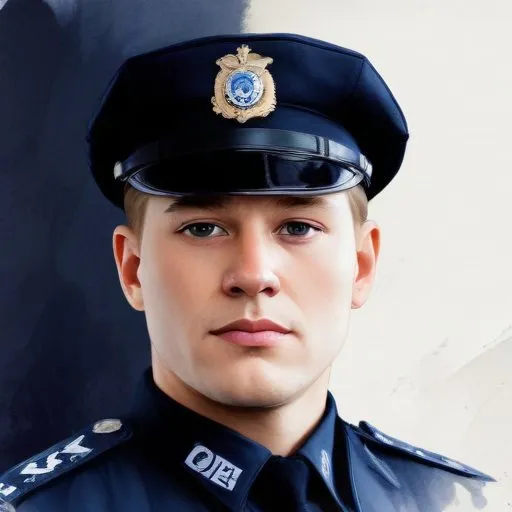
A Norwegian police officer who played a key role in the development of forensic science and crime investigation in Norway, pioneering the use of fingerprints and other modern techniques.
Kristian Welhaven, a Norwegian police officer, is revered for his instrumental role in establishing and reestablishing Norway's organized intelligence service before and after World War II. He served as the chief of police of Oslo for an impressive 27 years, from 1927 to 1954, leaving an indelible mark on the nation's law enforcement and intelligence agencies.
Welhaven was born on October 11, 1883, in Kristiania (now Oslo), Norway, to Johan Andreas Welhaven, a parish priest, and Gerda Kathinka Elisabeth Hansen. He was the nephew of renowned poet Johan Sebastian Welhaven and writer Elisabeth Welhaven.
Welhaven completed his secondary education at the Kristiania Cathedral School in 1901. He then went on to study at the Norwegian Military Academy from 1901 to 1902, followed by law at the Royal Frederick University, graduating with the cand.jur. degree in 1907.
Welhaven's professional journey began in Tana Municipality, Troms Municipality, and the city of Kristiania, where he worked until 1916. He was appointed Chief of Police in Rjukan in 1916 and later became Chief of Police of Oslo in 1927, a position he held until 1954, except for the war years.
One of Welhaven's keen interests was surveillance and intelligence gathering. He was central in establishing the Oslo police forces' surveillance department before the war, with a particular focus on monitoring communist activities, including those of Norwegian communist Viggo Hansteen. Another group deemed worthy of surveillance was the Romani people.
During World War II, Welhaven was arrested by the Germans and imprisoned in both Norway and Germany. He spent the remainder of the war as a civilian internee in Bavaria. After the war, he played a crucial role in reestablishing Norway's intelligence service, which had been dismantled during the occupation.
Welhaven married Margit Aagaard on October 12, 1917, in Kristiania. He passed away on July 27, 1975, in Oslo, leaving behind a legacy of dedication to Norway's law enforcement and intelligence communities.
Welhaven's contributions to Norway's intelligence service have had a lasting impact on the country's national security. His work in establishing and rebuilding the service has paved the way for future generations of law enforcement officials.
Kristian Welhaven's remarkable career and wartime experiences have cemented his place as a pioneering figure in Norway's law enforcement and intelligence agencies. His legacy continues to inspire and inform the country's national security efforts to this day.
Born in 1869
A Norwegian Nobel laureate who pioneered the study of international relations and peace, known for his work on the history of internationalism and the development of the Nobel Peace Prize.
Born in 1832
A Norwegian-French author and playwright who wrote influential works that explored themes of social justice, morality, and national identity, earning him the Nobel Prize in Literature in 1903.
Born in 1828
A pioneer of realism in theater, known for plays that probed the human condition, challenging social norms and morals through complex characters and situations.
Born in 1849
A prominent figure in Norwegian literature, known for his realistic and socially conscious plays and novels that critiqued the social conventions of his time.
