


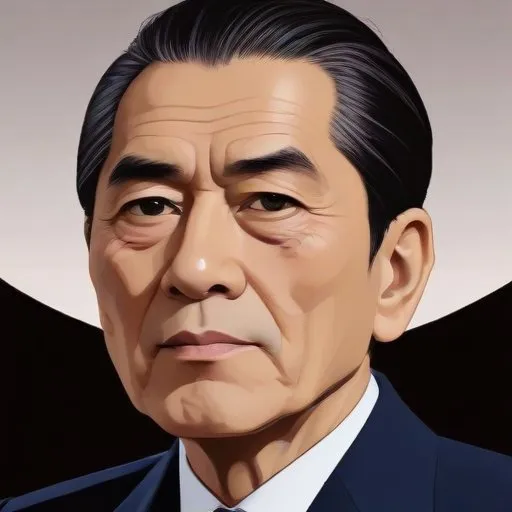
Led Japan's modernization efforts, transforming the country from a feudal state to a modern, centralized government. He played a key role in the Meiji Restoration, abolishing feudalism and introducing Western-style reforms.
Kuroda Kiyotaka, a Japanese statesman and diplomat, left an indelible mark on Japan's Meiji era as the Prime Minister from 1888 to 1889. This trailblazing leader played a pivotal role in shaping Japan's modern landscape, earning him a permanent place in the country's annals of history.
Born on November 9, 1840, in Satsuma Domain, Kyushu, Japan, Kuroda was part of a samurai-class family serving the Shimazu daimyō of Kagoshima. His early life was steeped in the traditional ways of the samurai, paving the way for his future role as a leader in the tumultuous years of Japan's transformation.
In 1862, Kuroda was embroiled in the Namamugi incident, where Satsuma retainers killed a British national who refused to bow down to the daimyō's procession. This event spawned the Anglo-Satsuma War in 1863, in which Kuroda played an active role. Although the war ended in defeat for Satsuma, it marked the beginning of Kuroda's journey towards modernizing Japan.
Under the Meiji government, Kuroda became a pioneering diplomat to Karafuto, claimed by both Japan and the Russian Empire, in 1870. His concerns about Russia's push eastward led him to advocate for the rapid development and settlement of Japan's northern frontier. In 1871, he embarked on a five-month journey to Europe and the United States, returning to Japan in 1872 as the head of colonization efforts in Hokkaidō.
Kuroda's tenure as director of the Hokkaidō Colonization Office saw the implementation of a groundbreaking colonist-militia scheme. This innovative approach settled the island with unemployed ex-samurai and retired soldiers, who served as both farmers and a local militia. This project not only helped to populate Hokkaidō but also contributed significantly to Japan's modernization.
Kuroda's vision for Japan's development was driven by his commitment to modernizing the country while maintaining its cultural heritage. He believed in the importance of education, economic growth, and diplomatic relations with foreign nations. His leadership was characterized by a pragmatic approach, often walking the fine line between tradition and innovation.
Kuroda Kiyotaka's contributions to Japan's modernization have had a lasting impact on the country's development. His pioneering efforts in Hokkaidō's colonization, education, and economic growth set a strong foundation for Japan's emergence as a major world power.
Kuroda's life and achievements are a testament to his unwavering dedication to Japan's modernization. His diplomatic and political efforts helped shape the country's relationships with foreign nations, securing Japan's position in the global arena. As a pioneering statesman, Kuroda Kiyotaka's legacy continues to inspire generations of Japanese leaders and citizens alike.
Born in 1841
First Prime Minister of Japan, instrumental in modernizing the country and drafting its constitution, known for his role in transforming Japan from a feudal society to a modern nation.
Born in 1838
A prominent Japanese leader who served as Prime Minister twice, playing a key role in modernizing Japan's military and politics. He's known for his efforts to transform Japan into a major world power.
Born in 1828
Leader of the Satsuma Rebellion, a samurai who fought against the modernization of Japan, seeking to preserve traditional ways. He's known for his bravery and tragic demise.
Born in 1848
A Japanese admiral who led the Imperial Japanese Navy to several victories during the Russo-Japanese War, including the Battle of Tsushima, which cemented Japan's rise as a naval power. He's known for his innovative tactics and strategies that revolutionized naval warfare.
