


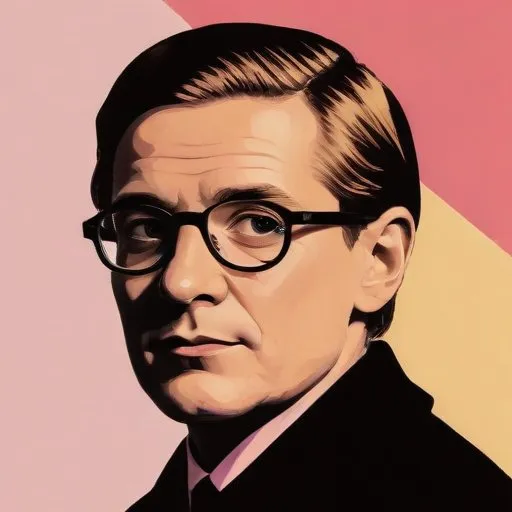
Developed a paradox in set theory, known as Grelling-Nelson paradox, which challenges the notion of self-reference in language. This paradox has significant implications for philosophy, logic, and mathematics.
Kurt Grelling, a German logician and philosopher, is renowned for his groundbreaking work in set theory and his contributions to the development of positivist philosophy. Particularly, he is recognized for his collaboration with philosopher Leonard Nelson on Russell's paradox, leading to the discovery of new paradoxes, including the Grelling-Nelson paradox.
Grelling was born on 2 March 1886 in Berlin to a Jewish family. His father, Richard Grelling, was a Doctor of Jurisprudence, and his mother, Margarethe ne Simon, was a homemaker. Grelling's interest in mathematics and philosophy led him to the University of Göttingen, where he began his research in 1905.
In 1908, Grelling and Nelson published a paper that introduced new paradoxes, including the Grelling-Nelson paradox, a semantic paradox that challenged the foundations of mathematics. This work built upon Russell's paradox, which had shaken the mathematical community in 1903. Grelling's research in set theory led to his PhD dissertation, "The Development of Arithmetic in Axiomatic Set Theory," advised by David Hilbert.
As a skilled linguist, Grelling translated philosophical works from French, Italian, and English to German, including four works by Bertrand Russell. This exposure to Russell's writings made Grelling a strong proponent of his philosophy. From 1911 to 1922, Grelling published journalistic articles in Social Democratic Party of Germany publications, showcasing his writing skills.
From 1924 onwards, Grelling's publications focused exclusively on positivist philosophy. Despite being unable to secure a university position in Göttingen or Berlin, Grelling continued to contribute to the field of philosophy until his untimely death in 1942.
Kurt Grelling's work in set theory and positivist philosophy has had a lasting impact on the development of mathematics and philosophy. His collaboration with Leonard Nelson led to significant advancements in the field, and his translations of Russell's works introduced German audiences to new philosophical ideas. Grelling's legacy serves as a testament to the power of interdisciplinary research and collaboration.
Born in 1872
A renowned thinker who made significant contributions to mathematics, philosophy, and social commentary, known for his influential writings on logic, ethics, and politics. He's a prominent figure in shaping modern intellectual thought.
Born in 1848
Developed a formal system of logic and introduced modern mathematical notation, laying the groundwork for modern logic, mathematics, and computer science.
Born in 1862
A renowned mathematician and academic who developed infinite-dimensional vector spaces and laid the foundation for quantum mechanics and relativity. He's also famous for his 23 unsolved math problems that shaped 20th-century mathematics.
Born in 1831
Developed a rigorous definition of real numbers and introduced the concept of Dedekind cuts, revolutionizing mathematics and laying the foundation for modern analysis. His work also explored the nature of infinity and the foundations of mathematics.
Born in 1845
Developed set theory, introducing infinite sets and cardinal numbers, revolutionizing mathematics and philosophy.
Born in 1857
Developed the foundation of modern linguistics, introducing concepts like signs, signifiers, and structuralism, revolutionizing the study of language and its role in shaping culture.
Born in 1882
Developed the Vienna Circle's logical positivism, a philosophical movement that emphasized empirical evidence and rejected metaphysics. They also made significant contributions to the philosophy of science and ethics.
Born in 1891
Developed logical positivism, a philosophical movement that emphasized scientific evidence and rejected metaphysics, and made significant contributions to the fields of philosophy of language, philosophy of science, and epistemology.
