


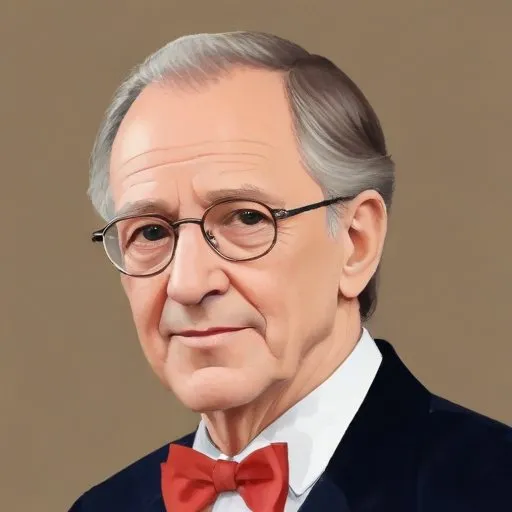
A pioneering composer and educator who expanded the boundaries of electroacoustic music and mentored numerous students in the field. He's recognized for his innovative compositions and pedagogical contributions.
Larry Austin was a renowned American composer, celebrated for his groundbreaking work in electronic and computer music. He is perhaps best known for his completion of Charles Ives' Universe Symphony, a feat that earned him international recognition.
Austin was born on September 12, 1930, in Duncan, Oklahoma. He pursued his passion for music at the University of North Texas College of Music, where he earned a bachelor's degree in Music Education in 1951 and a master's degree in Music in 1952. He further honed his skills at Mills College and the University of California, Berkeley, studying under prominent composers such as Violet Archer, Darius Milhaud, and Andrew Imbrie.
Austin's teaching career spanned over three decades, during which he taught at the University of California, Davis, the University of South Florida, and the University of North Texas. At UC Davis, he founded the improvisational New Music Ensemble, which became a hub for experimental music. He was named professor emeritus at the University of North Texas in 1996.
Austin's instrumental and orchestral works earned him early recognition, with his piece "Improvisations for Orchestra and Jazz Soloists" being performed and recorded by the New York Philharmonic under the legendary Leonard Bernstein. He also collaborated with other avant-garde musicians, exploring the intersection of electronic and acoustic music.
Austin was a co-founder and editor of the influential music periodical Source: Music of the Avant Garde, which provided a platform for cutting-edge composers and musicians to share their work. He was also a dedicated advocate for new music, serving as president of the International Computer Music Association (ICMA) from 1990 to 1994 and on the ICMA board of directors from 1984 to 1988 and 1990 to 1998.
Larry Austin's contributions to electronic and computer music have left an indelible mark on the music world. His trailblazing work, commitment to innovation, and dedication to nurturing new talent have inspired generations of musicians and composers. Austin's legacy continues to resonate, challenging the boundaries of sound and pushing the limits of musical expression.
84 Years Old
A visionary musician and producer who co-founded The Velvet Underground, pushing boundaries in rock music and influencing generations of artists. Known for experimental and avant-garde work .
Born in 1926
A pioneer of indeterminacy in music, creating subtle, atmospheric soundscapes that defy traditional composition, and teaching generations of musicians to think outside the box.
99 Years Old
Pioneering composer of avant-garde and experimental music, known for introducing indeterminacy and improvisation into classical music, creating a new language of sound.
Born in 1679
Developed a philosophical system that combined elements of Leibniz and Descartes, and was a prominent figure in the German Enlightenment. He wrote extensively on metaphysics, ethics, and logic.
Born in 1925
A renowned French musician who revolutionized classical music with his avant-garde compositions and innovative conducting style, pushing boundaries and redefining the genre.
98 Years Old
A pioneer of electronic and avant-garde music, this composer pushed boundaries with unconventional sounds and performances, influencing generations of musicians and artists.
Born in 1923
A visionary composer and educator who pushed the boundaries of classical music with his avant-garde and innovative works, blending dissonance and harmony in unique ways.
Born in 1922
A visionary composer who merged mathematics and music, creating complex, avant-garde works that pushed the boundaries of sound and performance.
