


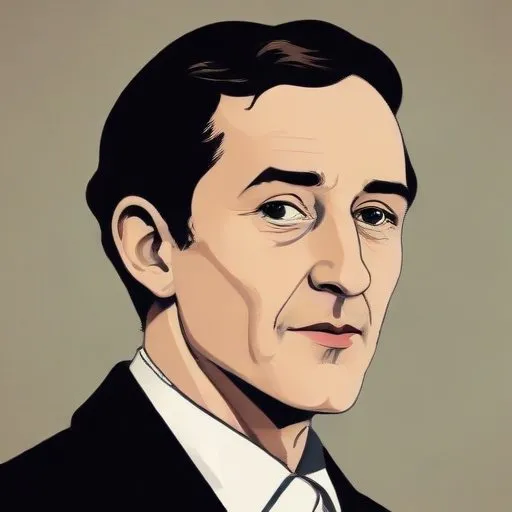
A poet, playwright, and scholar who penned the iconic "For the Fallen" poem, which is still recited today to honor the war dead. His work is a testament to the power of poetry in capturing the human experience.
Laurence Binyon is revered for his poignant poem "For the Fallen," which has become an anthem for Remembrance Day services across the UK, Australia, New Zealand, and Canada. This powerful tribute to the brave men who lost their lives in World War I has cemented Binyon's place in history as a celebrated poet, dramatist, and art scholar.
Born on August 10, 1869, in Lancaster, England, Binyon was the son of a clergyman, Frederick Binyon, and Mary Dockray. His family's strong educational background laid the foundation for his future achievements. He studied at St Paul's School, London, and later at Trinity College, Oxford, where he won the prestigious Newdigate Prize for poetry in 1891.
In 1914, the devastating losses of the British Expeditionary Force moved Binyon to write "For the Fallen," a poem that has become synonymous with Remembrance Day. His experiences as a hospital orderly in France and his work with the wounded of the Battle of Verdun inspired another powerful work, "For Dauntless France."
Binyon's war poetry also includes "The Burning of the Leaves," a masterpiece that captures the intensity of the London Blitz.
Beyond his war poetry, Binyon made significant contributions to the world of art. He wrote numerous books on the subject, including his acclaimed translation of Dante's "Divine Comedy."
Laurence Binyon's remarkable life and work have left an indelible mark on literature, art, and our collective memory of the Great War. His poetry continues to inspire and move people to this day, a testament to the power of words to transcend time and touch the human heart.
Born in 1887
A celebrated poet of the Georgian school, known for his romantic and patriotic verse, particularly his sonnets that captured the spirit of World War I.
Born in 1865
A renowned Irish wordsmith and dramatist, celebrated for his mystical and nationalistic verse that explores the human condition, as well as his contributions to the Irish Literary Revival.
Born in 1885
A pioneering modernist poet and critic who transformed 20th-century literature with innovative styles and provocative ideas, shaping the course of modern poetry.
Born in 1888
A renowned poet, playwright, and critic who reshaped modern poetry with works like "The Waste Land" and "Old Possum's Book of Practical Cats", influencing literature and art with their unique style.
Born in 1895
A renowned poet, novelist, and critic, best known for his historical novels, particularly "I, Claudius" and "Count Belisarius", which vividly brought ancient civilizations to life.
Born in 1886
A decorated World War I officer turned anti-war poet, known for his vivid and haunting accounts of trench life, influencing modern war literature.
Born in 1893
A soldier-poet who captured the horrors of World War I through vivid and powerful verse, conveying the brutal reality of war and its effects on humanity.
Born in 1893
A renowned poet, art critic, and anarchist, he championed modern art and literature, influencing the development of Surrealism and Existentialism. His writings explored the intersection of art, politics, and psychology.
