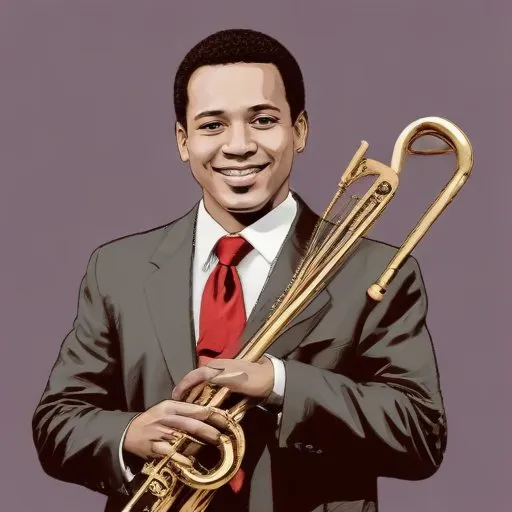
Lawrence Brown: The Legendary Trombonist of Duke Ellington's Orchestra
A Master of Melody and Technique
Lawrence Brown, an American jazz trombonist, is best remembered for his iconic work with the
Duke Ellington orchestra, where he showcased his exceptional technical command and creamy tone. With a career spanning over four decades, Brown left an indelible mark on the jazz scene, inspiring generations of trombonists with his unique style.
Early Life and Musical Beginnings
Born on August 3, 1907, in Lawrence, Kansas, Brown grew up in a musical family. His father, a preacher, sang in church, while his mother played the organ and piano. Brown's early introduction to music was through the violin, but he soon switched to the tuba in his school band. It wasn't until he stumbled upon the trombone while doing janitorial work at his father's church that he found his true calling.
Rise to Fame with Duke Ellington
Brown's professional career began with stints with Charlie Echols and Paul Howard, but it was his joining Duke Ellington's band in 1932 that catapulted him to fame. With Ellington, Brown's technical virtuosity and melodic playing style were showcased in compositions like "Blue Cellophane" and "Golden Cress." His versatility as a balladeer, technical soloist, and section leader made him an integral part of the orchestra.
A Life of Musical Exploration
Brown's career was marked by several notable collaborations. He left Ellington's band in 1951 to join
Johnny Hodges' band, where he stayed until 1955. He then worked as a session player for CBS for five years, before rejoining Ellington's band in 1960. During this second stint, Brown continued to push the boundaries of jazz, inspiring trombonists like
Tommy Dorsey and Bill Harris.
Personal Life and Legacy
Brown was married to Dorothea Bundrant and actress Fredi Washington. He passed away on September 5, 1988, in Los Angeles, California, at the age of 81. Brown's legacy extends far beyond his impressive technical skills; he was a master of melody, a true innovator, and a testament to the power of jazz to transcend generations.
Influence on Modern Jazz
Lawrence Brown's impact on modern jazz is immeasurable. His unique style, which blended technical virtuosity with melodic sensitivity, has influenced countless trombonists. His work with Ellington's orchestra helped shape the sound of jazz, paving the way for future generations of musicians.
Quintessential Quotes
"I wanted to replicate the sound of the cello on the trombone."
This quote captures Brown's innovative spirit and dedication to pushing the boundaries of his instrument.
Awards and Honors
- Inducted into the Jazz Hall of Fame (1993)
- Featured on multiple Grammy-winning albums with Duke Ellington
Brown's numerous accolades are a testament to his enduring impact on the jazz world.
A Legacy That Continues
Lawrence Brown's life and music serve as a reminder of the power of innovation, creativity, and dedication. As a trombonist, he left an indelible mark on the jazz scene; as a person, he inspired generations with his passion and love for music.
FAQ
What is Lawrence Brown known for in jazz music?
Lawrence Brown was a renowned American trombonist and composer, known for his work with the Duke Ellington Orchestra and his innovative playing style, which combined technical precision with emotional expression.
What was Lawrence Browns role in the Duke Ellington Orchestra?
Lawrence Brown was a key member of the Duke Ellington Orchestra, playing trombone and contributing arrangements and compositions to the groups repertoire, including the famous JACK THE BEAR.
How did Lawrence Brown influence jazz trombone playing?
Lawrence Browns playing style and technical innovations had a significant impact on jazz trombone playing, influencing generations of trombonists, including J.J. Johnson and Curtis Fuller.
What were Lawrence Browns compositions like?
Lawrence Browns compositions were characterized by their lyricism, complexity, and sense of swing, reflecting his deep understanding of jazz harmony and his ability to craft compelling melodies.
What is Lawrence Browns legacy in American music?
Lawrence Browns contributions to jazz and American music are immeasurable, as a performer, composer, and educator, he helped shape the course of jazz history and inspired countless musicians.