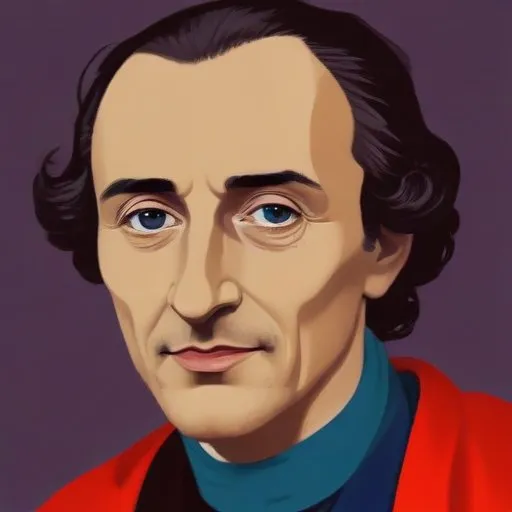
Leconte de Lisle: The French Poet of Ancient Inspirations
The Pioneer of Parnassian Poetry
Leconte de Lisle, a renowned French poet, is best known for his contributions to the Parnassian movement, a literary school that sought to revive classical Greek and Roman poetry. His three collections of poetry,
Poèmes antiques,
Poèmes barbares, and
Poèmes tragiques, are considered some of the most iconic works of the era, earning him a reputation as one of the greatest poets of his time.
A Life of Literary Pursuits
Born on October 22, 1818, on the French island of La Réunion, Leconte de Lisle spent his childhood in the Indian Ocean and later in Brittany. His early years were marked by a fascination with classical literature, which would later become the hallmark of his poetic style. After completing his education in Rennes, Brittany, he settled in Paris in 1845, where he became an active participant in the city's vibrant literary scene.
The Poetic Style of Leconte de Lisle
Leconte de Lisle's poetry is characterized by its use of classical forms, rich imagery, and a deep sense of historicism. His works were heavily influenced by ancient Greek and Roman poetry, as well as the French Romantic movement. His unique blend of classical and modern elements helped to shape the Parnassian movement, inspiring a generation of poets to explore new forms of expression.
Translations and Collaborations
In addition to his original poetry, Leconte de Lisle was a prolific translator of ancient Greek and Roman works. His translations of Aeschylus, Sophocles, Euripides, and Horace are still studied by scholars today. He also collaborated with other notable poets and writers of his time, including
Charles Baudelaire and Théophile Gautier.
Awards and Honors
Throughout his career, Leconte de Lisle received numerous awards and honors for his contributions to French literature. In 1867, he was elected to the French Academy, a prestigious honor reserved for the country's most distinguished writers and intellectuals.
Controversies and Criticisms
Despite his literary achievements, Leconte de Lisle was not immune to controversy. During the reign of
Napoleon III, he accepted a pension from the Emperor, which damaged his reputation among Republicans. However, he later redeemed himself by writing in support of the Third Republic.
Legacy and Influence
Leconte de Lisle's influence on French literature cannot be overstated. His poetry inspired generations of writers, including the Symbolists and the Modernists. His translations of ancient Greek and Roman works helped to popularize classical literature among the French public. Today, he is remembered as one of the greatest poets of the 19th century, and his works continue to be studied and admired by scholars around the world.
Quotes and Memorable Sayings
- "The poet is a torchbearer, illuminating the path to the unknown."
- "In the silence of the night, the gods speak to us through the stars."
Personal Milestones and Key Life Events
- 1845: Settles in Paris, where he becomes an active participant in the city's literary scene.
- 1852: Publishes his first collection of poetry, Poèmes antiques.
- 1862: Publishes Poèmes barbares, which solidifies his reputation as a leading poet of the Parnassian movement.
- 1884: Publishes Poèmes tragiques, his final collection of poetry.
- 1894: Passes away on July 17th, leaving behind a legacy of literary excellence.
Historical Context and Legacy
Leconte de Lisle's life and work spanned a tumultuous period in French history, from the Revolution of 1848 to the fall of the Second Empire. Despite the challenges and controversies he faced, he remained committed to his art, producing a body of work that continues to inspire and educate readers to this day. His legacy is a testament to the power of literature to transcend time and circumstance, speaking to the universal human experience.
FAQ
What was Leconte de Lisles role in French literature?
Leconte de Lisle was a prominent French poet and writer who was known for his beautiful prose and his mastery of language. He played a key role in the development of French literature during the 19th century.
What were Leconte de Lisles most famous works?
De Lisle wrote many famous works, including his poetry collections Poèmes antiques and Poèmes barbares. His poetry was known for its lyricism and its ability to evoke powerful emotions.
What was Leconte de Lisles relationship with the Parnassian movement?
De Lisle was a key figure in the Parnassian movement, a literary movement that sought to revive classical forms and themes in French literature. He was a close friend and collaborator of other prominent Parnassian writers, including Théodore de Banville.
What was Leconte de Lisles role in the development of French poetry?
De Lisles poetry helped to shape the course of French poetry during the 19th century. His innovative use of language and form paved the way for future generations of French poets.
What is Leconte de Lisles legacy in modern French literature?
Leconte de Lisles beautiful poetry and his contributions to French literature continue to be celebrated today. He remains one of the most important figures in the history of French poetry.