


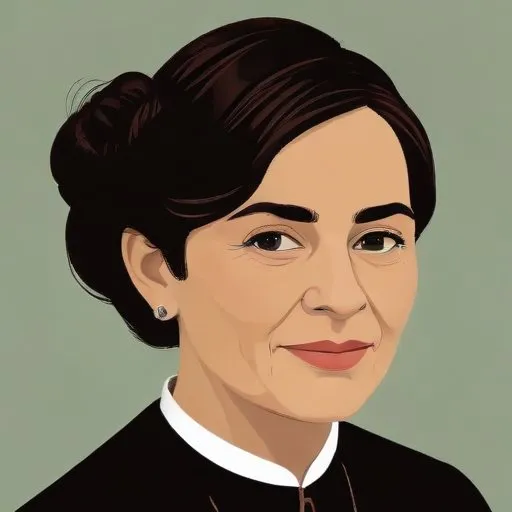
A Colombian poet, journalist, and diplomat who championed social justice and cultural heritage through his literary works and diplomatic efforts. He's celebrated for his lyrical poetry and commitment to preserving Colombian folklore.
Len de Greiff was born Francisco de Ass Len Bogislao de Greiff Haeusler on July 22, 1895, in Medellín, Colombia, to Luis de Greiff Obregón and Amalia Haeusler Rincón. His father, of Swedish ancestry, was the grandson of Karl Sigismund Fromholt von Greiff, a Swedish engineer and geographer who played a significant role in the abdication of King Gustav IV Adolf of Sweden. De Greiff's mother, of German descent, was the daughter of Heinrich Haeusler, a German mechanic and cabinetmaker who emigrated to Colombia in 1839.
In 1915, de Greiff co-founded Los Panidas, a literary and artistic group in Medellín, alongside other prominent figures. This collective aimed to promote innovative and avant-garde art forms, which deeply influenced de Greiff's writing style and thematic explorations.
De Greiff often employed pseudonyms, the most notable being Leo le Gris and Gaspar Von Der Nacht. This practice allowed him to experiment with different voices, tonalities, and narrative approaches, further enriching his poetic oeuvre. His use of obscure lexicon and deliberate eclecticism created a unique literary landscape, characterized by linguistic innovation and cultural fusion.
De Greiff's contributions to Colombian literature are immeasurable. His bold experiments with language and form inspired generations of writers, cementing his status as a literary pioneer. His influence extends beyond Colombia, as his work has been translated into multiple languages and continues to be studied and admired globally.
On July 23, 1927, de Greiff married María Teresa Matilde Bernal Nicholls, a Colombian of English descent. He had four siblings, Leticia, Laura, Otto, and Olaf, and a half-brother, Luis Eduardo. De Greiff's family background, with its complex mix of Scandinavian, Germanic, and Spanish influences, significantly shaped his literary themes and explorations.
De Greiff's work was recognized with numerous awards and honors, including the prestigious Premio Nacional de Poesía (National Poetry Prize) in 1947.
De Greiff's innovative approach to language and form can be compared to the works of other avant-garde writers of his time, such as Vicente Huidobro and César Vallejo. His use of obscure lexicon and deliberate eclecticism, however, set him apart as a unique voice in Latin American literature.
De Greiff's literary legacy extends beyond the realm of poetry, influencing Colombian culture and identity. His work has inspired artistic movements, musical compositions, and even cinematic adaptations, solidifying his place as a cultural icon.
Len de Greiff's life and work are deeply intertwined with the cultural and historical context of Colombia during the early 20th century. His literary innovations and thematic explorations continue to resonate with contemporary audiences, ensuring his legacy as a literary giant.
Born in 1904
A Chilean poet and diplomat who wrote passionate and evocative poetry that explored love, politics, and the human condition, and was awarded the Nobel Prize in Literature in 1971.
99 Years Old
A Colombian journalist and author who crafted magical realism, a literary style that blends fantasy and reality, and won the Nobel Prize in Literature in 1982. His works are known for their vivid storytelling and exploration of human experience.
Born in 1899
A visionary writer who crafted intricate, philosophical tales that blurred reality and fantasy, influencing generations of authors and thinkers. 82
Born in 1914
A Mexican poet and diplomat who won the Nobel Prize in Literature in 1990 for his work that explores the intersection of poetry, philosophy, and politics. He's known for his lyrical and introspective style that explores the human condition.
Born in 1914
A pioneering figure in magical realism, blending fantastical elements with everyday life in his novels and short stories, exploring the human condition and social commentary.
90 Years Old
A Nobel Prize-winning writer and politician who explored the complexities of Peruvian society through his novels and essays, and later ran for president. His works often blended politics, history, and fiction.
Born in 1917
A pioneering writer and photographer who blended magical realism with stark social commentary, capturing the essence of rural Mexico through his poignant and evocative works.
Born in 1904
A Swiss-Cuban musicologist and author who explored the intersection of music, culture, and politics in his work, blending magical realism with historical narratives. He's most known for his influential novels that shaped the Latin American literary boom.
