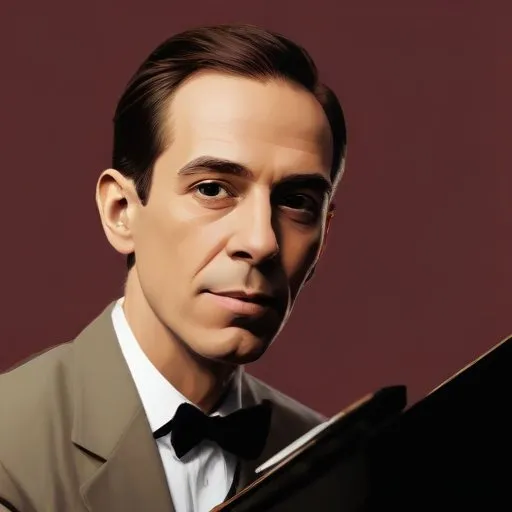
Lennie Tristano: The Pioneering Jazz Visionary
A Sonic Architect of Improvisation
Lennie Tristano, the American jazz pianist, composer, and educator, is renowned for his innovative approaches to improvisation, harmony, and rhythm. He is often credited with recording the first free group improvisations in jazz, as well as pioneering the use of overdubbing and atonal solos.
Early Life and Education
Born on March 19, 1919, in Chicago, Illinois, Tristano grew up in a family of Italian immigrants. He began playing piano at a young age and went on to study music at the Chicago Conservatory, where he earned both his bachelor's and master's degrees. This solid musical foundation would later inform his groundbreaking work in jazz.
The NYC Jazz Scene and Innovative Recordings
In 1946, Tristano moved to New York City, where he became an integral part of the thriving jazz scene. He formed his own small bands, which featured some of the leading bebop musicians of the time. His quintet's 1949 recordings marked a pivotal moment in jazz history, as they captured the first free group improvisations on tape. These sessions showcased Tristano's emphasis on contrapuntal interaction, harmonic flexibility, and rhythmic complexity.
Pushing Boundaries: Overdubbing and Atonal Solos
In 1951, Tristano made another significant innovation, recording the first overdubbed, improvised jazz sessions. This technique allowed him to create complex, layered soundscapes that expanded the possibilities of jazz. Two years later, he took another bold step, recording an atonal, improvised solo piano piece that abandoned traditional harmonies in favor of motif development.
A Teacher and Mentor
Tristano's influence extended far beyond his own performances. He began teaching music and improvisation in the early 1940s, and by the mid-1950s, he had shifted his focus to education. His structured and disciplined approach to teaching was unusual in jazz education at the time, but it proved highly effective. Notable students, such as saxophonists
Lee Konitz and
Warne Marsh, would go on to become influential figures in their own right.
A Legacy of Innovation and Influence
Tristano's impact on jazz is multifaceted and far-reaching. He bridged the gap between bebop and later, freer forms of jazz, paving the way for future generations of improvisers. While some critics have characterized his playing as "cold" and undervalued his contributions, many acknowledge him as a visionary who pushed the boundaries of jazz. His influence can be heard in the work of countless musicians who followed in his footsteps.
Quotable Tristano
- "The improviser must be able to create as he plays, and he must be able to create in such a way that the music is coherent and meaningful."
- "The most important thing in music is the thing that cannot be written down."
A Lasting Impact
Tristano's legacy extends beyond his own music and teaching. He played a crucial role in shaping the course of jazz, and his innovations continue to inspire and influence musicians today. As a true pioneer, Lennie Tristano remains an essential figure in the history of jazz, a testament to the power of creativity and innovation.
FAQ
What is Lennie Tristanos style of jazz music?
Lennie Tristanos style of jazz music is characterized by complex harmonies, introspective melodies, and a focus on group improvisation, which was influential in the development of cool jazz.
Who were Lennie Tristanos students?
Lennie Tristanos students included famous jazz musicians such as Lee Konitz, Warne Marsh, and Bill Evans, who went on to shape the course of modern jazz.
What is Lennie Tristanos most famous album?
Lennie Tristanos most famous album is Crosscurrents, which was released in 1949 and features his unique approach to jazz composition and arrangement.
Did Lennie Tristano perform with other famous jazz musicians?
Yes, Lennie Tristano performed with other famous jazz musicians, including Charlie Parker, Dizzy Gillespie, and Max Roach, and was a part of the 1940s bebop movement.
How did Lennie Tristanos blindness affect his music?
Lennie Tristanos blindness did not hinder his music, and he developed an incredible sense of hearing and memory, which enabled him to compose and play complex music despite his disability.