


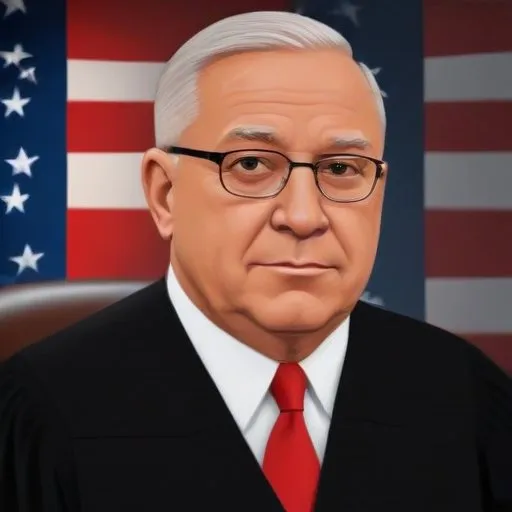
A signer of the Declaration of Independence and a prominent figure in New York politics, he played a key role in shaping the state's early government.
Lewis Morris, a prominent figure in American history, is revered as a Founding Father, landowner, and developer from Morrisania, New York, which is now part of Bronx County. He left an indelible mark on the nation by signing the United States Declaration of Independence as a delegate to the Continental Congress from New York.
Morris was born on April 8, 1726, at his family's estate in Morrisania. He was the third Lewis Morris in his family and the son of Lewis Morris (1698-1762) and Katrintje Staats (1697-1731). After his mother's passing, his father married Sarah Gouverneur (1714-1786). Morris graduated from Yale College in 1746 and inherited the bulk of the estate upon his father's death in 1762.
Morris's family was filled with notable figures. His uncle, Robert Hunter Morris (1700-1764), served as the governor of Pennsylvania. His cousin by marriage, William Paterson (1745-1806), was the governor of New Jersey and father-in-law of Stephen Van Rensselaer, the lieutenant governor of New York. Additionally, Anthony Walton White (1750-1803), a Continental Army general, was his cousin through his aunt, Elizabeth Morris (1712-c. 1784).
Lewis Morris's great-grandfather, Richard Morris (died 1672), immigrated to New York through Barbados after being part of Oliver Cromwell's army in the English Civil War of 1648. He purchased the first tract of land in the Bronx, which became the basis for the Morrisania manor. Richard and his young wife died, leaving behind an infant son, Lewis Morris (1671-1746). Richards's brother, Colonel Lewis Morris of Barbados, came to Morrisania to help manage the estate owned by his infant nephew.
Morris's public service began when he served as a delegate to the New York Provincial Congress from 1774 to 1777. He then became a delegate to the Continental Congress from 1775 to 1777, where he signed the Declaration of Independence in 1776. Morris's commitment to the patriot cause led him to serve as a member of the New York State Senate from 1777 to 1781 and again from 1783 to 1790.
Lewis Morris married Mary Walton in 1749, and they had nine children together. He managed his family's estate, expanding it through land purchases and development. Morris was known for his strong sense of justice and integrity, which earned him respect from his contemporaries.
Lewis Morris's legacy extends beyond his role as a Founding Father. He played a vital part in shaping the United States, contributing to its fight for independence, and developing the country's early infrastructure. Today, Morris is remembered as a pioneering figure in American history, and his name is etched in the annals of time as a testament to his dedication to the nation's founding principles.
Born in 1732
The first President of the United States, a military hero who led the country to independence, and set the standard for the office of the presidency. He's known for his honesty, integrity, and leadership skills.
41 Years Old
Professional baseball outfielder who played for several MLB teams, including the St. Louis Cardinals and Chicago Cubs, and later became a coach.
Born in 1755
First Secretary of the Treasury, founder of the US financial system, and key Founding Father, known for shaping the country's economic and banking infrastructure.
Born in 1743
The principal author of the Declaration of Independence and a strong advocate for individual liberties and limited government, shaping America's foundational principles. He oversaw the Louisiana Purchase, doubling the country's territory.
79 Years Old
A Pulitzer Prize-winning composer, known for blending minimalism with complex rhythms, creating a unique sound that resonates with audiences worldwide.
Born in 1751
The 4th President of the United States, often referred to as the "Father of the Constitution," played a crucial role in drafting the US Constitution and Bill of Rights, shaping the country's government and laws. He was a strong advocate for individual liberties and limited government power.
Born in 1758
The 5th President of the United States was a skilled military leader and statesman who oversaw the acquisition of Florida from Spain and issued the Monroe Doctrine, a policy of opposing European colonization in the Americas. He is also known for being the last of the Founding Fathers to hold the presidency.
Born in 1767
A fiery leader who expanded democracy and shaped the country's economy, known for his populist policies and controversial decisions, including the forced relocation of Native Americans.
