


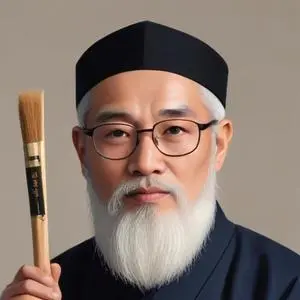
A pioneering Chinese intellectual who advocated for democracy, individual rights, and social reform through his influential writings and teachings. He's credited with introducing Western philosophical ideas to China, shaping the country's modernization efforts.
Liang Qichao, a Chinese politician, social and political activist, journalist, and intellectual, left an indelible mark on modern China's transformation. His influential writings and reform movements continue to inspire generations of Chinese scholars and activists, earning him the reputation as the "Father of Modern Chinese Journalism."
Born on February 23, 1873, in a small village in Xinhui, Guangdong Province, Liang Qichao was immersed in the world of literature and education from a young age. His father, Liang Baoying, a farmer and local scholar, recognized the importance of education in ethnic rejuvenescence and introduced Liang to various literary works at the tender age of six.
By nine years old, Liang began writing thousand-word essays and soon became a district school student. This early exposure to education laid the foundation for his future intellectual pursuits.
In 1898, Liang joined his teacher Kang Youwei in the reform movement, which aimed to introduce constitutional monarchy and modernize China's political system. However, the movement was eventually defeated, forcing Liang to flee to Japan, where he continued to promote his vision for a modern China.
In Japan, Liang organized political opposition to the Qing dynasty and advocated for a constitutional monarchy. He also translated numerous Western and Japanese books into Chinese, introducing new theories and ideas that inspired young activists.
After the revolution of 1911, Liang returned to China and joined the Beiyang government, serving as the chief justice and the first president of the currency system bureau. However, he soon became disillusioned with Yuan Shikai's authoritarian rule and launched a movement to oppose his ambitions to become emperor.
After Yuan's death, Liang served as the finance chief of the Duan Qirui cabinet and as supervisor of the Salt Administration. Despite his involvement in politics, Liang remained committed to his intellectual pursuits, advocating for the New Culture Movement and cultural change.
Liang's translations of Western and Japanese books into Chinese played a significant role in introducing new ideas and theories to the Chinese intellectual landscape. His writings and reform movements continue to inspire generations of Chinese scholars and activists.
Liang's thought has had a profound impact on modern China's political reformation. He is remembered as a visionary who championed the cause of modernization and enlightenment, leaving behind a legacy that continues to shape China's intellectual and political landscape.
Liang had two wives, Li Huixian and Wang Guiquan, and nine children, all of whom went on to achieve success in their respective fields.
Liang Qichao's influence on modern China's development is undeniable. His advocacy for constitutional monarchy, his introduction of Western and Japanese ideas to China, and his commitment to cultural change have left a lasting impact on China's intellectual and political landscape.
Today, Liang Qichao is remembered as a pioneering figure who paved the way for China's modernization and enlightenment. His legacy continues to inspire generations of Chinese intellectuals and activists, cementing his place as one of the most important figures in modern Chinese history.
Born in 1858
A Chinese scholar and politician who advocated for constitutional monarchy and social reform in late Qing dynasty China, and is known for his influential writings on modernizing Chinese society.
Born in 1866
A Chinese revolutionary who led the overthrow of the Qing dynasty and founded the Republic of China, known for his role in shaping modern China's government and politics.
Born in 1009
A renowned poet and essayist of the Song Dynasty, known for his lyrical and expressive writings that explored themes of nature, politics, and human emotions.
Born in 1887
Led the Nationalist Party in China, fighting against the Communist Party and later establishing the government of Taiwan. He's known for his role in shaping modern Chinese history.
