


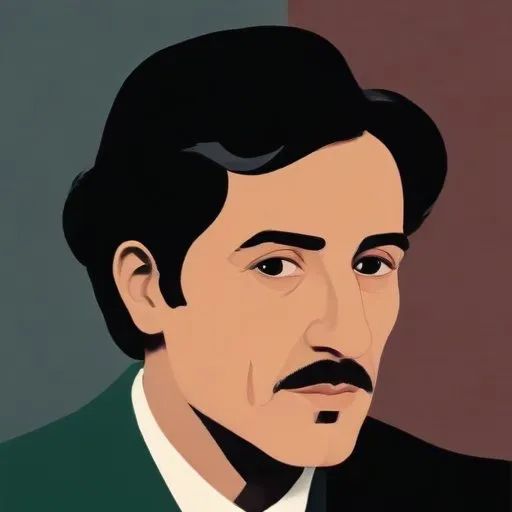
A 15th-century poet who wrote about spiritual and philosophical themes, blending Christianity with Hermeticism and Neoplatonism, producing influential works that shaped Renaissance thought.
Lodovico Lazzarelli, a 15th-century Italian poet, philosopher, and hermeticist, is best known for his translations of the Corpus Hermeticum, a collection of ancient Greek texts attributed to the legendary philosopher Hermes Trismegistus. As a prominent figure of the early Renaissance, Lazzarelli's works had a significant impact on the philosophical and intellectual landscape of his time.
Lazzarelli was born on February 4, 1447, in San Severino Marche, Italy. His early education took place in Teramo, where he was awarded a prize by Alessandro Sforza, the lord of Pesaro, for a poem on the battle of San Flaviano in 1460, when he was just 13 years old.
As a student of Giovanni Mercurio da Correggio, a renowned Italian preacher, hermeticist, and alchemist, Lazzarelli was deeply influenced by his mentor's teachings and philosophical ideas. Correggio, who was known for his magical and wonderworking abilities, had a profound impact on Lazzarelli's intellectual development and spiritual growth.
Lazzarelli's intellectual pursuits were deeply rooted in hermeticism, a philosophical tradition that emphasized the unity of all things and the potential for human transformation through spiritual practices. As a hermeticist, Lazzarelli believed in the power of the human soul to ascend to higher realms of consciousness and achieve spiritual illumination.
Through his translations of the Corpus Hermeticum, Lazzarelli sought to make the ancient wisdom of Hermes Trismegistus accessible to a broader audience, spreading the hermetic ideals of spiritual transformation, alchemy, and the unity of all things.
Lazzarelli's contributions to hermetic philosophy and his translations of the Corpus Hermeticum had a significant impact on the development of Western esotericism and occultism. His work influenced many prominent figures of the Renaissance, including Giovanni Pico della Mirandola and Marsilio Ficino.
In modern times, Lazzarelli's hermetic ideals continue to inspire spiritual seekers, philosophers, and esoteric practitioners around the world. His work remains a testament to the power of ancient wisdom to transform human consciousness and promote spiritual growth.
Lodovico Lazzarelli's legacy is a testament to the intellectual and cultural flowering of the Renaissance. His work represents a unique blend of classical learning, hermetic philosophy, and poetic genius, which continues to inspire and enrich our understanding of the human experience.
In conclusion, Lazzarelli's remarkable life and work continue to fascinate scholars, philosophers, and spiritual seekers alike. As a poet, philosopher, and hermeticist, he left an indelible mark on the intellectual and cultural landscape of the Renaissance, and his ideas continue to resonate with us today.
Born in 1463
Renaissance humanist and philosopher who wrote the famous "Oration on the Dignity of Man," a treatise that declared human beings' potential for greatness and their capacity for self-improvement. He's known for his emphasis on humanism and individualism.
Born in 1433
An Italian Renaissance philosopher who translated Plato's works into Latin, reviving classical Greek philosophy and influencing the development of Western esotericism. He's also known for his astrological writings and their impact on Renaissance thought.
Born in 1458
A Renaissance poet and scholar who crafted elegant Latin verse and witty epigrams, influencing the development of Italian literature and the Renaissance humanist movement.
Born in 1304
A 14th-century Italian poet and scholar who pioneered the Renaissance humanist movement, revitalizing interest in classical Greek and Roman literature, and inspiring a new era of artistic and intellectual exploration.
Born in 1452
A Dominican friar who preached about moral reform and prophesied the downfall of corrupt rulers, leading a short-lived theocratic government in Florence before being executed. He's known for his fiery sermons and clashes with the powerful Medicis.
