


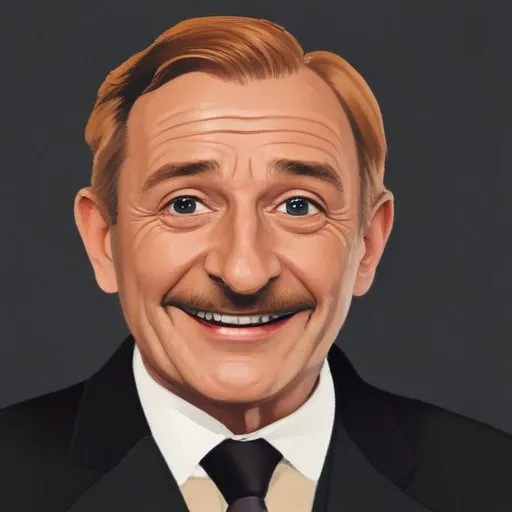
A renowned German comedian, actor, and director, celebrated for his witty satire and absurd humor in various TV shows and films, leaving a lasting impact on German comedy.
Loriot, born Vicco von Bülow, was a renowned German comedian, humorist, cartoonist, film director, actor, and writer, best known for his side-splitting cartoons, hilarious sketches, and iconic television series. His creative genius spanned multiple decades, leaving an indelible mark on German comedy and entertainment.
Born on November 12, 1923, in Brandenburg an der Havel, Prussia, Loriot hailed from a noble German family. After his parents' separation, he grew up in Berlin with his grandmother. During World War II, he served as an officer on the Eastern Front, earning decorations such as the Iron Cross 2nd and 1st class.
Loriot's foray into comedy began in the 1950s, when he started creating humorous cartoons for various German publications. His unique style and wit quickly gained him popularity, leading to his breakthrough in television with the 1976 series "Loriot," co-starring Evelyn Hamann. This show cemented his status as a comedy legend, earning him a massive following and critical acclaim.
Loriot's contributions to German comedy were recognized and celebrated throughout his career. He was ranked the 54th best German of all time on the television series "Unsere Besten" (Our Best), and in a special comedy episode, he was crowned the most famous German comedian ever.
In addition to his television success, Loriot ventured into film direction and acting. His two notable movies, "Ödipussi" (1988) and "Pappa Ante Portas" (1991), showcased his versatility as a filmmaker and his ability to adapt his comedic style to the big screen.
Loriot's work often poked fun at the absurdities of German culture and society, but beneath the humor lay a deeper commentary on the human condition. He believed in using comedy as a tool for social critique, encouraging people to think critically and question authority.
Despite his success, Loriot's personal life was marked by tragedy, including the loss of his younger brother during World War II. He remained humble and grounded, crediting his grandmother for instilling in him the values of humor and resilience.
Loriot's influence on modern German comedy is immeasurable. He paved the way for future generations of comedians, inspiring them to push the boundaries of humor and satire. His cartoons, films, and television shows continue to entertain and inspire audiences today, solidifying his place as one of Germany's most beloved and respected entertainers.
Loriot's wit and humor are encapsulated in his iconic quotes, such as "I'm not a comedian, I'm just a pessimist with a sense of humor." His clever one-liners and satirical observations continue to delight audiences and inspire new generations of comedians.
Loriot's remarkable career and enduring legacy serve as a testament to the power of comedy and satire in shaping our understanding of the world around us. As a true icon of German entertainment, he will continue to inspire and delight audiences for generations to come.
Born in 1797
A 19th-century literary mastermind who penned poignant poetry and biting social commentary, known for his witty satire and romantic verses that still resonate today.
Born in 1899
A celebrated German writer and poet, best known for his humorous and satirical children's books, such as "Emil and the Detectives" and "Lottie and Lisa", which have been beloved by generations of readers.
Born in 1918
A German leader who served as Chancellor from 1974 to 1982, known for his pragmatic and socially liberal policies, and his key role in shaping the European Union. He was also a respected economist and published author.
89 Years Old
German football legend and captain of the national team, known for his exceptional goal-scoring skills and leadership on the pitch.
96 Years Old
The first unified Germany's leader, who oversaw the country's reunification after the Berlin Wall's fall, and is credited with creating a strong, stable economy.
