


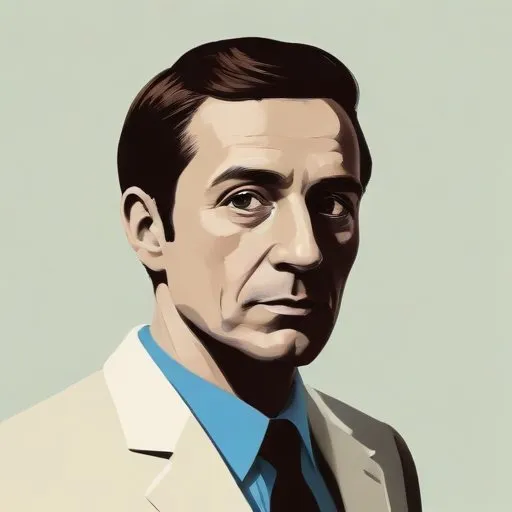
A British communist and peace activist who campaigned against nuclear weapons and racism, known for his involvement in the Aldermaston Marches and the Committee of 100.
Lou Kenton, a stalwart Englishman, is renowned for his unwavering dedication as a medical courier and ambulance driver with the International Brigade during the Spanish Civil War. As the oldest surviving member of the International Brigade at the time of his passing, Kenton's bravery and selflessness in the face of adversity continue to inspire generations.
Born on September 1, 1908, in Stepney, east London, to a Jewish Ukrainian family who had escaped the Tsarist pogroms, Kenton grew up with a strong sense of social justice. His father's untimely death from tuberculosis at a young age fueled Kenton's determination to fight against oppression. He left school at 14 and began working in a paper factory, where he first encountered antisemitism. This experience sparked his resolve to join the Communist Party of Great Britain in 1929.
Kenton actively participated in the Communist Party's disruption of the British Union of Fascists' rally at Olympia in June 1934 and resisted the BUF in the iconic Battle of Cable Street in October 1936. His involvement in these pivotal events demonstrated his unwavering commitment to combating fascism and promoting social equality.
In early 1937, Kenton answered the call to join the International Brigades in the Spanish Civil War. Riding his Douglas motorcycle to Albacete, he enlisted in the International Brigades Medical Unit. His first wife, Lillian, an Austrian nurse who had fled Nazi Germany in 1933, soon joined him in Spain. Kenton spent nearly two years in action as a medical courier on his motorcycle, distributing medical supplies to hospitals across the country, and as an ambulance driver on the front lines.
Upon his return to Britain in late 1938, Kenton embarked on an Aid for Spain mission to raise money for a new ambulance. His experiences during the Spanish Civil War had a profound impact on him, leaving him deeply depressed when the International Brigades were eventually disbanded. However, this did not deter him from continuing to fight for social justice. Kenton joined the Merchant Navy and later played a crucial role in repatriating Basque refugees from the United Kingdom to Spain.
Throughout his life, Kenton remained committed to promoting social justice and combating fascism. His courageous efforts as a medical courier and ambulance driver during the Spanish Civil War served as a testament to his unwavering dedication to the welfare of others. As the oldest surviving member of the International Brigade at the time of his passing on September 17, 2012, Kenton's legacy continues to inspire generations to stand against oppression and fight for a more just and equitable world.
Kenton's remarkable story serves as a poignant reminder of the importance of standing against social injustice and promoting compassion and understanding in the face of adversity.
Born in 1918
A South African lawyer and politician who fought against apartheid, becoming the country's first black president and a symbol of racial reconciliation, earning a Nobel Peace Prize. He's a beacon of hope and freedom.
97 Years Old
A prominent leader in the civil rights movement, advocating for racial equality and social justice through nonviolent means, leaving a lasting impact on American history.
Born in 1925
A prominent figure in the Civil Rights Movement, advocating for African American rights and self-defense, and a powerful orator who inspired a generation.
99 Years Old
The Cuban revolutionary who led the country from 1959 to 2008, implementing socialist policies and defying US opposition, becoming an iconic figure in modern history.
Born in 1869
Indian freedom fighter, activist, and philosopher who led India to independence from British rule through non-violent civil disobedience, inspiring civil rights movements worldwide.
Born in 1890
Leader of North Vietnam during the Vietnam War, unifying the country under communist rule and earning international recognition as a symbol of resistance against colonialism and imperialism.
Born in 1908
A pioneering feminist philosopher who wrote extensively on ethics, politics, and gender, famously arguing that "one is not born, but rather becomes, a woman."
Born in 1905
Existentialist philosopher and playwright who argued that humans have complete freedom to choose their actions and create their own meaning in life, influencing modern thought on morality and individual responsibility.
