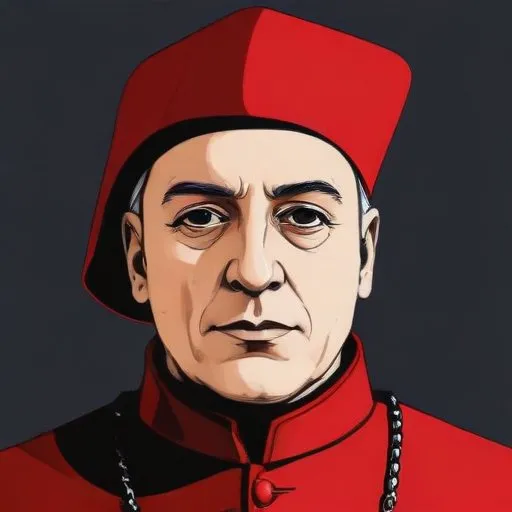
Louis Antoine de Noailles: The Conscience of the French Catholic Church
A Champion of Piety and Compassion
Louis Antoine de Noailles, Cardinal de Noailles, is revered as a champion of piety, compassion, and intellectual curiosity. Born on May 27, 1651, in the picturesque Château of Teyssire, Auvergne, France, Noailles would go on to leave an indelible mark on the French Catholic Church, earning him a place among the most influential figures of his time.
Early Life and Education
Noailles was the second son of Anne de Noailles, 1st Duke of Noailles, and Louise Boyer, a former lady-in-waiting to Queen
Anne of Austria. He received his doctorate in theology from the Sorbonne on March 14, 1676, marking the beginning of his illustrious career in the Church.
Rise to Prominence
Noailles' meteoric rise through the Church's hierarchy began with his appointment as bishop of Cahors in March 1679. Shortly thereafter, in 1680,
Pope Innocent XI transferred him to the diocese of Châlons-sur-Marne, bestowing upon him the title of peer of France. The pinnacle of his career came in 1700, when Pope
Innocent XII elevated him to the rank of cardinal.
A Friend to the People
Noailles' compassion and generosity towards the less fortunate earned him widespread admiration. In 1709, he sold his silver tableware to raise funds for famine victims, demonstrating his unwavering commitment to the welfare of his people. Furthermore, he invested a significant portion of his inheritance in the renovation of Notre Dame, cementing his status as a champion of the faith.
A Bridge between Faiths
Noailles' open-mindedness and willingness to engage with individuals from diverse religious backgrounds set him apart from his contemporaries. His friendship with
François Fénelon, a fellow theologian, is a testament to his ability to transcend denominational boundaries. Notably, he also formed a deep spiritual connection with Nicholas Ludwig von Zinzendorf, a young Lutheran count, during the latter's Grand Tour in 1719. This unlikely friendship speaks to Noailles' capacity for empathy and his dedication to fostering interfaith dialogue.
A Legacy of Controversy and Redemption
Noailles' condemnation of Fénelon's Maximes des Saints, a work deemed heretical by the Church, has been the subject of much debate among historians. While this move effectively ended Fénelon's career, it also underscores Noailles' commitment to upholding the Church's doctrine, even when faced with personal relationships.
signings of the Unigenitus Bull
Noailles' most enduring legacy is perhaps his role in ending the Jansenist controversy with his signing of the Unigenitus bull in 1728. This pivotal moment brought closure to a century-long theological dispute, cementing Noailles' status as a unifying force within the Church.
A Life of Service and Devotion
Throughout his remarkable career, Noailles remained steadfast in his devotion to the Church and its people. His life serves as a testament to the power of compassion, intellectual curiosity, and unwavering commitment to one's faith. As we reflect on the life and legacy of Louis Antoine de Noailles, Cardinal de Noailles, we are reminded of the profound impact one individual can have on the course of human history.
- Born: May 27, 1651, Château of Teyssire, Auvergne, France
- Died: May 4, 1729
- Doctorate in Theology: March 14, 1676, Sorbonne
- Bishop of Cahors: March 1679
- Cardinal: 1700, Pope Innocent XII
FAQ
What was the role of Louis Antoine de Noailles in the French Revolution?
Louis Antoine de Noailles played a significant role in the French Revolution as a vocal critic of the monarchy and a strong supporter of the National Assembly. He even helped draft the Declaration of the Rights of Man and of the Citizen.
How did Louis Antoine de Noailles become a cardinal?
Louis Antoine de Noailles was appointed as a cardinal in 1775 by Pope Pius VI, recognizing his dedicated service to the Catholic Church and his role in promoting Catholic causes in France.
What was Louis Antoine de Noailles relationship with King Louis XVI?
Louis Antoine de Noailles had a complex relationship with King Louis XVI, initially serving as his almoner but later becoming a vocal critic of the monarchy and supporting the National Assembly during the French Revolution.
What were Louis Antoine de Noailles contributions to education in France?
Louis Antoine de Noailles was a strong supporter of education and played a key role in establishing several educational institutions in France, including the École Militaire and the École des Ponts et Chaussées.
How did Louis Antoine de Noailles die?
Louis Antoine de Noailles died on February 9, 1841, at the age of 94, after a long and eventful life that spanned the French Revolution, the Napoleonic Wars, and the Bourbon Restoration.