


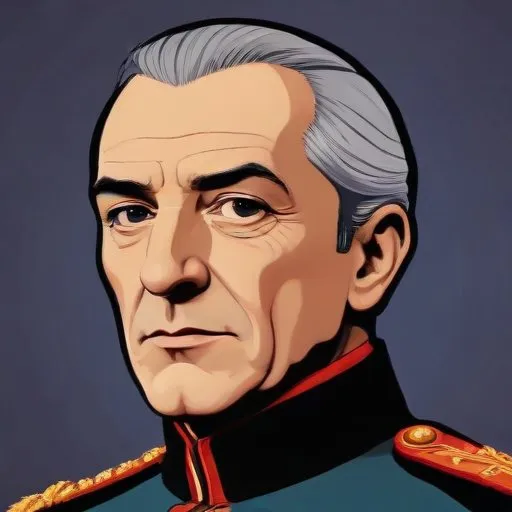
A skilled military strategist and Marshal of France, he successfully led campaigns during the Napoleonic Wars, earning recognition for his tactical genius and bravery.
Louis-Gabriel Suchet, a name synonymous with military prowess and strategic brilliance, is revered as one of the greatest generals of the Napoleonic Wars. Born on March 2, 1770, in Lyon, France, Suchet rose through the ranks to become a Marshal of the French Empire, cementing his legacy as a mastermind of warfare.
Suchet's early life was shaped by his family's business ventures. His father, Jean-Pierre Suchet, was a silk merchant, and Louis-Gabriel was initially groomed to take over the family enterprise. However, the French Revolution intervened, and in 1791, Suchet volunteered for the cavalry of the National Guard at Lyon. This marked the beginning of his illustrious military career, which would see him rapidly rise through the ranks.
Suchet's exceptional abilities and bravery in battle earned him rapid promotions. By 1792, he was a captain of the volunteers from Ardèche. His leadership skills were evident in the Siege of Toulon, where he captured the British general Charles O'Hara. This impressive feat catapulted him to prominence, and he became commander of the 4th Ardèche Battalion soon after.
Suchet played a pivotal role in several Italian campaigns, where he distinguished himself in battles such as Loano, Lodi, Castiglione, and Bassano. His valiant efforts earned him recognition and admiration from his peers and superiors. In 1797, he was promoted to lieutenant colonel of the 18th Infantry Demi-brigade.
Suchet's unwavering dedication and military genius led to his appointment as Marshal of the French Empire in 1811. This prestigious title solidified his position as one of Napoleon's most trusted generals. He went on to serve in various campaigns, including the Peninsular War, where he played a crucial role in the French occupation of Spain.
Louis-Gabriel Suchet's legacy extends far beyond his impressive military career. He is remembered as a brilliant strategist, a fearless leader, and a master of warfare. His campaigns and battles continue to inspire military historians and tacticians to this day.
Suchet's personal life was marked by tragedy, including the loss of his brother Gabriel-Catherine in 1806. He survived the downfall of Napoleon and the French Empire, passing away on January 3, 1826, at the age of 55. His tomb in the Père Lachaise Cemetery in Paris serves as a testament to his enduring legacy.
Louis-Gabriel Suchet's remarkable story serves as a testament to the power of determination, skill, and leadership. His name will forever be etched in the annals of history as one of the greatest generals of the Napoleonic Wars.
Born in 1769
A French military leader who rose to prominence during the French Revolution and became Emperor of France, known for his military conquests and reorganization of Europe. He is also famous for his Napoleonic Code, which remains a foundation of modern law.
Born in 1767
A flamboyant and daring cavalry commander who played a key role in Napoleon's military conquests, earning the title of King of Naples.
Born in 1758
A skilled military strategist and one of Napoleon's most trusted generals, known for his victories in the Peninsular War and his role in shaping modern warfare.
Born in 1769
A skilled military strategist and one of Napoleon's most trusted generals, known for his bravery and tactical genius on the battlefield.
Born in 1770
A renowned military strategist and statesman who played a crucial role in Napoleon's conquests and later became a key figure in French politics, known for his exceptional organizational skills and bravery.
Born in 1769
A skilled and fearless military leader, known for his bravery and tactical genius on the battlefield, particularly during the Napoleonic Wars.
Born in 1764
A French military leader and politician who reformed the French army and played a key role in the Napoleonic Wars, later becoming a prominent figure in the Bourbon Restoration.
