


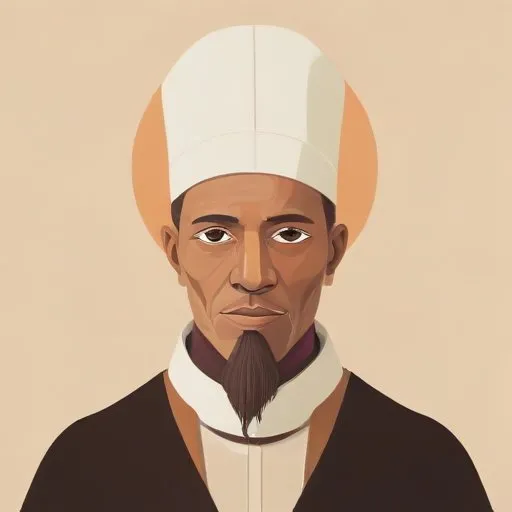
A Flemish priest and missionary who explored and documented the Great Lakes region in the 17th century, claiming to have discovered Niagara Falls. He wrote about his travels, providing valuable insights into Native American cultures.
Louis Hennepin, a Belgian Catholic priest and missionary, is best known for his expeditions to North America in the late 17th century, during which he mapped the Midwest region and proselytized to various Native American tribes.
Born Antoine Hennepin on May 12, 1626, in Ath, Spanish Netherlands (present-day Hainaut, Belgium), Hennepin joined the Franciscans and preached in Halles, Belgium, and Artois. He later became the administrator of a hospital in Maastricht.
In 1675, Hennepin was sent by Louis XIV to New France as part of a group of four Recollet missionaries. He accompanied René-Robert Cavelier, Sieur de La Salle, on an expedition to explore the western part of New France.
Hennepin spent time at the Indian mission at Fort Frontenac and later joined La Salle's expedition to construct the 45-ton barque Le Griffon and explore the unknown West. In January 1680, Hennepin helped build Fort Crèvecœur near present-day Peoria, Illinois.
In February 1680, La Salle sent Hennepin and two others as an advance party to search for the Mississippi River. They followed the Illinois River to its junction with the Mississippi, becoming the first Europeans to explore the region.
Hennepin was captured by a Sioux war party and carried off to present-day Minnesota, but he eventually escaped and returned to La Salle.
Hennepin's account of his travels, A New Discovery of a Vast Country in America, was published in 1697 and became a valuable source of information about the region.
Hennepin's expeditions and writings helped to shed light on the geography and Native American populations of the Midwest, influencing later explorers and settlers.
Hennepin's expeditions and writings contributed to the European understanding of the Midwest region, paving the way for later exploration and settlement.
Hennepin's legacy is still felt in the Midwest, where he is remembered as a pioneering figure in the region's history.
Born in 1637
French missionary and explorer who established missions in the Great Lakes region and mapped many of its rivers and lakes, including the Mississippi River. He played a key role in the European exploration of North America.
Born in 1567
French explorer who mapped much of eastern North America, establishing trade and settlement in what is now Canada and the northeastern United States.
