


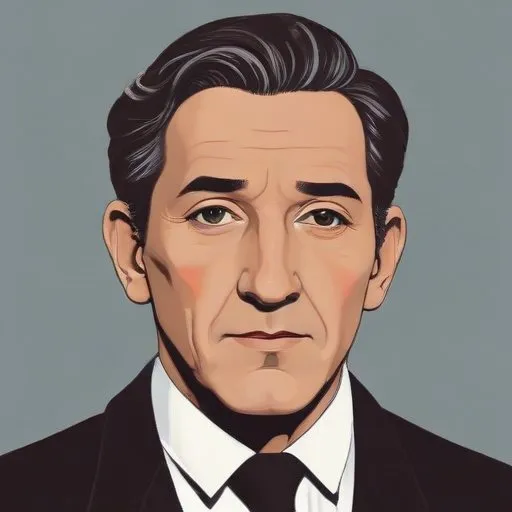
A prominent poet, anthologist, and critic who compiled influential poetry collections and championed contemporary American poetry, introducing many notable poets to the public.
Louis Untermeyer, a towering figure in American poetry, is best known for his eclectic body of work as a poet, anthologist, critic, and editor. Appointed as the fourteenth Consultant in Poetry to the Library of Congress in 1961, Untermeyer's legacy continues to shape the literary landscape of the country.
Born on October 1, 1885, in New York City, Untermeyer was the son of a German-Jewish jewelry manufacturer. Initially, he joined his father's firm as a designer, rising to the rank of vice president, before resigning in 1923 to devote himself to literary pursuits.
Untermeyer's first book of poetry, First Love (1911), reflected the influences of Heinrich Heine and British poet Laurence Housman. His next collection, Challenge (1914), showcased his growing maturity as a poet. These early works laid the foundation for his later accomplishments, which would solidify his position as a prominent American poet.
As an anthologist and editor, Untermeyer played a crucial role in promoting American poetry. He edited the influential anthology Modern American Poetry (1919), which introduced many new poets to the reading public. His editorial work also contributed to the discovery of notable poets like Robert Frost, with whom he would develop a lifelong friendship and correspondence.
Untermeyer's personal life was marked by both joy and tragedy. He married Jean Starr in 1907, and they had a son, Richard, who tragically took his own life in 1927 while studying at Yale. Untermeyer would go on to marry three more times, adopting two sons and having another son, John Fitzallen Moore, with poet Virginia Moore.
Untermeyer's writing was often infused with his philosophical beliefs, particularly his early adherence to Marxist ideology. He wrote for magazines like The Masses and The Liberator, advocating for the United States to stay out of World War I. Later, he contributed to The New Masses, an independent socialist magazine.
Through his work, Untermeyer played a significant role in shaping American literary culture. He co-founded The Seven Arts, a poetry magazine that introduced many new voices, including Robert Frost. His editorial work and poetry anthologies helped establish the foundations for modern American poetry.
Untermeyer's contributions to American literature were recognized with several awards and honors. He received the Gold Medal for Poetry from the National Institute of Arts and Letters in 1956 and was appointed the fourteenth Consultant in Poetry to the Library of Congress in 1961.
Louis Untermeyer's life and work continue to inspire generations of poets, writers, and literary enthusiasts. His tireless efforts to promote American poetry have left an indelible mark on the country's literary landscape. As a poet, anthologist, critic, and editor, Untermeyer remains an essential figure in American literary history.
Born in 1874
Pulitzer Prize-winning poet and playwright celebrated for rural New England-inspired works that explore human nature, morality, and the American experience.
Born in 1881
A popular poet and writer, known as the "People's Poet," who wrote uplifting and sentimental verse that celebrated everyday life and ordinary people. His poetry was widely read and appreciated during his lifetime.
Born in 1885
A pioneering modernist poet and critic who transformed 20th-century literature with innovative styles and provocative ideas, shaping the course of modern poetry.
Born in 1888
A renowned poet, playwright, and critic who reshaped modern poetry with works like "The Waste Land" and "Old Possum's Book of Practical Cats", influencing literature and art with their unique style.
Born in 1878
A Pulitzer Prize-winning poet and historian who celebrated the American spirit through his writing, particularly in his biography of Abraham Lincoln.
Born in 1879
A poet and educator who traveled the country reciting his poetry in exchange for food and lodging, known for his unique blend of folk-inspired verse and performance art.
Born in 1874
A pioneering figure in the Imagist poetry movement, known for her vibrant and expressive style, which emphasized clear and concise language. Her poetry and criticism helped shape modern American literature.
Born in 1892
A Pulitzer Prize-winning poet and playwright, known for her lyrical and passionate works that explored themes of love, feminism, and social justice. Her poetry is celebrated for its musicality and emotional intensity.
