


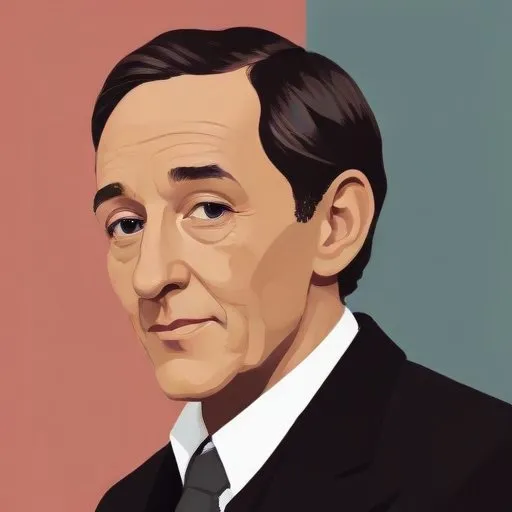
A poet and educator who traveled the country reciting his poetry in exchange for food and lodging, known for his unique blend of folk-inspired verse and performance art.
Vachel Lindsay, born on November 10, 1879, is renowned for his innovative style of "singing poetry," a genre that blurs the lines between music and verse. This American poet's unique approach to poetry has left an indelible mark on the literary world, earning him a place among the pioneers of modern poetry.
Lindsay's childhood in Springfield, Illinois, played a significant role in shaping his artistic vision. Growing up across the street from the Illinois Executive Mansion, he was exposed to the world of politics and social reform, which would later influence his poetry. His father, Vachel Thomas Lindsay, a medical doctor and a man of considerable wealth, encouraged his son's creative pursuits.
Lindsay's artistic journey began with medicine, as he studied at Ohio's Hiram College from 1897 to 1900. However, his passion lay in art, and he soon shifted his focus to the Art Institute of Chicago, where he honed his skills from 1900 to 1903. Later, he attended the New York School of Art (now The New School) to master pen and ink techniques. This multidisciplinary approach would eventually inform his unique poetic style.
Lindsay's poetry is characterized by its musical quality, meant to be sung or chanted. His words weave together a tapestry of sounds, rhythms, and cadences that evoke a sense of community and shared experience. In poems like "The Eagle Forgotten" and "Abraham Lincoln Walks at Midnight," he pays tribute to his hometown's rich history and its most iconic resident, Abraham Lincoln.
Lindsay's commitment to social justice and reform is evident in his poetry, which often addresses issues of inequality and freedom. His work has inspired generations of poets, musicians, and artists, cementing his legacy as a pioneer of modern singing poetry.
Lindsay's life was marked by personal struggles, including poverty and depression. Despite these challenges, he continued to write and innovate, leaving behind a body of work that has captivated audiences for generations.
Lindsay's singing poetry has inspired a wide range of artists, from musicians like Bob Dylan to poets like Allen Ginsberg. His innovative approach has also influenced the development of spoken word and performance poetry.
Lindsay received widespread critical acclaim during his lifetime, including the prestigious Levinson Prize in 1921.
Lindsay's poetry has been widely studied in academic circles, and his innovative approach has inspired new generations of writers and artists. His work continues to be a staple of American literature courses, offering insights into the country's rich cultural heritage.
Lindsay was known for his charismatic performances, which often included singing and chanting his poetry. He was also an accomplished painter and created many artworks throughout his life.
Vachel Lindsay's legacy extends far beyond his poetry. He has inspired a movement of artists and writers who continue to push the boundaries of language and form. As a visionary poet, he has left an indelible mark on American literature, ensuring that his poetry will be sung and celebrated for generations to come.
Born in 1868
A lawyer-turned-writer who crafted a collection of free-verse poems, each telling the story of a fictional small-town resident, offering a glimpse into the human experience. His works are celebrated for their innovative style and poignant insights into American life.
Born in 1878
A Pulitzer Prize-winning poet and historian who celebrated the American spirit through his writing, particularly in his biography of Abraham Lincoln.
Born in 1874
Pulitzer Prize-winning poet and playwright celebrated for rural New England-inspired works that explore human nature, morality, and the American experience.
Born in 1885
A pioneering modernist poet and critic who transformed 20th-century literature with innovative styles and provocative ideas, shaping the course of modern poetry.
Born in 1888
A renowned poet, playwright, and critic who reshaped modern poetry with works like "The Waste Land" and "Old Possum's Book of Practical Cats", influencing literature and art with their unique style.
Born in 1883
A physician-turned-writer, known for his modernist poetry and short stories that explored the everyday lives of ordinary people, often using imagery and experimental styles. His work blurred the lines between poetry and prose, creating a unique literary voice.
Born in 1879
A modernist master of language and imagination, crafting innovative, symbolic poetry that explores the human experience and the relationship between reality and the individual's perception of it.
