


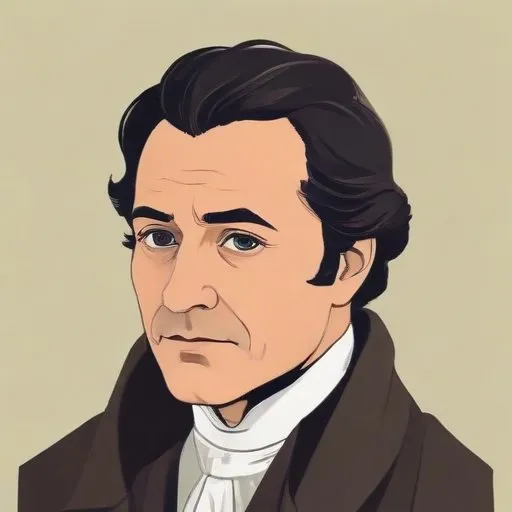
A French playwright and composer who wrote librettos for operas and ballets, and is known for his collaborations with famous composers like Jean-Philippe Rameau. His works showcased a blend of music, dance, and drama.
Louis de Cahusac was a renowned French playwright, librettist, and Freemason, celebrated for his enduring collaborations with composer Jean-Philippe Rameau, which yielded some of the most iconic operas of the 18th century. His libretti for Rameau's operas, including Les fêtes de l'Hymen et de l'Amour, Zais, Naïs, Zoroastre, and Les Boréades, continue to captivate audiences with their poetic elegance and dramatic flair.
Born on April 6, 1706, Cahusac's artistic inclinations were evident from an early age. As a young man, he became a member of the Freemasons, an organization that fostered intellectual and artistic pursuits. This affiliation would later prove influential in shaping his creative circle and collaborations.
Cahusac's partnership with Rameau spanned over a decade, resulting in some of the most celebrated operas of the French Baroque period. His libretti showcased a unique ability to craft narratives that expertly balanced drama, wit, and poetics, perfectly complementing Rameau's exquisite musical compositions.
One of Cahusac's most notable contributions was his work on Zoroastre, an opera that premiered in 1749 and was later revised in 1756. This collaboration not only cemented his reputation as a master librettist but also solidified Rameau's position as a leading composer of his time.
In addition to his work with Rameau, Cahusac was a prolific writer, contributing to various literary and artistic endeavors. His treatise, La Danse ancienne et moderne ou Traité historique de la danse, published in 1754, remains a valuable resource on the history of dance.
Cahusac was also an active participant in the intellectual circles of his time, penning articles for Diderot's Encyclopédie and socializing with prominent figures such as the art collector Comte de Caylus and the actress Marie-Anne-Catherine Quinault.
Louis de Cahusac's personal life was marked by a long-term romantic relationship with Marie Fel, a celebrated opera singer of the time. Their association not only reflected Cahusac's deep appreciation for music but also underscores the significance of his connections within the artistic community.
Louis de Cahusac's contributions to French opera and literature continue to inspire generations of artists and scholars. His collaborations with Rameau have left an indelible mark on the world of opera, with their works remaining a staple of the repertoire to this day.
Through his diverse artistic pursuits and partnerships, Cahusac embodied the spirit of 18th-century French culture, bridging the worlds of literature, music, and art. As a testament to his enduring legacy, his works continue to captivate audiences, offering a glimpse into the elegance and sophistication of a bygone era.
Born in 1606
A 17th-century French mastermind behind iconic plays like "Le Cid" and "Horace", known for pioneering the classical French tragedy genre.
Born in 1622
A 17th-century master of comedy, he penned witty plays that satirized the French aristocracy, leaving a lasting impact on Western theater. His works remain widely performed and adapted today.
Born in 1639
A 17th-century master of French tragedy, crafting intricate, psychologically complex dramas that probed the human condition, influencing the development of Western theatre.
Born in 1694
A witty and insightful 18th-century writer and philosopher who used satire to critique societal norms and advocate for reason, tolerance, and human rights.
Born in 1683
A prominent figure in the Baroque period, this composer and theorist revolutionized Western classical music with innovative harmonies and treatises on music theory, shaping the course of classical music.
Born in 1714
A pioneering opera composer who revolutionized the art form with his innovative and expressive works, blending music and drama in a way that captivated audiences.
Born in 1732
A prolific Rococo painter and etcher, renowned for his delicate, whimsical, and often erotic works that capture the carefree spirit of 18th-century French aristocracy. His art often featured lush landscapes, gentle colors, and playful scenes of love and leisure.
Born in 1703
A prominent artist of the Rococo style, known for his delicate and ornate paintings, often depicting mythological and pastoral scenes, as well as designing sets for the Paris Opera.
