


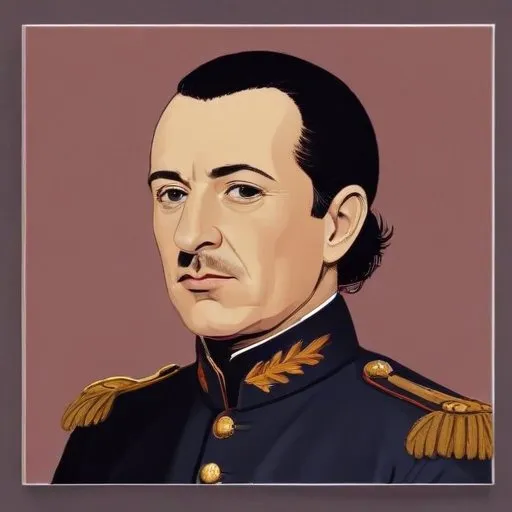
A French military leader who played a key role in the American Revolutionary War, helping the Continental Army secure crucial victories.
Louis de Noailles, a French aristocrat and art enthusiast, is renowned for his unwavering support of avant-garde artists, writers, and musicians during the early 20th century. As a patron of the arts, he played a pivotal role in shaping the cultural landscape of his time, fostering the development of Surrealism, Cubism, and other innovative movements.
Born on October 24, 1894, into a wealthy and influential family, Louis de Noailles inherited a passion for art and a sense of responsibility to support creative visionaries. He used his family's fortune to promote the works of groundbreaking artists, writers, and intellectuals, hosting lavish salons and gatherings at his Parisian townhouse.
The Noailles' residence, 11 Place des États-Unis, became a hub for artistic experimentation and intellectual discussion. Louis de Noailles and his wife, Marie-Laure, welcomed an eclectic group of creatives, including Salvador Dalí, Luis Buñuel, Jean Cocteau, and Man Ray, who would often gather for bohemian soirees, experimenting with new forms of art, literature, and cinema.
Louis de Noailles was instrumental in the development of avant-garde cinema, commissioning innovative films such as Buñuel and Dalí's Un Chien Andalou (1929) and L'Age d'Or (1930). He also supported the work of pioneering photographers like Man Ray, who would often photograph the Noailles' circle, capturing the essence of their artistic gatherings.
Louis de Noailles' patronage was not limited to art; he was also drawn to radical thinkers and intellectuals. He was fascinated by the ideas of Sigmund Freud and Henri Bergson, and his salons often became a platform for lively debates on philosophy, psychology, and literature.
Louis de Noailles' unwavering support of avant-garde artists and thinkers contributed significantly to the development of modern art movements. His legacy extends beyond the art world, inspiring future generations to embrace innovation and creative experimentation.
In an era marked by social and political upheaval, Louis de Noailles' commitment to artistic expression and intellectual freedom helped shape the cultural landscape of the early 20th century. His patronage and vision continue to influence contemporary art, film, and literature.
In an era of influential patrons, Louis de Noailles stood out for his willingness to take risks and support truly avant-garde artists. His approach differed from that of Gertrude Stein, who focused on nurturing American expatriate writers, and Peggy Guggenheim, who prioritized supporting Surrealist artists.
Louis de Noailles' dedication to the arts was driven by a passion for creative expression and a desire to challenge societal norms. His unwavering support of innovative artists serves as a testament to the power of patronage and the importance of nurturing artistic vision.
Born in 1890
A French military leader who led the Free French Forces during WWII and later became President of France, known for his strong leadership and vision for a unified Europe.
Born in 1856
A French general who led the country to defeat in World War II and later collaborated with the Nazis, serving as the Chief of State of Vichy France. He's infamous for his role in the French surrender and subsequent authoritarian regime.
Born in 1888
A key architect of the European Union, credited with uniting a war-torn continent through economic cooperation and integration. His vision for a unified Europe has shaped modern politics and global relations.
Born in 1882
A French lawyer and politician who served as the 17th President of France, known for his role in shaping the country's post-war constitution and politics. He played a key part in establishing the Fifth Republic.
Born in 1884
The first President of the Fourth Republic, serving from 1947 to 1954, known for his role in post-war France's reconstruction and establishment of the European Coal and Steel Community.
Born in 1916
A French lawyer and politician who served as the 21st President of France, known for his socialist policies and role in shaping the European Union. He's also remembered for his controversial past and complex personality.
93 Years Old
A French military officer and statesman who served as President of France from 1995 to 2007, known for his opposition to the US-led invasion of Iraq and his efforts to strengthen the European Union.
71 Years Old
The 23rd President of France, a lawyer-turned-politician who led the country from 2007 to 2012, known for his efforts to reform the EU and his controversial domestic policies.
