


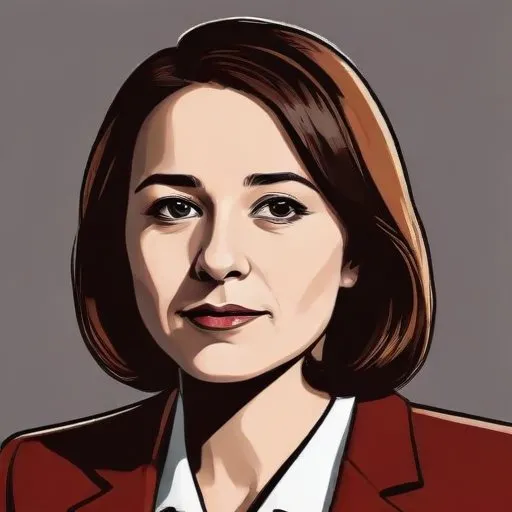
A Canadian academic and politician who served as a member of the National Assembly of Quebec and Minister of Culture and Communications, known for her advocacy of Quebec sovereignty and cultural preservation.
Louise Beaudoin is a name synonymous with Quebec politics, known for her unwavering dedication to the French language and culture, as well as her unapologetic stance on Quebec separatism. As a member of the Parti Québécois (PQ), she has left an indelible mark on the province's political landscape, earning her a reputation as a force to be reckoned with.
Born on September 26, 1945, in Quebec City, Quebec, Beaudoin earned a master's degree in history from Université Laval and a master's degree in sociology from the Sorbonne. Her academic pursuits were accompanied by her involvement in Quebec separatist movements, a passion that would shape her future political career.
In the 1970s, Beaudoin worked at the École nationale d'administration publique (ENAP) and later became the director of Claude Morin's office. Her career took a significant turn when she was posted to the Délégation générale du Québec in Paris from 1984 to 1985, where she developed close ties with René Lévesque, the founder of the PQ.
In 1994, Beaudoin was elected as a PQ member in the riding of Chambly, a position she held until 2003. During her tenure, she occupied various ministerial portfolios, including the Charter of the French Language, international relations, intergovernmental relations, La Francophonie, Culture and Communications, and globalization. Her unwavering commitment to the French language led to her spirited defense of Bill 101, which earned her both praise and criticism from the Anglophone communities in Quebec.
Beaudoin's stringent enforcement of Bill 101 and her views on multiculturalism, which she claimed was a Canadian value but not a Quebec one, sparked controversy and criticism. She was famously caricatured as a leather-clad dominatrix by popular Montreal Gazette cartoonist Aislin, a testament to her unyielding stance on Quebec's cultural identity.
Beaudoin's contributions to Quebec politics and her advocacy for the French language have earned her several awards and honors. She worked alongside Sheila Copps, the Minister for Canadian Heritage, to adopt the UNESCO Universal Declaration on Cultural Diversity, which was voted on in 2001.
Louise Beaudoin's legacy is a testament to her unwavering dedication to Quebec's cultural identity and her commitment to promoting the French language. Love her or hate her, Beaudoin's impact on Quebec politics and her unapologetic stance on Quebec separatism have cemented her place in the province's history.
Today, Louise Beaudoin's name remains synonymous with Quebec politics, a testament to her unwavering commitment to the province's cultural identity and her unapologetic stance on Quebec separatism.
Born in 1922
A charismatic leader who championed Quebec's independence and shaped the province's distinct identity through his passionate politics and journalism. He's revered for his role in Quebec's Quiet Revolution.
Born in 1919
The charismatic leader who championed Canadian unity and implemented progressive policies, known for his iconic style and influential legacy in shaping modern Canada.
92 Years Old
The 20th Prime Minister of Canada, serving from 1993 to 2003, known for his leadership during the Quebec sovereignty movement and his role in shaping Canada's national unity. He implemented policies like the Clarity Act and the National Child Benefit.
45 Years Old
American professional ice hockey player who won two Stanley Cup championships and was a four-time NHL All-Star. Known for his rugged defensive play and physical presence on the ice.
87 Years Old
The 18th Prime Minister of Canada, a skilled lawyer and politician, led the country from 1984 to 1993, known for negotiating the Canada-US Free Trade Agreement and introducing the Goods and Services Tax.
79 Years Old
The first and only female Prime Minister of Canada, serving for a brief four months in 1993, known for her efforts to reform the country's justice system. She was also a strong advocate for women's rights and gender equality.
Born in 1922
The first female Governor General of Canada, serving from 1984 to 1990, and a pioneering journalist who broke barriers for women in Canadian media.
96 Years Old
A Canadian economist and politician who served as the 26th Premier of Quebec, leading the province's sovereignty movement and playing a key role in the 1995 Quebec referendum. He's known for his strong nationalist views and efforts to gain independence for Quebec.
