


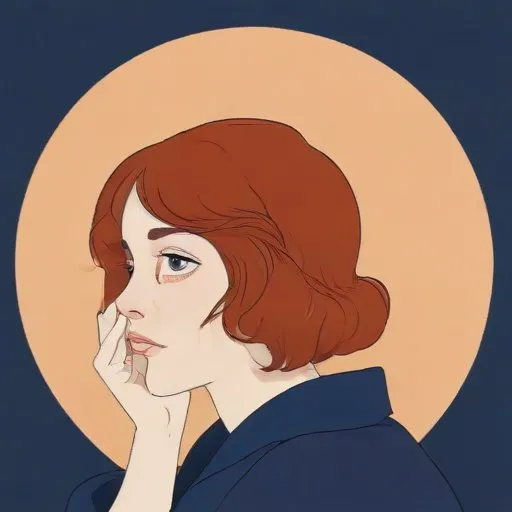
A 19th-century French poet, known for her romantic and feminist writings, which inspired many artists and writers of her time. Her poetry explored themes of love, nature, and women's rights.
Louise Colet, born Louise Revoil de Servannes, was a renowned French poet and writer who left an indelible mark on the literary world of 19th-century France. Her remarkable talent, fiery spirit, and storied life earned her a prominent place among the era's most celebrated writers, including Victor Hugo, Gustave Flaubert, and Alfred de Musset.
Colet was born on August 15, 1810, at the Hôtel d'Antoine Frère in Aix-en-Provence, France. In her twenties, she married Hippolyte Colet, an academic musician, and moved to Paris to escape provincial life. This move marked the beginning of her literary career, as she began submitting her work for approval and publication.
Colet's talent was soon recognized by the Académie Française, which awarded her a 2,000-franc prize, the first of four prizes she would win from the institution. This accolade catapulted her into the Parisian literary community, where she rubbed shoulders with prominent writers and intellectuals.
Colet's salon became a hub for literary luminaries, including Victor Hugo, who frequented her gatherings. Her personal life, however, was marked by tumultuous relationships with some of France's most celebrated writers. In 1840, she gave birth to a daughter, Henriette, whose paternity was disputed by both her husband and her lover, Victor Cousin. Later, she became the paramour of Gustave Flaubert, Alfred de Musset, and Abel Villemain.
Colet's most notable romantic entanglement was with Gustave Flaubert, with whom she had a passionate eight-year affair. Although the relationship ultimately ended in heartbreak, it inspired Colet to write a novel, Lui, a semi-autobiographical account of her affair with Musset and her frustration with Flaubert. Flaubert, in turn, wrote dozens of letters to Colet, providing valuable insight into the writing of his seminal work, Madame Bovary.
Colet's poetry and writing, while often overshadowed by her personal life, demonstrate her mastery of Romanticist style and her contribution to the French literary canon. Her salon, which attracted some of the era's most influential writers, played a significant role in shaping the literary landscape of 19th-century France.
Colet's writing often explored themes of love, passion, and the human condition, reflecting her Romanticist inclinations. Her poems and novels reveal a deep understanding of the complexities of the human experience, making her a valuable voice in the literary conversation of her time.
Today, Louise Colet is remembered as a trailblazing poet and writer who navigated the treacherous waters of 19th-century French literature with aplomb. Her remarkable life, marked by both creative triumphs and personal struggles, continues to captivate readers and inspire writers to this day.
Born in 1821
A pioneering realist novelist who crafted meticulous, psychologically nuanced portrayals of 19th-century French life, particularly in his iconic novel "Madame Bovary".
Born in 1810
French Romantic writer who penned passionate and introspective works, including plays, poems, and novels that explored the human experience.
Born in 1798
A Romantic-era master of expressive brushstrokes and vivid color, creating iconic works that captured the drama and emotion of historical and literary scenes.
Born in 1821
A 19th-century literary mastermind who crafted exquisite poetry and art criticism, exploring the beauty and darkness of human experience.
Born in 1811
A French Romantic poet and critic who championed the beauty of art for art's sake, and is known for his vivid descriptions of nature and the human experience.
Born in 1799
A prolific writer who created a vast array of characters and stories that explored the human condition, particularly in the context of post-Napoleonic France. His works are considered a cornerstone of French literature.
Born in 1810
A Polish pianist and composer renowned for his delicate, expressive, and technically demanding piano music that evokes deep emotions and continues to inspire generations of musicians and music lovers. His nocturnes, waltzes, and preludes are staples of classical music.
