


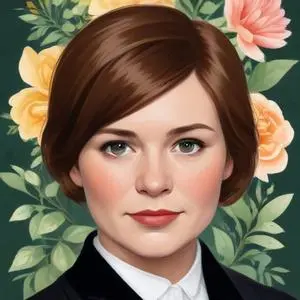
Co-founder of the National Woman's Party, a pioneering figure in the fight for women's suffrage and equal rights, instrumental in securing the 19th Amendment.
Lucy Burns was a pioneering American suffragist and women's rights advocate, best known for her tireless efforts in fighting for women's right to vote and her instrumental role in forming the National Woman's Party. Alongside her close friend and ally, Alice Paul, Burns dedicated her life to challenging the status quo and pushing for radical change, earning her a reputation as a powerful and passionate leader in the suffrage movement.
Born on July 28, 1879, in Brooklyn, New York, to an Irish Catholic family, Burns demonstrated a natural aptitude for learning and a keen sense of injustice from an early age. She attended the prestigious Packer Collegiate Institute, where she was instilled with a strong sense of social responsibility and a desire to challenge the patriarchal norms of the time.
Inez Haynes Irwin, a fellow National Woman's Party member, aptly described Burns as a woman of "twofold ability," possessing both eloquence and elegance in her speech and writing. Burns' intellectuality was matched only by her warm and charming nature, making her a compelling and persuasive force in the fight for women's rights.
After graduating from Packer Collegiate Institute, Burns attended Columbia University, Vassar College, and Yale University, where she honed her skills as an educator and developed a passion for language and literature. She went on to teach at Erasmus High School in Brooklyn, but her experience was marked by frustration, and she eventually left to pursue her own studies.
In 1906, Burns moved to Germany to resume her studies in language, enrolling at the Universities of Bonn and Berlin. This period marked a significant turning point in her life, as she became increasingly politicized and began to see the struggle for women's rights as an integral part of her own identity.
Burns' involvement in the suffrage movement began in earnest during her time in the UK, where she joined the militant suffragettes and quickly rose through the ranks. Alongside Alice Paul, she formed the National Woman's Party, an organization that would become the vanguard of the women's suffrage movement in the United States.
Burns' tireless activism, oratory skills, and persuasive writing made her a force to be reckoned with in the suffrage movement. She was a master strategist, always pushing for more radical action and refusing to accept anything less than full equality for women.
Lucy Burns' legacy is one of unwavering dedication, unrelenting passion, and a commitment to challenging the status quo. Her work played a significant role in securing women's right to vote, and her influence can still be felt today. As a testament to her enduring impact, Burns remains an inspiration to women's rights advocates around the world, a shining example of the power of determination and courage in the face of adversity.
Burns' contributions to the women's suffrage movement were recognized during her lifetime, and she was awarded numerous honors for her work. Posthumously, she was inducted into the National Women's Hall of Fame in 1997, a testament to her enduring legacy.
Lucy Burns' remarkable life serves as a powerful reminder of the importance of perseverance, grit, and determination in the pursuit of social justice. Her unwavering commitment to the women's suffrage movement continues to inspire generations of activists, ensuring that her legacy will endure for generations to come.
Born in 1885
A pioneering figure in the women's suffrage movement, fighting for equal rights and voting privileges through nonviolent protests and strategic lobbying. Her legacy continues to inspire feminist activism today.
Born in 1820
Pioneering figure in the women's suffrage movement, fighting for women's right to vote and own property. Her tireless efforts led to significant advancements in women's rights.
Born in 1815
Pioneering women's rights activist who led the women's suffrage movement, fighting for women's right to vote and own property.
Born in 1859
Founded the League of Women Voters and International Alliance of Women, a pioneering figure in the women's suffrage movement, fighting for women's right to vote and equality.
Born in 1880
First woman elected to Congress, serving two non-consecutive terms, and a lifelong pacifist who voted against both World War I and World War II.
Born in 1879
A pioneering birth control activist who advocated for women's reproductive rights and founded the American Birth Control League, precursor to Planned Parenthood.
Born in 1897
A pioneering social activist and journalist who advocated for pacifism, women's rights, and the poor, founding the Catholic Worker Movement to promote social justice and nonviolence.
Born in 1924
A trailblazing African American congresswoman who broke racial and gender barriers, advocating for education, women's rights, and the poor. She was the first woman to run for the Democratic presidential nomination in 1972.
