


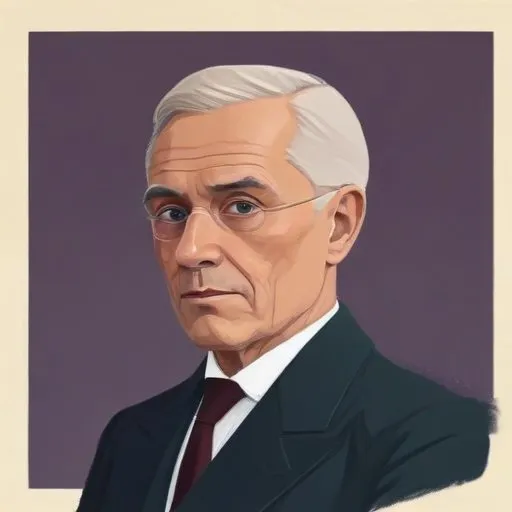
Developed the Faddeev equations, a crucial tool for solving quantum scattering problems, and made significant contributions to quantum field theory and mathematical physics.
Ludvig Faddeev, a renowned Soviet and Russian mathematical physicist, revolutionized the field of quantum mechanics with his groundbreaking work on the Faddeev equations and path-integral methods. His contributions have had a profound impact on our understanding of quantum systems, and his legacy continues to inspire future generations of physicists and mathematicians.
Faddeev's most notable achievement is the development of the Faddeev equations, which provided a solution to the quantum-mechanical three-body problem. This breakthrough enabled physicists to better understand the behavior of particles in quantum systems, paving the way for advancements in fields such as quantum field theory and particle physics.
Faddeev, in collaboration with Victor Popov, introduced the concept of Faddeev-Popov ghosts, a mathematical tool used to quantify the quantization of non-abelian gauge field theories. This innovative approach has been instrumental in the development of modern particle physics, allowing researchers to better grasp the intricacies of fundamental interactions.
Faddeev led the Leningrad School, a hub of intellectual curiosity and innovation, where he, along with his students, developed the quantum inverse scattering method. This methodology enabled the study of quantum integrable systems in one space and one time dimension, laying the groundwork for the invention of quantum groups by Drinfeld and Jimbo.
Faddeev was born on March 23, 1934, in Leningrad, Russia, to a family of mathematicians. His father, Dmitry Faddeev, was a prominent algebraist and professor at Leningrad University, while his mother, Vera Faddeeva, made significant contributions to numerical linear algebra.
Faddeev pursued his undergraduate degree in physics at Leningrad University, graduating in 1956. He chose to study physics to establish his own identity, separate from his father's influence. Nevertheless, he received a solid education in mathematics, thanks to the guidance of V.A. Fock and V.I. Smirnov.
He completed his doctoral work on scattering theory in 1959 under the direction of Olga Ladyzhenskaya, a renowned mathematician in her own right.
Faddeev was a member of the Russian Academy of Sciences since 1976 and held membership in several foreign academies, including the U.S. National Academy of Sciences. He was the head of the St. Petersburg Department of Steklov Institute of Mathematics of the Russian Academy of Sciences (PDMI RAS) from 1976 to 2000.
In 1988, he founded the Euler International Mathematical Institute, now a department of PDMI RAS. Faddeev was an invited visitor to the CERN Theory Division on multiple occasions, starting in 1973.
Faddeev's work has left an indelible mark on the field of mathematical physics. His contributions have inspired generations of researchers, and his legacy continues to shape our understanding of quantum systems. Through his work, Faddeev has demonstrated the power of human curiosity and the boundless potential of the human mind.
As we reflect on Faddeev's remarkable journey, we are reminded of the importance of fundamental research and the pursuit of knowledge. His story serves as a beacon of inspiration, motivating future generations to push the boundaries of human understanding.
Born in 1921
A Soviet physicist and dissident who advocated for human rights and nuclear disarmament, earning a Nobel Peace Prize in 1975. He's known for his courageous stance against the Soviet regime, promoting peace and democracy.
Born in 1895
A Soviet physicist who developed the concept of the "tokamak," a device used to confine and study plasmas at extremely high temperatures, leading to advancements in nuclear fusion research.
Born in 1908
A renowned physicist and academic who made groundbreaking contributions to our understanding of quantum mechanics, superfluidity, and particle physics, earning a Nobel Prize in Physics in 1962.
Born in 1894
A Soviet physicist who discovered superfluidity and made significant contributions to the study of low-temperature physics, earning him a Nobel Prize in Physics in 1978.
Born in 1909
Developed mathematical methods for quantum field theory and made significant contributions to the development of theoretical physics, particularly in the areas of statistical mechanics and quantum mechanics.
89 Years Old
A renowned mathematician and academic who made significant contributions to the fields of differential equations, dynamical systems, and symplectic geometry, earning him numerous awards and honors.
Born in 1903
Developed theories on probability, topology, and complexity, making significant contributions to modern mathematics and computer science.
88 Years Old
A renowned mathematician and academic, he was awarded the Fields Medal for his groundbreaking contributions to topology and algebraic geometry. His work has far-reaching implications for our understanding of geometric structures.
