


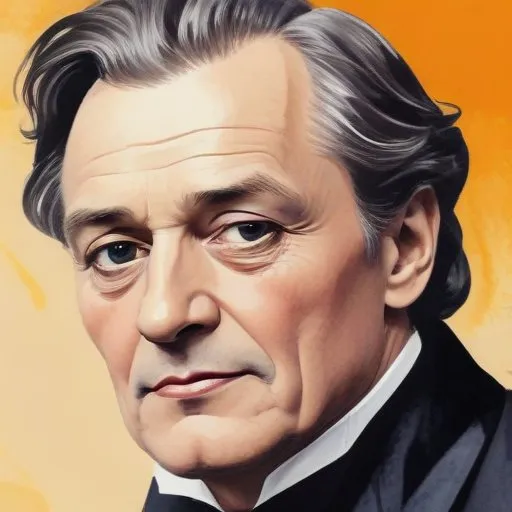
A renowned German author and playwright, he is best known for his romantic and historical novels, particularly those set in the Bavarian Alps, which have been adapted into films and stage productions. His works often explored themes of love, nature, and social class.
Ludwig Ganghofer, dubbed the most adapted author in the history of German cinema, left an indelible mark on the literary and cinematic landscape of Germany. With a plethora of novels turned into films, his work continues to captivate audiences to this day.
Born on July 7, 1855, in Kaufbeuren, Bavaria, Ganghofer was the son of forestry official August Ganghofer. His younger sister, Ida, would later marry geologist and geographer Albrecht Penck, making the renowned geomorphologist Walther Penck his nephew.
Ganghofer's academic pursuits took him from gymnasium to the Munich Polytechnic, where he initially studied mechanical engineering. However, his passion for literature and philosophy soon led him to switch majors, and he went on to study in Munich, Berlin, and Leipzig. In 1879, he received his doctorate from Leipzig University.
Ganghofer's entry into the world of literature was marked by the success of his play, Der Herrgottschnitzer von Ammergau (The Crucifix Carver of Ammergau), which premiered at the Munich Grtnerplatz Theatre in 1880. The play's subsequent performance in Berlin, where it was staged over 100 times, cemented his reputation as a talented playwright.
His breakthrough led to opportunities as a dramaturge at the Ringtheater in Vienna (1881) and as a freelance writer for the family paper Die Gartenlaube. He also worked as a feuilleton editor of the Neues Wiener Tagblatt from 1886 to 1891. During this time, Ganghofer frequented the salon in the Palais Todesco, where he rubbed shoulders with luminaries like Hugo von Hofmannsthal and Johann Strauss.
From 1891 onwards, Ganghofer devoted himself to writing Alpine novels, drawing inspiration from his hunting lodge near Leutasch in Tyrol. This prolific period saw the creation of some of his most iconic works, which would later be adapted into films.
As a testament to his influence, Ganghofer founded the Munich Literary Society and went on to make significant contributions to the world of literature. His work as a voluntary war correspondent from 1915 to 1917, although lesser known, showcases his dedication to capturing the essence of his times.
Ludwig Ganghofer's literary legacy extends far beyond his written works. His novels have been adapted into numerous films, making him the most adapted author in German cinematic history. This enduring impact on German cinema solidifies his position as a pioneer in the world of storytelling.
Ganghofer's passing on July 24, 1920, marked the end of an era, but his work continues to inspire and captivate audiences, ensuring his legacy as a literary giant.
Ludwig Ganghofer's remarkable life and works serve as a reminder of the transformative power of literature and cinema. His enduring legacy continues to captivate audiences, inspiring new generations of writers, filmmakers, and enthusiasts alike.
Born in 1749
A German literary giant who penned iconic works like "Faust" and "The Sorrows of Young Werther", shaping the Romantic movement and influencing countless writers.
Born in 1759
A renowned poet and playwright who crafted influential works that explored the human condition, morality, and the struggle for freedom, leaving a lasting impact on German literature.
Born in 1729
A prominent Enlightenment thinker, he's known for his influential writings on philosophy, literature, and theology, which helped shape modern German culture. He's also credited with developing the concept of dramatic irony in literature.
Born in 1797
A 19th-century literary mastermind who penned poignant poetry and biting social commentary, known for his witty satire and romantic verses that still resonate today.
Born in 1819
A 19th-century literary mastermind, renowned for crafting poignant novels and poetry that explored the human condition, particularly in the context of German society during the late 1800s.
Born in 1819
A 19th-century literary mastermind, celebrated for his vivid storytelling and poetic flair, particularly in his novel "Green Henry", which explores the human condition. His works are considered a cornerstone of Swiss literature.
Born in 1899
A celebrated German writer and poet, best known for his humorous and satirical children's books, such as "Emil and the Detectives" and "Lottie and Lisa", which have been beloved by generations of readers.
Born in 1875
A renowned literary mastermind, celebrated for crafting complex, psychologically rich novels that probed the human condition, often blending philosophy and art.
