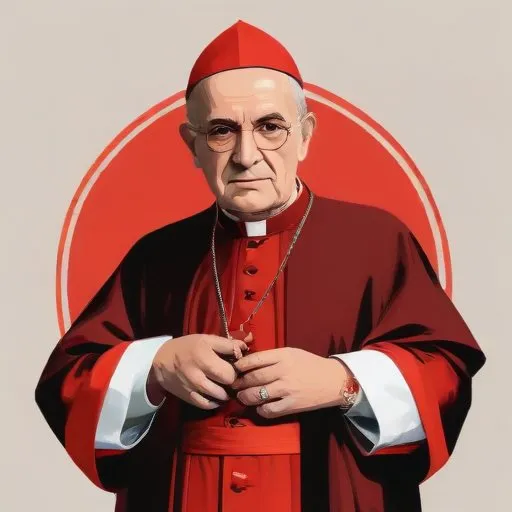
Luigi Raimondi: The Illustrious Pontiff and Champion of Sainthood
A Life Dedicated to the Pursuit of Holiness
Luigi Raimondi is perhaps best known for his remarkable service as the Prefect of the Congregation for the Causes of Saints, a prestigious position he held from 1973 until his untimely passing in 1975. As a renowned prelate of the Catholic Church, Raimondi dedicated his life to the pursuit of holiness, playing a pivotal role in the canonization of numerous saints during his tenure.
Early Life and Education
Born on October 25, 1912, in Lussito, Acqui, Italy, Raimondi was the son of Giovanni Raimondi and Maria Giacchero. He embarked on his spiritual journey by attending the seminary in Acqui, where he was ordained to the priesthood by Bishop Lorenzo Del Ponte on June 6, 1936. Raimondi's thirst for knowledge led him to further his studies in Rome at the Pontifical Lateran University, followed by a stint at the elite Pontifical Ecclesiastical Academy, where he honed his skills in diplomacy.
A Distinguished Diplomatic Career
Raimondi's remarkable diplomatic career spanned over three decades, during which he served in various capacities, including:
- Secretary of the Guatemalan nunciature (1938-1942)
- Auditor of the Apostolic Delegation to the United States (1942-1949)
- Counselor and chargé d'affaires to India (1949-1953)
- Official of the Vatican Secretariat of State (1953)
These postings provided Raimondi with invaluable experience and insight, which he would later leverage in his role as Prefect of the Congregation for the Causes of Saints.
Elevation to the Episcopacy and Cardinalate
On December 24, 1953, Raimondi was appointed Titular Archbishop of Tarsus and Nuncio to Haiti, as well as Apostolic Delegate to the British and French West Indies. He received his episcopal consecration on January 31, 1954, from Cardinal Adeodato Giovanni Piazza. Later, on June 30, 1967, Raimondi was named Apostolic Delegate to the United States, a position he held until his appointment as Prefect of the Congregation for the Causes of Saints.
A Legacy of Holiness
Raimondi's crowning achievement came when
Pope Paul VI created him Cardinal-Deacon of Ss. Biagio e Carlo ai Catinari in the consistory of March 5, 1973. As Prefect of the Congregation for the Causes of Saints, Raimondi played a crucial role in the canonization of numerous saints, solidifying his legacy as a champion of holiness.
Personal Milestones and Key Life Events
Throughout his life, Raimondi was honored with several distinctions, including:
- Named a Privy Chamberlain of His Holiness on March 3, 1939
- Appointed a Domestic Prelate of His Holiness on March 5, 1951
- Participated in the Second Vatican Council from 1962 to 1965
Legacy and Impact
Luigi Raimondi's life and legacy serve as a testament to his unwavering dedication to the pursuit of holiness. His remarkable diplomatic career, coupled with his esteemed position as Prefect of the Congregation for the Causes of Saints, have left an indelible mark on the Catholic Church. Raimondi's contributions continue to inspire generations, ensuring that his legacy will endure for centuries to come.
FAQ
What is Luigi Raimondis most notable achievement in the Catholic Church?
Raimondi served as the Prefect of the Sacred Congregation for thePropagation of the Faith from 1953 to 1967, and was elevated to the College of Cardinals in 1953.
What was Luigi Raimondis early life and education like?
Raimondi was born in 1912 in Acqui Terme, Italy. He studied at the Pontifical Gregorian University in Rome and was ordained a priest in 1936.
How did Luigi Raimondis career in the Church begin?
Raimondi began his career in the Church as a priest in the Diocese of Acqui, before being appointed as a diplomat for the Holy See in 1945.
What was Luigi Raimondis role in the Second Vatican Council?
Raimondi served as one of the council fathers at the Second Vatican Council, where he played a key role in the commission on missionary activity.
What is Luigi Raimondis legacy in the Catholic Church?
Raimondi is remembered as a dedicated servant of the Church, who worked tirelessly to promote missionary activity and the spread of the Gospel around the world.