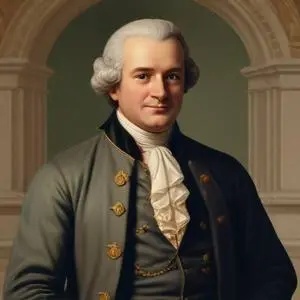
The Visionary Architect: Luigi Vanvitelli
A Master of Classicizing Late Baroque and Neoclassicism
Luigi Vanvitelli, the 18th-century Italian architect, is renowned for his grandiose and intricate designs that transport us to a bygone era of elegance and refinement. As one of the most prominent architects of his time, Vanvitelli's style effortlessly transitioned from Late Baroque to Neoclassicism, leaving an indelible mark on the world of architecture.
The Formation of a Genius
Born on May 12, 1700, in Naples, Italy, Vanvitelli was the son of Anna Lorenzani and Caspar van Wittel, a Dutch painter of landscapes and cityscapes. The artistic inclination was evident from an early age, and Vanvitelli went on to hone his skills in Rome under the guidance of Nicola Salvi, a prominent architect of the time. It was during this period that he worked on the prestigious project of constructing the Trevi Fountain, an experience that would shape his future endeavors.
Rise to Prominence
Vanvitelli's talent and innovative approach soon caught the attention of
Pope Clement XII, who commissioned him to work on several papal projects in the Marche region. One of his most notable creations from this period is the Lazaretto in Ancona (1732), a vast pentagonal building that spanned over 20,000 square meters. This ingenious design not only showcased Vanvitelli's mastery of architecture but also demonstrated his understanding of the importance of public health and safety.
A Legacy of Landmark Creations
Throughout his illustrious career, Vanvitelli worked on numerous projects that would go on to become iconic symbols of their time. Some of his most notable works include:
- Stabilizing the dome of St. Peter's Basilica in Rome, a feat that earned him widespread recognition
- Designing the Chapel of St. John the Baptist for King John V of Portugal, a masterpiece of opulence and extravagance
- Building a bridge over the Calore Irpino in Benevento, a testament to his ingenuity and engineering prowess
The Visionary's Philosophy
Vanvitelli's creations not only reflected his technical expertise but also embodied his philosophical approach to architecture. He believed in the importance of blending functionality with aesthetics, creating spaces that were both grand and inviting. His commitment to sustainability and environmental consciousness, evident in his use of locally sourced materials and innovative designs, made him a trailblazer in his field.
A Lasting Impact
Luigi Vanvitelli's legacy extends far beyond his impressive architectural feats. He inspired a generation of architects and artists, leaving an indelible mark on the world of art and design. His influence can be seen in the works of contemporaries and successors, and his name remains synonymous with elegance, sophistication, and visionary design.
A Quote to Remember
"I believe that architecture should be a reflection of the human spirit, a balance of grandeur and harmony, of elegance and functionality." – Luigi Vanvitelli
A Life of Innovation and Creativity
Luigi Vanvitelli's journey was a testament to the power of innovation, creativity, and perseverance. His life's work continues to inspire and awe us, reminding us of the transformative power of art and architecture to shape our world and our perceptions.
FAQ
Who was Luigi Vanvitelli?
Luigi Vanvitelli was an Italian architect and engineer who designed several famous buildings, including the Palace of Caserta and the Royal Palace of Milan.
What were Luigi Vanvitellis contributions to architecture?
Luigi Vanvitelli developed a new style of architecture that combined Baroque and Neoclassical elements. He also pioneered the use of modern building techniques.
What was Luigi Vanvitellis role in the development of the Palace of Caserta?
Luigi Vanvitelli designed the Palace of Caserta, which was built for the King of Naples. The palace is considered one of the greatest architectural achievements of the 18th century.
What was Luigi Vanvitellis relationship with the royal courts of Europe?
Luigi Vanvitelli worked for several royal courts, including the King of Naples and the King of Spain. He was highly sought after for his architectural expertise.
When did Luigi Vanvitelli die?
Luigi Vanvitelli died in 1773 at the age of 77.