


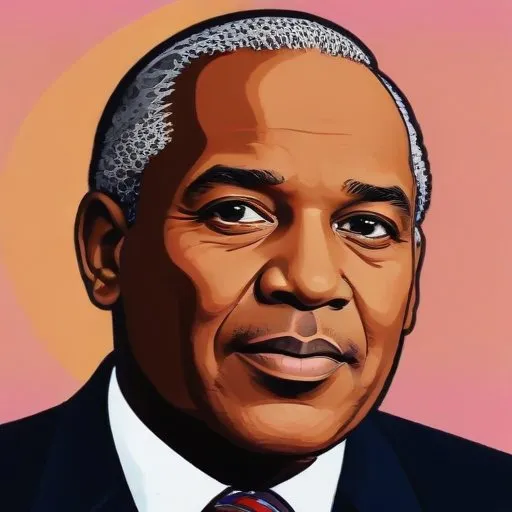
A pioneering librarian and politician who modernized the Library of Congress and served as a US Senator and Representative, known for expanding access to information and education.
Luther Harris Evans, a renowned American political scientist, left an indelible mark on the world of education, libraries, and international cooperation. As the tenth Librarian of Congress and third Director-General of UNESCO, Evans dedicated his life to promoting knowledge, preserving cultural heritage, and fostering global understanding.
Born on October 13, 1902, in Sayersville, Texas, Evans earned his Bachelor's, Master's, and Ph.D. degrees in political science from the University of Texas at Austin and Stanford University. His academic excellence led to teaching positions at prestigious institutions like New York University, Dartmouth College, and Princeton University.
Evans' entry into government service was facilitated by the influential Lehman family of New York, who introduced him to Harry Hopkins, advisor to President Franklin Delano Roosevelt. This connection led to Evans' appointment as the director of the Historical Records Survey for the Works Project Administration (WPA) from 1935 to 1939. Under his leadership, the survey accomplished the monumental task of organizing and preserving American historical records.
In 1945, President Harry S. Truman appointed Evans as the tenth Librarian of Congress, a position he held until 1953. During his tenure, Evans implemented reforms, expanded the library's collections, and introduced innovative programs. He also played a crucial role in shaping the library's Legislative Reference Service, which provided vital information to Congress.
In 1953, Evans became the third Director-General of the United Nations Educational, Scientific and Cultural Organization (UNESCO). As the first American to hold this position, Evans worked tirelessly to promote international cooperation, education, and cultural exchange. Under his leadership, UNESCO launched several flagship programs, including the Education for All initiative and the UNESCO Prize for Peace Education.
Luther Evans' Contributions to society are multifaceted and far-reaching. He played a crucial role in shaping the Library of Congress, UNESCO, and the global educational landscape. His commitment to preserving cultural heritage, promoting education, and fostering international cooperation continues to inspire generations.
Through his remarkable life and career, Luther Evans embodied the values of scholarship, public service, and international cooperation. His legacy continues to inspire leaders, educators, and individuals around the world.
Evans' personal life was marked by milestones and anecdotes that reveal his wit, humility, and dedication to public service. One such story highlights his courage and conviction: when asked to propose a plan to Harry Hopkins, Evans instead pointed out the disarray of the US Archives, demonstrating his commitment to preserving American history.
Evans' wife, Agnes, played a vital role in his life and career, supporting him through the ups and downs of public service. Together, they had two children, Jane and Harris.
Luther Evans passed away on December 23, 1981, but his enduring legacy continues to inspire and educate future generations.
Born in 1911
The 38th Vice President of the United States was a prominent liberal politician and journalist who played a key role in shaping the country's civil rights policies. He's most known for his strong support of the Civil Rights Act of 1964.
Born in 1908
The 36th President of the United States, a skilled politician and leader, played a crucial role in passing landmark civil rights legislation, including the Civil Rights Act and Voting Rights Act.
Born in 1913
The 37th President of the United States, a polarizing figure who led the country through significant domestic and foreign policy changes, infamous for his involvement in the Watergate scandal.
Born in 1913
The 38th President of the United States, a former football star and lawyer, is known for being the first vice president to assume the presidency under the 25th Amendment and for his controversial pardon of Richard Nixon. He's also remembered for his humble and accidental rise to the presidency.
Born in 1924
A naval officer turned politician who served as the 39th President of the United States, known for his commitment to human rights and social justice, and awarded the Nobel Peace Prize in 2002.
Born in 1911
The charismatic leader who championed conservative policies, helped end the Cold War, and is often credited with restoring American pride and optimism. He's also remembered for his folksy, actor-honed communication style.
Born in 1924
The 41st President of the United States, a decorated war hero and skilled diplomat, led the country through the end of the Cold War and Gulf War. He's known for his foreign policy expertise and "kinder, gentler nation" vision.
79 Years Old
The 42nd President of the United States, a charismatic leader who reformed healthcare and economy, and infamous for his scandals.
