


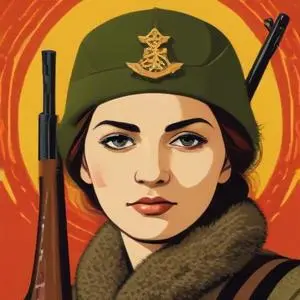
A Ukrainian-Russian soldier and sniper, credited with over 300 confirmed kills, who became a legendary figure in the Soviet Union during World War II, and a symbol of female empowerment.
Lyudmila Pavlichenko is widely recognized as one of the most successful snipers in World War II, credited with an astonishing 309 confirmed kills. Her impressive marksmanship and bravery in the face of enemy fire earned her a place among the top five snipers of all time.
Born Lyudmila Belova on July 12, 1916, in Bila Tserkva, Russian Empire (now in Ukraine), Pavlichenko was raised in a family with strong communist ties. Her father, Mikhail Belov, was a locksmith and a Communist Party member who had served in the Red Army, earning the Order of the Red Banner.
As a child, Pavlichenko was a self-described tomboy who excelled in athletic activities and developed a passion for shooting. She joined an OSOAVIAKhIM shooting club in Kiev, where she honed her skills and earned her Voroshilov Sharpshooter badge and a marksman certificate.
In 1941, Pavlichenko enlisted in the Red Army and was assigned to the 25th Rifle Division. During the siege of Odessa and Sevastopol, she quickly proved herself as a skilled and deadly sniper, earning the respect and admiration of her comrades.
Her impressive kill count and unwavering dedication to the war effort made her a celebrity in the Soviet Union. In 1942, she was evacuated to Moscow after being injured in battle, where she underwent treatment and recovery.
After recovering from her injuries, Pavlichenko embarked on a highly publicized tour of the United States, Canada, and the United Kingdom, where she promoted the Soviet war effort and rallied international support. Her charm, wit, and impressive marksmanship skills made her a media sensation, earning her the nickname "Lady Death."
Upon her return to the Soviet Union, Pavlichenko trained other Red Army snipers and continued to serve as a public spokeswoman for the military. Her contributions to the war effort were instrumental in boosting morale and inspiring others to take up arms against the enemy.
After the war, Pavlichenko was reassigned as a senior researcher for the Soviet Navy. She continued to work in this capacity until her death on October 10, 1974, at the age of 58.
Pavlichenko's remarkable story has inspired numerous books, films, and documentaries, cementing her place in history as one of the most remarkable female snipers of all time. Her bravery, skill, and dedication to her country have made her a beloved and respected figure in Soviet and Ukrainian history.
Lyudmila Pavlichenko's remarkable story is a testament to her bravery, skill, and dedication to her country. Her legacy continues to inspire and captivate audiences around the world, ensuring that her place in history as one of the most remarkable female snipers of all time remains secure.
Born in 1881
A Soviet politician and military leader who served as Defense Minister during World War II, playing a crucial role in the Soviet war effort and later becoming a key figure in Stalin's government. He's also known for his iconic tank, the KV-1, named in his honor.
Born in 1896
A Soviet military leader who played a crucial role in defeating Nazi Germany in World War II, and later became a key figure in Soviet politics.
Born in 1896
A Soviet military leader who played a crucial role in several key battles, including the Battle of Stalingrad and the capture of Berlin, earning him the highest military honors. He was a skilled strategist and tactician who helped turn the tide of the war in favor of the Allies.
Born in 1894
The Soviet leader who initiated reforms and denounced Stalin's regime, known for his bold policies and iconic shoe-banging incident at the UN.
Born in 1879
Founded the Red Army and played a crucial role in the Russian Revolution, shaping the course of modern communism. A key figure in 20th-century politics and ideology.
Born in 1878
The Soviet Union's ruthless leader who ruled with an iron fist, implementing policies that led to widespread famine and purges, while also playing a crucial role in defeating Nazi Germany in World War II.
