


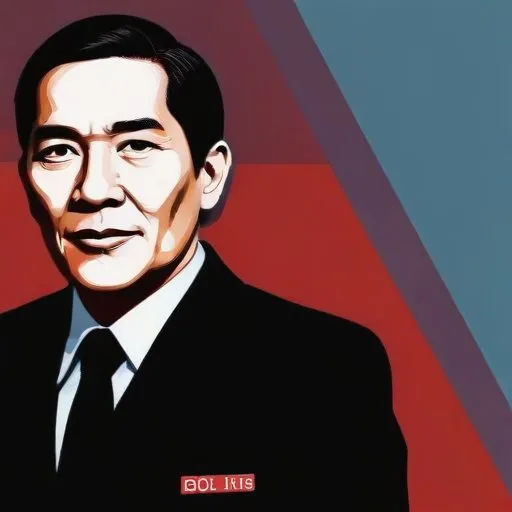
The 12th President of the Republic of China, a Hong Kong-Taiwanese commander and politician, is known for his efforts to improve relations with mainland China and his role in shaping Taiwan's economy. He's also recognized for his moderate stance on Taiwanese independence.
Ma Yingjeou, the sixth president of the Republic of China, is widely recognized for his efforts to strengthen ties with mainland China, marking a significant shift in Taiwan's foreign policy. During his presidency from 2008 to 2016, Ma oversaw the signing of the Economic Cooperation Framework Agreement, a landmark deal that boosted economic cooperation between the two nations.
Born on July 13, 1950, Ma Yingjeou hails from a prominent family in Taiwan. He earned a Bachelor of Laws degree from National Taiwan University in 1972 and later pursued graduate degrees in juridical science at New York University and Harvard University in the United States.
Ma's political career began in 1981, when he worked for President Chiang Ching-kuo. He later served as chair of the Research, Development and Evaluation Commission and Minister of Justice from 1993 to 1996. In 1998, he was elected as the mayor of Taipei, defeating incumbent Chen Shuibian of the Democratic Progressive Party (DPP).
Ma was elected as the chairman of the Kuomintang (KMT) in 2005 and later resigned in 2007 to focus on his presidential campaign. He won the presidential election in 2008 with 58.45% of the popular vote, defeating DPP nominee Frank Hsieh. During his presidency, Ma prioritized improving relations with mainland China, resulting in:
Ma's presidency was not without controversy. Critics accused him of being too soft on China and compromising Taiwan's sovereignty. Additionally, his administration faced criticism for its handling of the 2014 Sunflower Student Movement, which protested against a trade agreement with mainland China.
Ma is married to Christine Chow, a Taiwanese-American, and they have two daughters. In 2015, Ma made history by becoming the first Taiwanese leader to meet with a Chinese leader, Xi Jinping, in Singapore.
Ma Yingjeou's presidency marked a significant shift in Taiwan's foreign policy, as he pursued a more conciliatory approach towards mainland China. While his policies were controversial, they contributed to a period of relative stability in cross-strait relations. Ma's legacy will be remembered for his efforts to bridge the gap between Taiwan and mainland China.
"We want to maintain good relations with China, but we also want to maintain our dignity and our sovereignty." - Ma Yingjeou
Ma Yingjeou has received several awards, including the Order of the Propitious Clouds with Special Grand Cordon and the Grand Cross of the Order of the Sun of Peru.
Ma Yingjeou's legacy is complex and multifaceted, reflecting both his efforts to strengthen ties with mainland China and the controversies that surrounded his presidency. As a key figure in Taiwanese politics, his impact on modern society will continue to be felt for years to come.
Born in 1923
The fourth President of the Republic of China, a key figure in Taiwan's transition to democracy, known for his bold economic reforms and advocacy for Taiwanese identity. He played a crucial role in shaping Taiwan's modern politics and economy.
Born in 1887
Led the Nationalist Party in China, fighting against the Communist Party and later establishing the government of Taiwan. He's known for his role in shaping modern Chinese history.
Born in 1893
Leader of the Chinese Communist Party who implemented radical social and economic reforms, including the Great Leap Forward and the Cultural Revolution, shaping modern China's politics and economy.
Born in 1904
A Chinese revolutionary and statesman who led the country's economic reforms, transforming it into a global superpower. He's credited with opening up China to the world and introducing capitalist principles.
83 Years Old
The 5th Paramount leader of China, who served from 2002 to 2012, is known for his role in China's rapid economic growth and his "Scientific Development Concept" policy. He also increased China's global influence through strategic diplomacy.
73 Years Old
The supreme leader of China, overseeing the country's rapid economic growth and asserting its global influence, while consolidating power and cracking down on dissent.
71 Years Old
The 7th Premier of the People's Republic of China, serving from 2013 to 2023, oversaw China's economic reforms and played a key role in shaping the country's global influence. He implemented policies to boost domestic consumption and reduce reliance on exports.
