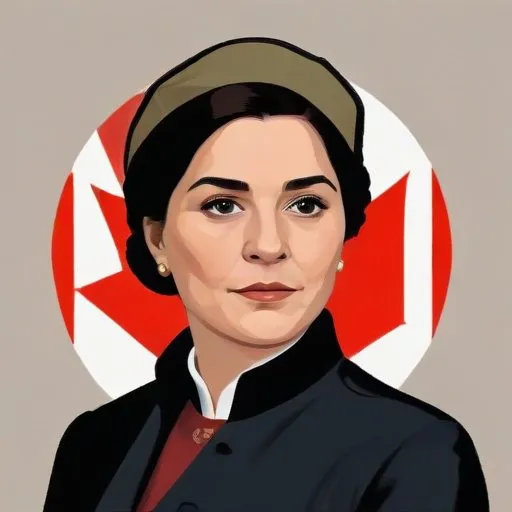
Madeleine de Verchères

Madeleine de Verchères

Madeleine de Verchères was born on March 3rd, 1678

Full Name: Madeleine de Verchères
Birthplace: Verchères, Quebec
Nationality: Canadian
Occupation: Rebel leader
Notable Work: Defense of Verchères
Age: 14 years old
Death Date: 1747
Notable Event: Iroquois attack

A 14-year-old girl who defended her family's fort against a French and Native American attack in 1692, becoming a legendary heroine in Canadian history.

Written by: Emma Thompson Emma Thompson

Madeleine de Verchres: The Brave Heroine of New France

Known for her remarkable bravery and quick thinking, Madeleine de Verchres is celebrated for repelling a surprise attack on Fort Verchres when she was just 14 years old. This daring feat in 1692 would earn her a place in history as a heroine of New France, a region that is now modern-day Quebec.

A Life Shaped by War and Settlement

Madeleine was born on March 3, 1678, in Verchres, New France, to Franois Jarret and Marie Perrot. Her father, a veteran of the Beaver Wars, had fought against the Haudenosaunee, a Native American confederacy. The Jarret family was one of the earliest European settlers in the region, and Madeleine grew up surrounded by the uncertainties of frontier life.

The Courageous Act that Made Her a Legend

On October 22, 1692, Madeleine's parents left the fort to gather winter supplies, leaving her in charge with a small group of soldiers and an elderly man named Laviolette. While working in the cabbage garden, Madeleine spotted a Haudenosaunee war party descending upon the settlers. Without hesitation, she rallied the soldiers and organized a defense, shouting "Aux armes! Aux armes!" (To arms! To arms!) as she ran back to the fort. Her swift action allowed the French settlers to prepare for battle, ultimately repelling the attack and saving countless lives.

A Life of Service and Duty

After her heroic act, Madeleine continued to live a life of service and duty. She married Pierre Thomas Tarieu de La Naudière in 1706 and had six children with him. Her husband, a military officer, was often away on duty, leaving Madeleine to manage their estate and raise their family. She remained dedicated to her community, often providing assistance to her neighbors and supporting the local church.

Legacy and Honors

Madeleine de Verchres' bravery and selflessness have inspired generations of Canadians and French citizens. Today, she is remembered as a symbol of courage and resilience in the face of adversity. Her legacy is celebrated through various monuments, museums, and historical sites in Quebec, ensuring that her remarkable story continues to inspire future generations.

Madeleine de Verchres' extraordinary courage and determination have cemented her place in history as a true heroine of New France. Her remarkable story continues to captivate and inspire, serving as a reminder of the power of bravery and determination in the face of adversity.

Timeline
1678
Born in Verchères, Quebec
Madeleine de Verchères was born in Verchères, Quebec, to a prominent family of French colonists. She would go on to become a Canadian rebel leader.
1692
Defends Verchères against Iroquois
De Verchères defended Verchères against an Iroquois attack, showing bravery and leadership skills that earned her recognition.
1705
Leads rebellion against British rule
De Verchères led a rebellion against British rule in Quebec, advocating for French autonomy and self-governance.
1713
Writes Histoire veritable
De Verchères wrote Histoire veritable, a memoir that detailed her experiences as a rebel leader and defender of Verchères.
1747
Dies in Sainte-Anne-de-la-Pérade, Quebec
De Verchères died in Sainte-Anne-de-la-Pérade, Quebec, leaving behind a legacy as a heroine of French Canada.
Madeleine de Verchères

Madeleine de Verchères Quiz

What was Madeleine de Verchères known for?

Score: 0/5
FAQ
What was Madeleine de Verchères role in the French colonization of North America?
Madeleine de Verchères played a significant role in the French colonization of North America, helping to defend the French colony at Québec against the Iroquois attacks. Her bravery and leadership earned her the nickname the heroine of New France.
What is Madeleine de Verchères most notable achievement?
Madeleine de Verchères most notable achievement is her successful defense of the French colony at Québec against the Iroquois attacks in 1692. This event has become a celebrated moment in Canadian history, symbolizing the courage and determination of the French settlers.
How did Madeleine de Verchères actions impact the development of New France?
Madeleine de Verchères actions had a significant impact on the development of New France, helping to secure the French colony and pave the way for further expansion. Her bravery and leadership inspired other settlers to defend their homes and communities against Native American attacks.
What was Madeleine de Verchères view on the role of women in society?
Madeleine de Verchères believed that women played a crucial role in society, serving as guardians of family, community, and nation. She argued that womens bravery and leadership were essential to the survival and success of the French colonies in North America.
How did Madeleine de Verchères legacy shape Canadian identity?
Madeleine de Verchères legacy has shaped Canadian identity, symbolizing the courage, determination, and resilience of the French settlers who established the first permanent settlements in North America. Her story has inspired generations of Canadians, serving as a powerful symbol of national pride and identity.

Related People:

Jean Talon

Born in 1626

The first Intendant of New France was a key figure in establishing and governing the French colony, overseeing its economic development, and implementing policies to ensure its growth and prosperity. They played a crucial role in shaping the colony's early years.

Louis Jolliet

Born in 1645

French-Canadian explorer who charted the Mississippi River and claimed the region for France, opening up the Midwest to further exploration and settlement.

Jacques Marquette

Born in 1637

French missionary and explorer who established missions in the Great Lakes region and mapped many of its rivers and lakes, including the Mississippi River. He played a key role in the European exploration of North America.

Samuel de Champlain

Born in 1567

French explorer who mapped much of eastern North America, establishing trade and settlement in what is now Canada and the northeastern United States.