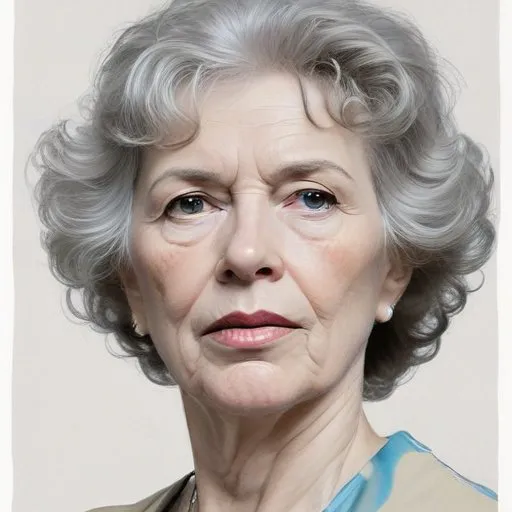
Maggi Hambling: The Maverick Artist Behind London's Most Controversial Sculptures
A Life of Artistic Innovation and Provocation
Maggi Hambling is a British artist renowned for creating some of London's most thought-provoking and controversial sculptures, including
A Conversation with Oscar Wilde,
A Sculpture for Mary Wollstonecraft, and the 4-meter-high steel
Scallop on Aldeburgh beach. Her work often sparks intense debate, reflecting her passion for exploring the human condition and challenging societal norms.
Early Life and Inspiration
Born on October 23, 1945, in Sudbury, Suffolk, Hambling grew up in a family that nurtured her creative spirit. Her father, Harry Smyth Leonard Hambling, was a Barclays bank cashier and local politician, while her mother, Marjorie (née Harris), taught ballroom dancing. Hambling's artistic talent was inherited from her father, who discovered his own passion for painting later in life. Her brother, Roger, nine years her senior, introduced her to carpentry and taught her how to wring a chicken's neck, foreshadowing her own fearlessness in pursuing unconventional artistic expression.
Education and Training
Hambling's artistic journey began at the Amberfield School in Nacton, where she studied under Yvonne Drewry. She then attended the East Anglian School of Painting and Drawing, Ipswich School of Art, Camberwell School of Art, and finally, the Slade School of Art at UCL, graduating in 1969. Her education laid the foundation for her unique style, which blends figuration and abstraction.
Artistic Career and Controversies
Hambling's sculptures often tackle complex themes, such as identity, mortality, and social justice. Her portrait work is equally acclaimed, with several pieces held by the National Portrait Gallery, London. However, it's her public sculptures that have sparked the most debate.
A Conversation with Oscar Wilde, a life-size sculpture of the author, sits on a granite sarcophagus in Adelaide Street, London, while
A Sculpture for Mary Wollstonecraft, a tribute to the pioneering feminist, has been criticized for its abstract representation of the subject. The
Scallop, a majestic steel sculpture on Aldeburgh beach, has been both praised and scorned for its bold, modern design.
Philosophical Contributions and Beliefs
Through her art, Hambling challenges societal norms and encourages introspection. Her work often explores the human experience, delving into the complexities of identity, morality, and mortality. By pushing the boundaries of artistic expression, she inspires us to question our assumptions and confront the unknown.
Influence on Modern Society
Hambling's sculptures have become an integral part of London's cultural landscape, sparking conversations and debates that transcend the art world. Her willingness to tackle controversial subjects has inspired a new generation of artists to pursue unconventional themes and forms of expression.
Awards and Honors
Throughout her career, Hambling has received numerous accolades, including the Prix de Rome (1969) and the Marsh Award for Public Art (2013). Her work is held in high esteem by both critics and the public, cementing her position as a leading figure in modern British art.
Legacy and Impact
Maggi Hambling's artistic legacy extends far beyond her individual works. She has challenged the status quo, inspiring a new wave of artists to push the boundaries of creative expression. Her sculptures have become icons of modern London, reflecting the city's diversity, complexity, and spirit of innovation. As a testament to her enduring influence, Hambling's work continues to provoke, inspire, and challenge us to think differently about the world around us.