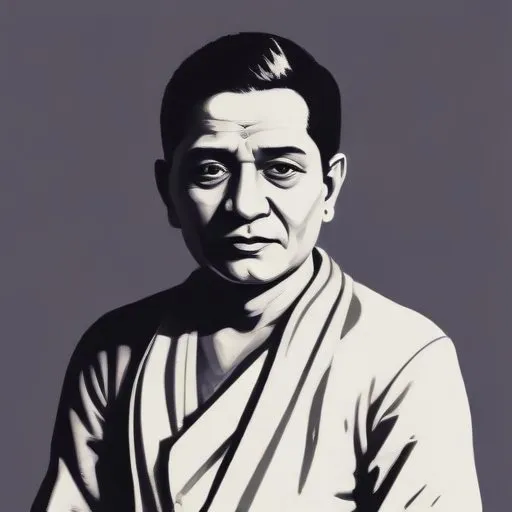
Mahadev Desai: The Indispensable Right-Hand Man of Mahatma Gandhi
A Life Dedicated to Freedom and Service
Mahadev Desai was a Indian independence activist, scholar, and writer who is best remembered as the personal secretary of
Mahatma Gandhi, a position he held for 25 years. As Gandhi's trusted associate, Desai played a crucial role in the Indian independence movement, earning him the esteemed title of "Gandhi's Boswell" and "ananda to Gandhi's Buddha."
Early Life and Education
Born on January 1, 1892, in the village of Saras in Surat district of Gujarat, Desai came from an Anavil Brahmin family. His mother, Jamnabehn, passed away when he was just seven years old. In 1905, at the age of 13, Desai was married to Durgabehn. He pursued his education at the Surat High School and the Elphinstone College, Mumbai, graduating with a BA degree. Later, he earned his L.L.B in 1913 and took up a job as an inspector at the central cooperative bank in Bombay.
Meeting Gandhi and the Beginning of a Lifelong Association
Desai's life took a significant turn in 1915 when he met Gandhi to seek his advice on publishing a Gujarati translation of John Morley's English book "On Compromise." This encounter marked the beginning of a lifelong association with Gandhi, which would shape Desai's life and legacy. In 1917, Desai joined Gandhi's ashram and accompanied him to Champaran with his wife Durgabehn.
A Chronicler of Gandhi's Life
Desai is notable for maintaining a diary from November 13, 1917, to August 14, 1942, the day before his death. This diary provides valuable insights into Gandhi's life and the Indian independence movement. Verrier Elwin, a British missionary and writer, aptly described Desai as "much more than" Gandhi's personal secretary, saying, "He was Home and Foreign Secretary combined. He managed everything. He made all the arrangements. He was equally at home in the office, the guesthouse, and the kitchen."
Personal Sacrifices and Arrests
Desai's commitment to Gandhi and the cause of Indian independence led him to make significant personal sacrifices. In 1919, when Gandhi was arrested in Punjab, he named Desai as his heir. Desai was arrested for the first time in 1921 and sentenced to a year in prison. Despite facing numerous challenges and arrests, Desai remained steadfast in his devotion to Gandhi and the independence movement.
A Legacy of Service and Sacrifice
Mahadev Desai's life was a testament to his unwavering dedication to Gandhi and the Indian independence movement. Rajmohan Gandhi, a grandson of Mahatma Gandhi, aptly describes Desai's selfless nature, saying, "Waking up before Gandhi in predawn darkness, and going to sleep long after his Master, Desai lived Gandhi's day thrice over." Desai's untimely death on August 15, 1942, was a significant loss to Gandhi and the nation, but his legacy as a champion of freedom and service continues to inspire generations.
Philosophical Contributions and Beliefs
Desai's association with Gandhi deeply influenced his philosophical beliefs. Like Gandhi, Desai believed in the principles of non-violence, truth, and self-discipline. He was a strong advocate for Indian independence and swaraj, and his writings and speeches reflect his commitment to these ideals.
Influence on Modern Society
Mahadev Desai's life and legacy have had a profound impact on modern Indian society. His association with Gandhi helped shape the Indian independence movement, and his writings and speeches continue to inspire social and political activists. Desai's selfless dedication to the cause of freedom and his unwavering commitment to Gandhi serve as a beacon of inspiration for generations to come.
FAQ
What was Mahadev Desais role in the Indian independence movement?
Mahadev Desai was an Indian author and activist who served as Mahatma Gandhis personal secretary from 1917 to 1942. He played a key role in promoting Gandhis ideals and was a prominent figure in the Indian independence movement.
What were Mahadev Desais literary contributions?
Desai was a prolific writer and translator, publishing numerous works on Gandhian philosophy and Indian politics. His translations of Gandhis works into Gujarati helped to disseminate Gandhis ideas to a broader audience.
What was Mahadev Desais relationship with Mahatma Gandhi?
Desai was deeply devoted to Gandhi, serving as his personal secretary, confidant, and biographer. He was one of Gandhis closest associates and played a crucial role in documenting Gandhis life and work.
What was Mahadev Desais role in the Salt March?
Desai participated in the Salt March with Gandhi, walking 240 miles from Ahmedabad to Dandi to protest the British salt tax. He was arrested and imprisoned for his involvement in the march.
What is Mahadev Desais legacy in Indian history?
Mahadev Desai is remembered as a dedicated Gandhian and a champion of Indian independence. His literary contributions and personal sacrifices have inspired generations of Indians to work towards social change and national liberation.