


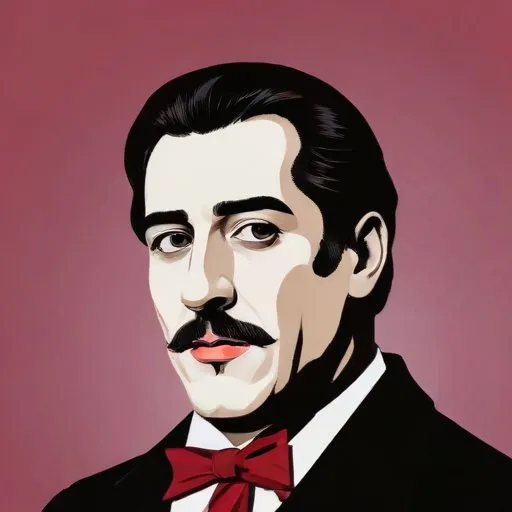
A renowned 19th-century opera singer and composer, known for his virtuosic performances and innovative compositions that blended Italian and Spanish styles.
Manuel Garcia, also known as Manuel del Ppulo Vicente Rodriguez Garcia, was a Spanish opera singer, composer, impresario, and singing teacher who left an indelible mark on the world of opera. With a career spanning over four decades, Garcia was a prolific composer, producing numerous light operas, and a renowned performer, known for his powerful tenor voice.
Garcia was born in Seville, Spain, on January 21, 1775. He began his musical journey as a tenor in Madrid and Cadiz, before moving to Paris in 1808. It was in Paris that Garcia's talents as a composer and performer gained recognition, earning him accolades for his performances in Rossini's operas, including Elisabetta, regina d'Inghilterra and The Barber of Seville.
Garcia's influence extended beyond Europe, as he toured Naples, Italy, and later, London, England. Between 1819 and 1823, he performed in various operas, including Otello and Don Giovanni, at the King's Theatre in London. His travels also took him to Paris, where he presented new French-style operas of his own composition at the Paris Opera, the Opera-Comique, and the Gymnase-Dramatique.
Garcia's family was a talented bunch, with his elder daughter, Maria Malibran, becoming a celebrated mezzo-soprano. His second daughter, Pauline Viardot, was a musician of great consequence and one of the most brilliant dramatic stars of her time. Garcia's son, Manuel Patricio Rodriguez Garcia, followed in his father's footsteps, becoming a world-famous vocal pedagogue and leading theoretical writer of the Rossini vocal school.
In 1825, Garcia and his family, along with four other members, were recruited by a New York vintner, Dominick Lynch Jr., to introduce Italian opera to New York. This marked the beginning of a new era in American opera, with Garcia's company staging around 80 performances of Italian opera, including The Barber of Seville, in which Garcia played the role of Almaviva.
Garcia's contributions to the world of opera are immeasurable. He was a true pioneer, paving the way for future generations of opera singers, composers, and impresarios. His legacy extends beyond his own accomplishments, as his family continued to shape the world of opera, ensuring his influence would be felt for generations to come.
Garcia's life was a testament to the power of music and the arts. His impact on the world of opera continues to be felt, inspiring generations of artists and music lovers alike.
Born in 1792
Operatic mastermind behind iconic comedies like "The Barber of Seville" and "William Tell," crafting catchy, witty, and playful music that still delights audiences today.
Born in 1797
A renowned Italian composer of the Romantic era, best known for his operas, particularly "L'elisir d'amore" and "Don Pasquale", which are still widely performed today.
Born in 1801
Operatic mastermind behind bel canto classics like "Norma" and "La Sonnambula", renowned for their beautiful, expressive melodies and dramatic flair.
Born in 1782
A virtuosic violinist and composer who revolutionized the instrument's technical possibilities, leaving an indelible mark on classical music.
Born in 1811
A virtuosic pianist and composer who revolutionized classical music with his technically demanding and emotionally expressive works, blending Hungarian folk influences with Romantic-era drama.
Born in 1809
A renowned 19th-century musician who masterfully blended classical and romantic styles, creating iconic works like the "Wedding March" and "Elijah" oratorio. His compositions continue to inspire and influence generations of artists.
Born in 1803
A French Romantic-era mastermind who composed iconic symphonies, operas, and orchestral works, revolutionizing classical music with his bold, expressive style.
Born in 1714
A pioneering opera composer who revolutionized the art form with his innovative and expressive works, blending music and drama in a way that captivated audiences.
