


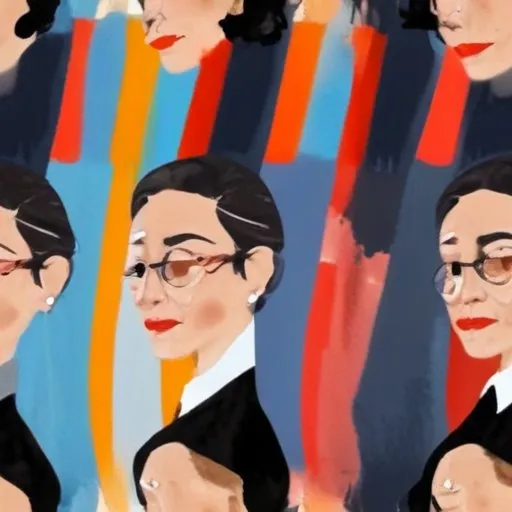
A 17th-century Spanish novelist known for her pioneering work in the genre of novella, particularly her collection of short stories "The Disillusioned" which exposed the social ills of her time.
Mara de Zayas, a prominent figure of Spain's Golden Age of literature, is celebrated as one of the pioneers of literary feminism. Her works, characterized by strong female characters, aimed to enlighten readers about the plight of women in Spanish society and instruct them on how to live virtuous lives.
De Zayas was born in Madrid to infantry captain Fernando de Zayas y Sotomayor and María Catalina de Barrasa. Her baptism took place in the church of San Sebastian on September 12, 1590, suggesting that she was born just days before this date. Beyond this, little is known about her life, leaving historians to fill in the gaps.
De Zayas' literary output was marked by two collections of novellas: Novelas amorosas y ejemplares (The Enchantments of Love) in 1637 and Desengaños amorosos (The Disenchantments of Love) in 1647. These works showcased her unique ability to craft complex female characters, using them as vehicles to explore the challenges faced by women in Spanish society.
De Zayas enjoyed the respect and admiration of her contemporaries, including prominent writers Lope de Vega and Alonso de Castillo Solrzano. The latter affectionately dubbed her the "Sibila de Madrid" (Sibyl of Madrid). Despite her popularity during the 17th and 18th centuries, her works fell into relative obscurity in the 19th century, only to be rediscovered in the late 20th century.
De Zayas' works were instrumental in shaping the literary landscape of Spain's Golden Age. Her pioneering efforts in literary feminism paved the way for future generations of women writers. Her novellas, in particular, provided a platform for exploring the complexities of female experience, challenging societal norms and expectations.
"The world is a labyrinth, and women are its most skillful navigators."
This quote, attributed to de Zayas, captures the essence of her literary philosophy, which empowered women to take control of their lives and challenge the patriarchal norms of the time.
De Zayas' legacy extends beyond the literary sphere, influencing modern society's understanding of women's roles and gender equality. Her works continue to inspire contemporary writers, scholars, and feminists, cementing her place as a trailblazing voice in the history of literary feminism.
De Zayas' literary output is often compared to that of her contemporaries, such as María de Zayas y Sotomayor and Ana Caro Mallén. While sharing similarities with these writers, de Zayas' unique voice and perspective set her apart as a distinct contributor to the literary canon of Spain's Golden Age.
De Zayas' works have been incorporated into academic curricula, providing students with a unique window into the social, cultural, and literary landscape of 17th-century Spain. Her novellas, in particular, offer valuable insights into the experiences of women during this period, fostering a deeper understanding of the complexities of gender and identity.
Born in 1600
A 17th-century master of Spanish Golden Age theatre, he penned influential plays that explored complex moral themes, earning him a revered place in literary history.
Born in 1547
Author of the timeless classic "Don Quixote", a foundational work of modern Western literature that has shaped the literary canon and influenced countless writers and artists.
Born in 1562
Renowned playwright and poet who dominated Spain's Golden Age of theater, penning over 1,500 plays and numerous poems that still influence Spanish literature today.
Born in 1843
A renowned Spanish literary figure, known for his influential and insightful novels of manners that explored the social and political landscape of 19th-century Spain. His works are celebrated for their nuanced characterizations and vivid portrayals of everyday life.
Born in 1898
A Spanish poet and author, celebrated for his surreal and introspective works that explored the human condition, earning him the Nobel Prize in Literature in 1977.
