


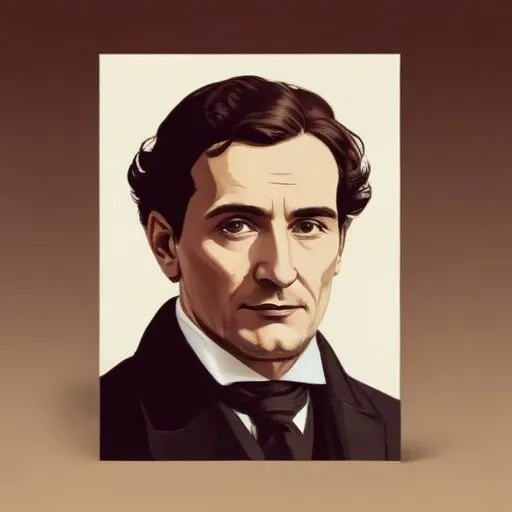
French mathematician and theorist who developed the Parseval's theorem, a fundamental concept in Fourier analysis, which has far-reaching implications in signal processing, image analysis, and many other fields.
MarcAntoine Parseval des Chênes is widely recognized for his groundbreaking contribution to mathematics, particularly in the field of Fourier analysis. His eponymous theorem, Parseval's theorem, has had a profound impact on the development of mathematics and physics, and its significance continues to reverberate to this day.
Born on April 27, 1755, in Rosières-aux-Salines, France, Parseval came from an aristocratic family. Little is known about his early education, but it is believed that he received a solid foundation in mathematics and science.
Parseval's most notable contribution is the theorem that bears his name. In his 1799 memoir, he stated the theorem, which relates to the summation of infinite series and has far-reaching implications for the Fourier transform. Although he did not provide a proof, his work laid the foundation for later mathematicians to build upon.
His work on differential equations and the calculus of variations also demonstrates his profound understanding of mathematical concepts. In his five published papers, Parseval addressed various mathematical topics, including the integration of partial differential equations and the mechanics of fluids.
Despite his significant contributions to mathematics, Parseval was never elected to the French Academy of Sciences, despite being nominated five times between 1796 and 1828. This oversight is a testament to the complexities of academic politics and the often subjective nature of recognition.
Parseval's personal life was marked by turmoil and controversy. A staunch monarchist, he opposed the French Revolution and was imprisoned in 1792. Later, he fled France after publishing poetry critical of Napoleon's government.
His marriage to Ursule Guerillot in 1795 was short-lived, and the couple divorced soon after. Parseval's personal struggles and controversies often overshadowed his remarkable mathematical achievements.
Parseval's theorem has had a profound impact on various fields, including physics, engineering, and signal processing. His work has influenced some of the most prominent mathematicians and scientists in history, including Pierre-Simon Laplace and Joseph Fourier.
Today, Parseval's theorem remains a fundamental tool in many areas of science and engineering, and his legacy continues to inspire new generations of mathematicians and scientists.
In conclusion, MarcAntoine Parseval's remarkable mathematical contributions have left an indelible mark on the world of science and mathematics. His legacy serves as a testament to the power of human ingenuity and the importance of recognizing and celebrating groundbreaking achievements.
Born in 1749
Developed nebular hypothesis of the origin of the solar system and formulated Laplace's equation, a fundamental concept in mathematics and physics. He's considered the founder of celestial mechanics.
Born in 1768
Developed the Fourier series, a mathematical tool used to decompose periodic functions into their component frequencies, and pioneered the study of heat transfer and thermodynamics.
Born in 1777
A pioneer in mathematics and physics, he made major contributions to number theory, algebra, and electromagnetism, shaping our understanding of the natural world.
Born in 1752
Developed the theory of elliptic integrals, and his work on number theory laid the foundation for modern cryptography.
Born in 1774
A French polymath who made significant contributions to the fields of physics, astronomy, and mathematics, particularly in the discovery of chromatic polarization and the Biot-Savart law.
Born in 1789
Developed rigorous mathematical theories and introduced concepts like convergence and continuity, revolutionizing calculus and paving the way for modern mathematics.
Born in 1786
A mathematician and politician who made significant contributions to the development of electromagnetism and served as Prime Minister of France, advocating for social reform and education.
Born in 1788
Developed projective geometry, a fundamental area of mathematics, and made significant contributions to the field of engineering, particularly in the design of machines and mechanisms.
