


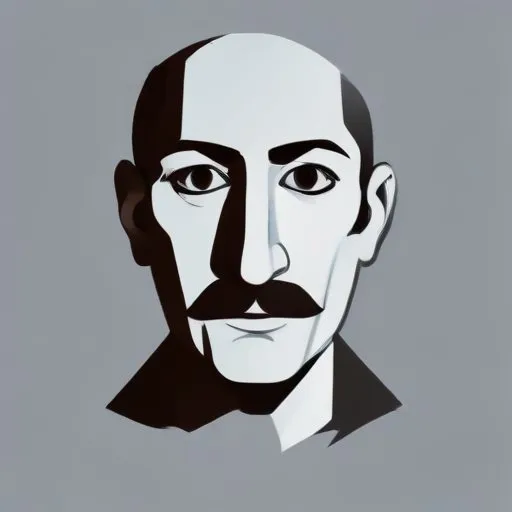
A French engineer and author who wrote extensively on military engineering, fortifications, and artillery, making significant contributions to the development of modern fortification systems.
Renowned for his groundbreaking work on fortifications, Marc Ren, Marquis de Montalembert, was a French military engineer and writer who revolutionized the art of fortification. His pioneering concepts and designs, particularly the polygonal method of fortification, continue to influence military architecture to this day.
Born on July 16, 1714, in Angoulème, Montalembert entered the French Army in 1732, embarking on a journey that would take him to the battlefields of Europe. He fought in the War of the Polish Succession on the Rhine (1733-1734) and in the War of the Austrian Succession, participating in campaigns in Bohemia and Italy.
In the years preceding the Seven Years War, Montalembert devoted himself to the study of fortifications, an interest sparked by Vauban's "Trait de l'attaque". He became an associate member of the Académie des Sciences in 1747, laying the foundation for his future work. His passion for fortifications led him to establish a cannon foundry at Ruelle, near his birthplace.
Montalembert's fortress designs were characterized by simplicity and effectiveness, departing from the intricate trace systems employed by Vauban and Cormontaigne. His plan, which featured a tenaille design, enabled defenders to concentrate their firepower on besieging forces. This innovative approach paved the way for the development of entrenched camps in the 19th century.
Although met with resistance from traditionalist engineers, Montalembert's method found success in his constructions at Aix and Oléron. However, he was forbidden from publishing his designs, and it wasn't until 1776-1777 that he released his work in Paris, after 15 years of secrecy.
Montalembert's work had a profound impact on modern warfare, influencing the design of fortifications and military infrastructure. His ideas were adopted by German engineers in the early 19th century, who used them to develop their own systems. The polygonal method of fortification, a direct outcome of Montalembert's systems, continues to shape military architecture today.
In addition to his engineering prowess, Montalembert was a skilled writer. He published numerous works on fortifications, including his seminal treatise, which remains an important reference for military historians and engineers.
Through his groundbreaking designs and literary contributions, Marc Ren, Marquis de Montalembert, left an indelible mark on the history of military engineering, earning his place as one of the most influential figures in the field.
Born in 1769
A French military leader who rose to prominence during the French Revolution and became Emperor of France, known for his military conquests and reorganization of Europe. He is also famous for his Napoleonic Code, which remains a foundation of modern law.
Born in 1767
Radical Jacobin leader during the French Revolution, known for his extreme views and role in the Reign of Terror.
Born in 1758
Radical leader of the French Revolution, instrumental in the Reign of Terror, and advocate for the execution of King Louis XVI.
Born in 1759
A leading figure of the French Revolution, instrumental in the overthrow of the monarchy and establishment of the First French Republic, known for his radical Jacobin ideology.
Born in 1755
A key figure in the French Revolution, leading the coup that overthrew Maximilien Robespierre and later serving as a key advisor to Napoleon Bonaparte. He played a crucial role in shaping French politics during a tumultuous period.
Born in 1753
A French general, mathematician, and politician who played a crucial role in the French Revolution and is considered the "Organizer of Victory" for his military strategies, and also made significant contributions to mathematics and engineering.
Born in 1749
Developed nebular hypothesis of the origin of the solar system and formulated Laplace's equation, a fundamental concept in mathematics and physics. He's considered the founder of celestial mechanics.
Born in 1772
A utopian socialist who envisioned a society where people lived in harmony with their passions and the environment, and is known for his innovative ideas on social organization and urban planning.
