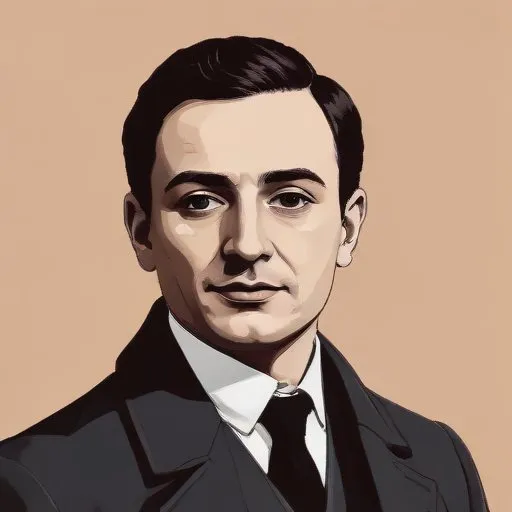
Marcel Cohen: The Pioneering Linguist of Ethiopian Languages
A Life Dedicated to Unraveling the Secrets of Semitic Languages
Marcel Cohen was a renowned French linguist who dedicated his life to the study of Semitic languages, particularly Ethiopian languages. He is best known for his groundbreaking work on the languages of Ethiopia, which earned him recognition as one of the most important scholars in the field.
Early Life and Education
Born on February 6, 1884, in Paris, France, Cohen's intellectual curiosity was sparked from an early age. He studied at the Lyce Condorcet and later attended Antoine Meillet's lectures at the Collège de France and the École pratique des hautes études. In 1905, he registered at the École des langues orientales, where he graduated in 1909.
A Journey to Ethiopia and the Collection of Linguistic Treasures
Between March 1910 and June 1911, Cohen embarked on a journey to Ethiopia, where he collected a vast amount of material on Ethiopian languages. This expedition laid the foundation for his future research and publications.
Academic Career and Contributions
Cohen's academic career was marked by several milestones. In 1916, he became an Assistant Professor, and in 1926, he was promoted to full Professor. He also taught Ethiopic at the École pratique des hautes études. Throughout his career, he supervised several students who went on to become distinguished Ethiopists, including Wolf Leslau, Stefan Strelcyn, and Joseph Tubiana.
Major Works and Publications
Cohen's publications are a testament to his dedication to the field of linguistics. Some of his notable works include:
- Le parler arabe des Juifs d'Alger (1912)
- Rapport sur une mission linguistique en Abyssinie 1910-1911 (1912)
- Documents ethnographiques d'Abyssinie (1920)
- La prononciation traditionnelle du Guèze éthiopien classique (1921)
- Couplets amhara du Choa (1924)
- Le système verbal sémitique et l'expression du temps (1924)
- Les langues du monde (1924), co-authored with Antoine Meillet
- Études d'éthiopien méridional (1931)
- Documents sudarabiques (1934)
Legacy and Impact
Marcel Cohen's contributions to the field of linguistics have had a lasting impact. He played a crucial role in shaping the understanding of Ethiopian languages and Semitic languages as a whole. His work continues to inspire linguists and scholars around the world, and his legacy serves as a testament to the power of dedicated research and scholarship.
FAQ
What was Marcel Cohens field of expertise?
Marcel Cohen was a French linguist and scholar who specialized in the study of languages, particularly Semitic languages such as Hebrew and Arabic.
What was Marcel Cohens most notable work?
Marcel Cohens most notable work is his book Le système verbal sémite, which is considered a classic in the field of Semitic linguistics. He also made significant contributions to the study of Hebrew and Arabic grammar.
What was Marcel Cohens academic background?
Marcel Cohen studied at the École des langues orientales, where he received his Ph.D. in linguistics. He later taught at the Sorbonne University and worked at the Centre national de la recherche scientifique.
What was Marcel Cohens contribution to Hebrew studies?
Marcel Cohen was a leading expert in Hebrew studies and made significant contributions to the field of Hebrew linguistics. He was particularly interested in the history and development of the Hebrew language.
What is Marcel Cohens legacy in linguistics?
Marcel Cohen is remembered as a brilliant linguist who made significant contributions to our understanding of Semitic languages. His work continues to influence research in the field of linguistics and Hebrew studies.