


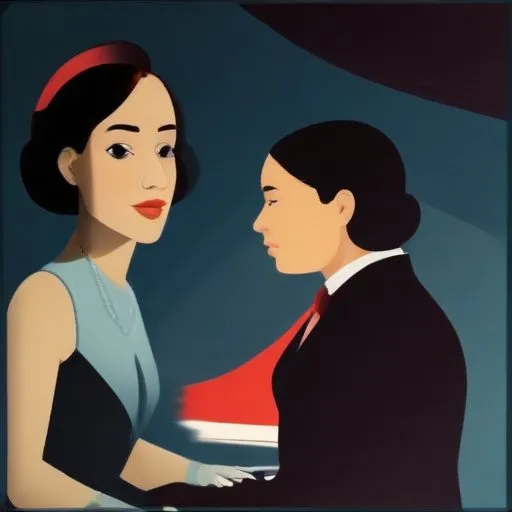
A pioneering African American pianist and composer who blended jazz and classical music, creating works that showcased her unique cultural heritage. Her compositions often featured African American spirituals and poetry, celebrating black identity and culture.
Margaret Bonds was a trailblazing American composer, pianist, arranger, and teacher who gained recognition in the United States for her captivating arrangements of African-American spirituals and her collaborations with renowned poet Langston Hughes. Her work played a significant role in promoting African-American music and culture, making her a legendary figure in the world of classical music.
Bonds was born Margaret Jeanette Allison Majors on March 3, 1913, in Chicago, Illinois. Her father, Monroe Alpheus Majors, was a prominent figure in the civil rights movement and an accomplished physician and writer. Her mother, Estelle C. Bonds, was a church musician and a member of the National Association of Negro Musicians.
Bonds began her musical journey at a young age, studying piano under the Coleridge Taylor Scholarship. She went on to win piano scholarships from the Chicago Musical College at the ages of 8 and 9. Her early piano teachers included her mother, Estelle Bonds, Martha B. Anderson, and Tom Theodore Taylor. At 13, she began studying with William Levi Dawson and Florence Price.
Bonds' collaboration with Langston Hughes led to the creation of some of her most memorable works. Her arrangements of Hughes' poetry, such as "The Negro Speaks of Rivers" and "Africa," showcased her unique ability to blend African-American musical traditions with classical music. This collaboration not only catapulted her to fame but also played a significant role in popularizing African-American poetry and music.
Bonds' tireless efforts to promote African-American music and culture have left an indelible mark on the classical music world. Her arrangements of spirituals have become staples of the classical music repertoire, and her legacy continues to inspire generations of musicians and composers.
Throughout her career, Bonds was recognized with several awards and honors, including the prestigious Harmon Award. Her music and legacy continue to be celebrated through performances and recordings by renowned artists and ensembles.
Bonds' music and legacy reflect her deep commitment to promoting African-American culture and challenging racial segregation in the classical music world. Through her work, she advocated for greater representation and recognition of African-American artists and composers.
Her philosophy was rooted in the belief that music could be a powerful tool for social change and that African-American cultural expression was essential to the richness of American music.
Bonds' life and work were deeply intertwined with the historical context of racial segregation and the struggle for civil rights in the United States. Her music and legacy serve as a testament to the power of art to challenge social norms and promote positive change.
Today, Bonds is recognized as a pioneering composer and a champion of African-American spirituals. Her music continues to inspire and influence generations of musicians and composers, ensuring her legacy as a trailblazer in the world of classical music.
Born in 1902
A renowned poet, novelist, and playwright who powerfully voiced the experiences and struggles of African Americans during the Harlem Renaissance, using jazz and blues rhythms to convey the spirit of his people.
Born in 1895
African-American composer and conductor of symphonies, operas, and ballets, blending jazz, blues, and folk music with classical forms, earning him the title "Dean of Afro-American Composers".
Born in 1899
A legendary jazz pianist, composer, and bandleader who revolutionized the genre with his unique style and iconic compositions, such as "Take the A Train" and "Mood Indigo".
Born in 1904
A legendary jazz pianist and bandleader who led a iconic orchestra, blending swing and blues to create a unique sound that influenced generations of musicians. Known for his distinctive "less-is-more" style and hits like "April in Paris" and "One O'Clock Jump".
Born in 1917
A virtuosic jazz vocalist known for her pure, expressive tone, impeccable phrasing, and incredible scat singing abilities. She won 13 Grammy Awards and recorded over 200 albums.
Born in 1901
A legendary jazz musician who revolutionized the genre with his unique trumpet playing and raspy vocals, leaving an indelible mark on American music.
Born in 1894
A powerful blues singer known for her soulful, raspy voice and emotive performances, often referred to as "The Empress of the Blues".
Born in 1897
A renowned contralto who broke racial barriers in the music industry, performing at the White House and becoming a symbol of the Civil Rights Movement.
