


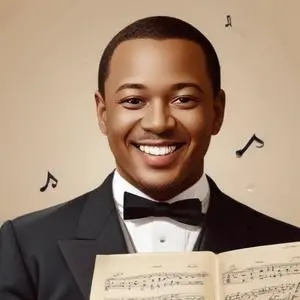
African-American composer and conductor of symphonies, operas, and ballets, blending jazz, blues, and folk music with classical forms, earning him the title "Dean of Afro-American Composers".
William Grant Still was a renowned American composer who made significant contributions to the world of classical music, earning him the title of "Dean of Afro-American Composers." He was the first African American to have an opera produced by the New York City Opera, and his first symphony, the Afro-American Symphony, was the most widely performed symphony composed by an American until 1950.
Still was born on May 11, 1895, in Woodville, Mississippi, to Carrie Lena Fambro Still Shepperson and William Grant Still Sr. After his father's death, his mother moved with him to Little Rock, Arkansas, where she taught high school English. She remarried Charles B. Shepperson, who encouraged Still's musical interests by taking him to operettas and concerts.
Still attended Wilberforce University and Oberlin Conservatory of Music, where he studied under George Whitefield Chadwick and Edgard Varèse. His education and training laid the foundation for his future success as a composer.
Still's compositional output was staggering, with nearly 200 works to his credit, including five symphonies, four ballets, nine operas, and numerous choral works, art songs, chamber music, and solo works. Some of his notable works include:
Still was a trailblazer in many ways. He was the first African American to:
These achievements paved the way for future generations of African American composers and musicians.
Still's music reflects his roots in African American culture, as well as his classical training. His work has been widely performed and acclaimed, and he is recognized as a leading figure in American classical music.
The University of Arkansas houses the papers of Still and his second wife, Verna Arvey, a librettist and writer. This collection provides valuable insights into the life and work of this important American composer.
William Grant Still's legacy continues to inspire and influence musicians and composers today, solidifying his place as the "Dean of Afro-American Composers."
Born in 1899
A legendary jazz pianist, composer, and bandleader who revolutionized the genre with his unique style and iconic compositions, such as "Take the A Train" and "Mood Indigo".
Born in 1904
A legendary jazz pianist and bandleader who led a iconic orchestra, blending swing and blues to create a unique sound that influenced generations of musicians. Known for his distinctive "less-is-more" style and hits like "April in Paris" and "One O'Clock Jump".
Born in 1897
A pioneering figure in early jazz, leading a renowned orchestra and composing innovative arrangements that influenced generations of musicians.
Born in 1907
A legendary jazz musician who played saxophone and trumpet, and composed music for films and TV shows, leaving a lasting impact on the jazz genre.
Born in 1898
A British veteran of World War I, known as the "Last Tommy," who fought in the trenches and later shared his war experiences to promote peace and remembrance.
Born in 1897
A pioneering composer and pianist who experimented with avant-garde techniques, creating innovative works that blended traditional and modern styles. Known for his radical approach to music, pushing boundaries and inspiring future generations.
Born in 1898
A renowned pianist and composer who blended jazz and classical music to create iconic works like "Rhapsody in Blue" and "An American in Paris", leaving a lasting impact on American music.
Born in 1918
A renowned musician who blended jazz, classical, and Broadway styles, creating iconic works like West Side Story, and inspiring generations with his charismatic performances and innovative compositions.
