


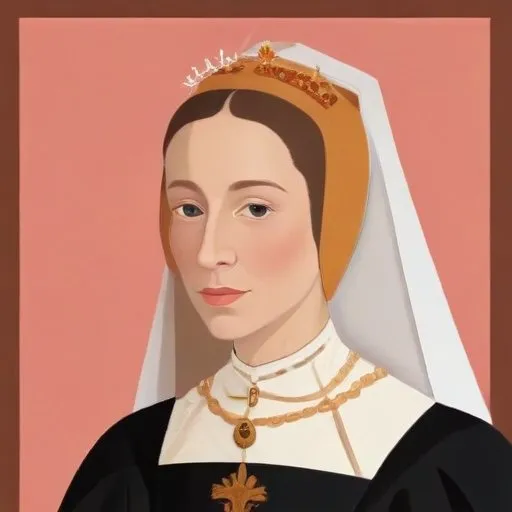
Governor of the Habsburg Netherlands, she was a skilled politician and diplomat who played a key role in maintaining peace and stability in the region during a tumultuous period.
Margaret of Austria, Duchess of Savoy, was a trailblazing figure in European history, renowned for her remarkable governance of the Habsburg Netherlands from 1507 to 1515 and again from 1519 until her death in 1530. She was the first of many female regents in the Netherlands, showcasing her exceptional leadership skills and diplomatic prowess.
Margaret was born on January 10, 1480, in Brussels, to Maximilian I, Holy Roman Emperor, and Mary of Burgundy, cosovereigns of the Low Countries. Her early life was marked by a series of political marriages, with three engagements and two completed marriages to John, Prince of Asturias, and Philibert II, Duke of Savoy.
Her first marriage to John, Prince of Asturias, was short-lived, ending with his death in 1497, just six months after the wedding. Her second marriage to Philibert II, Duke of Savoy, lasted for three years until his death in 1504.
Following the death of her mother in 1482, Margaret's brother Philip the Handsome succeeded as sovereign of the Low Countries, with their father as regent. However, with her brother's death in 1506, Margaret's life took a dramatic turn, and she was entrusted with the responsibility of governing the Habsburg Netherlands.
As regent, Margaret demonstrated her exceptional abilities, successfully navigating the complex web of European politics and diplomacy. She governed the Netherlands on behalf of her father, Maximilian I, and later her nephew, Charles V, who were both frequently absent due to their imperial obligations.
Margaret's remarkable leadership and governance of the Habsburg Netherlands have left a lasting legacy in European history. She was a pioneer among female regents, paving the way for future generations of women in power.
Her impact on modern society is still felt, with her influence on politics, diplomacy, and governance continuing to inspire and inform contemporary leaders.
Margaret's remarkable achievements and contributions to European history have earned her a revered place in the annals of time. She remains an inspiration to leaders and scholars alike, a testament to the power of capable and visionary governance.
Though formal awards and honors were not bestowed upon her during her lifetime, her legacy continues to be celebrated and recognized by historians and scholars.
