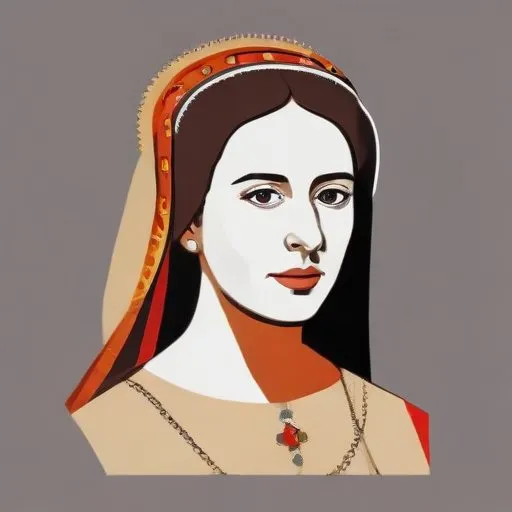
Maria II of Portugal: The Educator and Good Mother
A Legacy of Learning and Leadership
Maria II of Portugal, affectionately known as the Educator or the Good Mother, was a queen of immense wisdom and compassion, who ruled Portugal twice, from 1826 to 1828 and again from 1834 to 1853. She was a champion of education and a symbol of stability in a tumultuous era, earning her a revered place in Portuguese history.
Early Life and Royal Intrigue
Born on April 4, 1819, in Rio de Janeiro, Maria was the first child of the Duke and Duchess of Braganza, who later became Emperor Dom Pedro I and Empress Dona Maria Leopoldina of Brazil. Her early life was marked by royal intrigue, as her father became king of Portugal in 1826, only to abdicate in favor of the seven-year-old Maria. However, her uncle Miguel, who was appointed regent, soon deposed her and declared himself king, sparking the Liberal Wars over royal succession.
A Period of Exile and Education
During the war, Maria pursued her education in Paris, where she was deeply influenced by the ideas of the Enlightenment and the values of liberalism. Her father, Emperor Dom Pedro I, having abdicated the Brazilian throne in 1831, returned to Europe and led a military expedition in support of Maria's claim to the throne. In 1834, Miguel was forced to abdicate, and Maria was restored to the throne, marking the beginning of her second reign.
Marias Second Reign: A Period of Turmoil and Triumph
Maria's second reign was marked by continued political turmoil, but she remained resolute in her commitment to education and the welfare of her people. In 1835, she married Auguste, Duke of Leuchtenberg, who died shortly after their marriage. In 1836, she remarried to Prince Ferdinand of Saxe-Coburg and Gotha, who was proclaimed King Dom Fernando II a year later. Maria's second husband played a crucial role in stabilizing the monarchy and supporting Maria's educational initiatives.
A Legacy of Learning and Reform
Maria's reign was marked by a series of educational reforms, which aimed to promote literacy, improve the quality of education, and increase access to education for girls and the poor. She established the Normal School of Lisbon, which became a model for teacher training, and introduced the concept of free and compulsory primary education. Her legacy in education earned her the title of "the Educator," and her commitment to the welfare of her people earned her the title of "the Good Mother."
Personal Milestones and Tragedy
Maria faced a series of difficult pregnancies, which took a toll on her health. Ultimately, she died in childbirth on November 15, 1853, at the age of 34. She was succeeded by her eldest son, Dom Pedro V, who went on to become a wise and just ruler.
Legacy and Impact
Maria II's legacy extends far beyond her reign, as she pioneered a new era of educational reform and social progress in Portugal. Her commitment to education and the welfare of her people has inspired generations of Portuguese citizens, and her legacy continues to shape the country's values and ideals.
- Quote: "The education of the people is the most sacred duty of the government."
- Awards and Honors: Maria II was awarded the Grand Cross of the Order of Our Lady of Conception of Vila Viçosa, the Grand Cross of the Order of the Tower and Sword, and the Grand Cross of the Order of Christ.
- Fun Facts: Maria II was known for her love of literature and the arts. She was an accomplished pianist and patron of the arts, and her court was renowned for its cultural and intellectual sophistication.
- Historical Context: Maria II's reign coincided with the rise of liberalism and nationalism in Europe, and her commitment to education and social progress reflected the values of the Enlightenment.
FAQ
What was Maria II of Portugals role in the Portuguese Civil War?
Maria II of Portugal played a crucial role in the Portuguese Civil War, as she ultimately prevailed over her uncle, Miguel I, to claim the throne and restore the constitutional monarchy.
How did Maria II of Portugals reign shape Portuguese politics?
Maria II of Portugals reign had a significant impact on Portuguese politics, as she worked to consolidate power, stabilize the government, and promote economic development.
What was Maria II of Portugals relationship like with her husband, Ferdinand II?
Maria II of Portugal and her husband, Ferdinand II, had a strong and supportive relationship. Ferdinand played an important role in supporting Marias reign and helping to stabilize the government.
How did Maria II of Portugals reign impact the Portuguese Empire?
Maria II of Portugals reign had a significant impact on the Portuguese Empire, as she worked to reform colonial administration, promote economic development, and expand Portuguese influence.
What is Maria II of Portugals legacy in Portuguese history?
Maria II of Portugals legacy in Portuguese history is that of a strong and determined leader who navigated a tumultuous period of Portuguese history, restoring stability and promoting growth and development.