


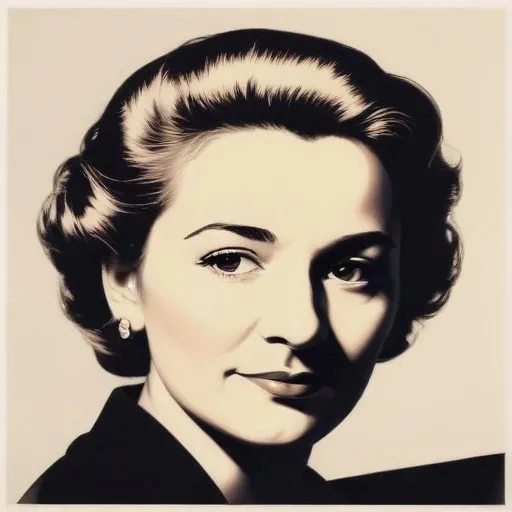
A pioneering female composer and pianist of the early Romantic era, known for her expressive and technically demanding piano music, which influenced later generations of composers.
Maria Szymanowska was a renowned Polish composer and one of the first professional virtuoso pianists of the 19th century. Her compositions, which include piano pieces, songs, and chamber works, epitomize the stile brillant of the era preceding Frédéric Chopin.
Born Marianna Agata Wołowska on December 14, 1789, in Warsaw, Poland, Maria was part of a prosperous Polish family with Frankist Jewish roots. Her father, Franciszek Ksawery Wołowski, was a minor nobleman and landlord, while her mother, Barbara Wołowska, came from a prominent Polish noble background.
Although the details of her early years and musical studies are uncertain, it is known that she studied piano with Antoni Lisowski and Tomasz Gremm, and composition with Franciszek Lessel, Józef Elsner, and Karol Kurpiński. Maria's salon was a hub for outstanding artists and intellectuals of the time, providing her with a rich cultural and musical environment.
Maria gave her first public recitals in Warsaw and Paris in 1810, marking the beginning of her illustrious career. In the same year, she married Józef Szymanowski, with whom she had three children.
Throughout the 1820s, Maria toured extensively throughout Europe, performing in cities such as Vienna, Berlin, and Paris. Her concerts were highly acclaimed, with critics praising her technical skill and expressive playing style.
Maria's compositions, although largely forgotten after her death, have recently gained recognition for their significance in Polish music history. Her piano pieces, songs, and chamber works showcase her mastery of the stile brillant, a style characterized by virtuosic technique, lyricism, and expressive nuance.
She was one of the first Polish composers to write piano concert etudes and nocturnes, paving the way for future generations of Polish composers, including Frédéric Chopin.
Maria's legacy extends beyond her music. As a woman and a Pole in a male-dominated field, she broke barriers and challenged societal norms. Her salon in St. Petersburg became a hub for cultural and intellectual exchange, attracting prominent figures such as Adam Mickiewicz, who would later marry her daughter Celina.
Today, Maria Szymanowska is recognized as a pioneering figure in Polish music history, and her compositions are being rediscovered and performed by musicians around the world.
Although there are no recorded quotes from Maria Szymanowska, her music and legacy continue to inspire generations of musicians and music lovers.
Born in 1810
A Polish pianist and composer renowned for his delicate, expressive, and technically demanding piano music that evokes deep emotions and continues to inspire generations of musicians and music lovers. His nocturnes, waltzes, and preludes are staples of classical music.
Born in 1756
A child prodigy and master of classical music, he composed over 600 works, including symphonies, operas, and chamber music, that continue to inspire and influence musicians today.
Born in 1770
A musical genius who expanded the possibilities of classical music, creating iconic symphonies and piano sonatas that continue to inspire and influence generations of artists.
Born in 1833
A renowned pianist and composer, he crafted complex, expressive works that blended traditional and innovative techniques, leaving an indelible mark on classical music.
Born in 1811
A virtuosic pianist and composer who revolutionized classical music with his technically demanding and emotionally expressive works, blending Hungarian folk influences with Romantic-era drama.
Born in 1840
A renowned Russian composer and educator, he is best known for his iconic and beloved ballets, such as Swan Lake and The Nutcracker, which continue to enchant audiences worldwide.
Born in 1678
A virtuosic violinist and prolific composer, he crafted over 400 concertos, including "The Four Seasons," which remains a beloved and iconic masterpiece of classical music.
Born in 1685
A renowned Baroque composer and organist, famous for creating majestic orchestral suites, operas, and oratorios, including the iconic "Messiah" masterpiece.
