


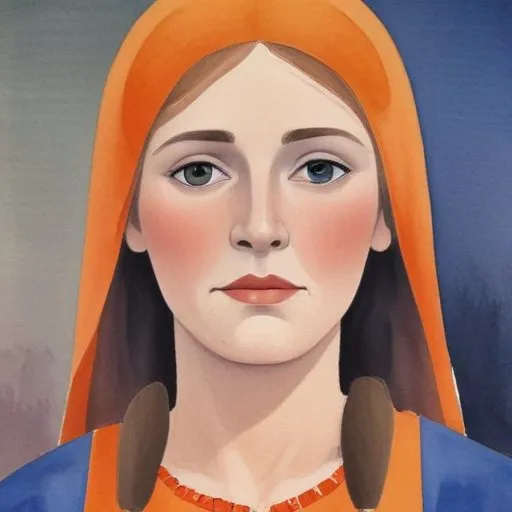
A pioneering female artist who broke away from traditional representation, creating vibrant, expressive works that explored the emotional and psychological depths of the human experience.
Marianne von Werefkin, a Russian-born artist, left an indelible mark on the art world as a central figure of German Expressionism. Known for her vibrant, emotive, and introspective works, Werefkin's artistic journey bridges the gap between Russia and Germany, blending the styles of her native country with the avant-garde movements of early 20th-century Europe.
Born on September 10, 1860, in Tula, Russia, Werefkin was the daughter of a Russian noble family. Her early life was marked by a love for art, which was encouraged by her family. She began taking academic drawing lessons at the age of 14, and her talent soon became apparent.
Werefkin's artistic development was shaped by her association with prominent Russian artists, including Ilya Repin, with whom she studied privately. This exposure led her to the artists' colony of Abramtsevo, where she networked with other notable artists, such as Valentin Serov.
In 1896, Werefkin left Russia for Munich, Germany, where she co-founded the Phalanx group with artist Alexej von Jawlensky. This move marked a significant turning point in her career, as she immersed herself in the avant-garde movements of the time, including Fauvism and Expressionism.
Werefkin's artistic style underwent a transformation, characterized by bold, vibrant colors and emotive brushstrokes. Her work explored themes of introspection, emotion, and the human experience, earning her a reputation as a pioneering female artist in a male-dominated art world.
Werefkin's oeuvre includes a range of works, from landscapes to portraits and still lifes. Some of her most notable pieces include The Dream, The Lady in Blue, and The City. Her artistic contributions have been recognized and celebrated through various exhibitions and retrospectives.
Today, Werefkin's legacy extends beyond her artwork. She paved the way for future generations of female artists, challenging the patriarchal norms of the art world and inspiring others to pursue their creative vision.
Werefkin's artistic legacy continues to inspire artists, art historians, and enthusiasts alike. Her pioneering spirit and artistic innovations have left an indelible mark on the development of modern art, particularly in the realm of Expressionism.
As a woman in a male-dominated art world, Werefkin's determination and perseverance serve as a beacon of inspiration for aspiring female artists. Her story is a testament to the power of creativity and the importance of pursuing one's passion, despite the obstacles that may arise.
Born in 1864
A Russian-German painter who pioneered Expressionism, capturing intense emotions through vibrant, distorted forms and bold colors. He's famous for his bold, avant-garde portraits.
Born in 1871
A German-American painter and illustrator who blended cubism and futurism to create vibrant, abstracted cityscapes and seascapes, influencing the development of modern art.
Born in 1885
A pioneer of Orphism, a style of abstract art that emphasizes geometric shapes and vibrant colors, creating dynamic and expressive works that explore the emotional potential of color. 42
Born in 1877
A Fauvist painter who captured the vibrant spirit of Parisian nightlife and high society with bold, expressive brushstrokes and vivid colors.
Born in 1880
A German soldier-turned-painter who pioneered Expressionism, capturing the emotional essence of animals and landscapes in vibrant, abstracted forms. His work continues to inspire artists and art lovers alike.
