


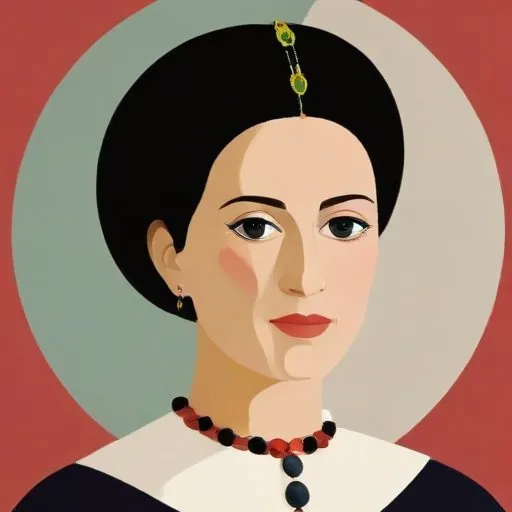
A Portuguese infanta who played a significant role in the country's royal family and was known for her charitable works and patronage of the arts. She was a devoted wife and mother, and her marriage helped strengthen ties between Portugal and Spain.
Maria of Portugal, Duchess of Viseu, was a renowned patron of the arts, architecture, and literature, whose personal wealth rivaled that of her half-brother, King John III of Portugal, making her the richest woman in Portugal and one of the wealthiest princesses in Europe. She was a humanist and a protector of the arts, whose household was transformed into an intellectual circle that welcomed women of letters.
Maria de Aviz was born on June 18, 1521, in Lisbon, Portugal, as the only daughter of King Manuel I of Portugal and Infanta Eleanor of Austria. Five months after her birth, her father died of the plague, and her mother departed to Spain, leaving Maria to be raised in Portugal at her half-brother's court.
Her education was astounding for a woman of her time, with teachers including female scholars such as humanists Joana Vaz, Luisa Sigeia, and Pública Hortênsia de Castro. Her lessons included finances, architecture, literature, and several languages, making her one of the most educated of the Portuguese infantas.
Maria's personal life was marked by rumors of a romantic relationship with Portugal's greatest poet, Luís de Camões. Although she had several marriage proposals, Maria never married. Her engagement with Dauphin Francis was negotiated with the support of her mother Eleanor, but the prince died in 1536.
After the prince's death, Eleanor tried to arrange a marriage between Maria and the Dauphin's younger brother, Charles II of Orléans, in hopes that the prospective match would enable Maria to join her at the French court. However, Maria remained unmarried, dedicating her life to the arts and her intellectual pursuits.
Maria's wealth and influence enabled her to become a prominent patron of the arts, commissioning numerous architectural projects and supporting writers and poets. Her intellectual circle welcomed women of letters, providing a rare opportunity for female scholars to engage in intellectual discussions and pursuits.
As a humanist, Maria's legacy extends beyond her patronage of the arts. She embodied the Renaissance ideals of education, intellectual curiosity, and cultural advancement, inspiring future generations of women to pursue their passions and interests.
Maria's commitment to education and intellectual pursuits has had a lasting impact on modern society. She paved the way for future generations of women to engage in intellectual discussions, pursue careers in the arts and humanities, and become leaders in their fields.
Her legacy serves as a testament to the importance of education, cultural advancement, and female empowerment, inspiring women around the world to pursue their passions and interests with confidence and determination.
Maria of Portugal, Duchess of Viseu, was a true Renaissance woman, whose love for the arts, architecture, and literature has left a lasting impact on modern society. Her legacy continues to inspire women around the world to pursue their passions and interests with confidence and determination.
Born in 1455
King of Portugal from 1481 to 1495, known for his centralizing policies, establishing a strong monarchy, and sponsoring explorers like Bartolomeu Dias and Vasco da Gama.
Born in 1320
King of Portugal who ruled from 1357 to 1367 and is remembered for his brutal suppression of the nobility and his role in the Portuguese succession crisis. He's also known for his tumultuous personal life, including the murder of his mistress's lover.
Born in 1455
King of Portugal from 1481 to 1495, known for his centralizing policies, establishing a strong monarchy, and sponsoring explorers like Bartolomeu Dias and Vasco da Gama.
Born in 1458
Queen of Portugal from 1475 to 1481, known for her strong personality, cultural patronage, and role in shaping the country's politics and arts.
Born in 1469
King of Portugal from 1495 to 1521, known for sponsoring Vasco da Gama's voyage to India, establishing trade routes, and promoting the Portuguese Renaissance.
Born in 1394
A Portuguese prince who sponsored and organized numerous expeditions to explore and map the west coast of Africa, leading to the discovery of new trade routes and territories. He played a crucial role in the Age of Exploration.
