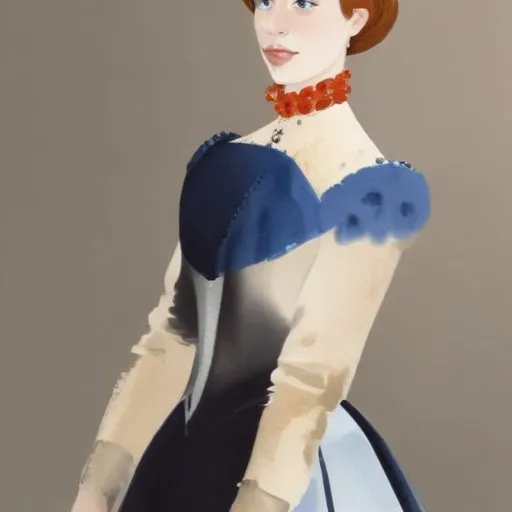
Eleanor of Austria: The Forgotten Queen Consort
A Brief Overview
Eleanor of Austria, also known as Eleanor of Castile, was a queen consort of Portugal and France, and a member of the prestigious House of Habsburg. Born in 1498, she held a prominent position in European royalty, serving as the queen consort of Portugal from 1515 to 1521 and of France from 1530 to 1547.
Early Life and Family
Eleanor was born in Leuven, as the eldest child of Philip the Handsome and Joanna of Castile, who would later become co-sovereigns of Castile. Her father was the son of the reigning Holy Roman Emperor Maximilian I and his deceased consort
Mary of Burgundy, while her mother was the daughter of the Catholic monarchs,
Ferdinand II of Aragon and
Isabella I of Castile. She was named after her paternal great-grandmother,
Eleanor of Portugal, Holy Roman Empress.
Marriage Proposals and Early Ambitions
As a child, Eleanor was proposed as a marriage candidate for the future King of England, Henry VIII, but the plan was abandoned when Henry decided to marry her aunt,
Catherine of Aragon. Her relatives also attempted to marry her to the French kings
Louis XII or Francis I, or to the Polish King Sigismund I, but none of these plans came to fruition.
Queen Consort of Portugal
In 1515, Eleanor married King
Manuel I of Portugal, becoming the queen consort of Portugal. During her time in Portugal, she was known for her piety and her interest in the arts. She was particularly fond of music and was known to have supported several musicians and composers.
Queen Consort of France
After the death of her first husband, King Manuel I, Eleanor married King
Francis I of France in 1530, becoming the queen consort of France. She played a significant role in French politics during her time as queen consort, often serving as a mediator between her husband and her brother, Charles V, Holy Roman Emperor.
Personal Life and Anecdotes
Eleanor was known for her intelligence and her strong will. She was also known to have had a love affair with
Frederick II, Elector Palatine, which was discovered by her brother, King Charles. Despite her royal status, Eleanor was not immune to scandals, and her personal life was often marred by controversy.
Legacy and Impact
Eleanor's legacy is often overshadowed by that of her more famous relatives, such as her brother
Charles V, Holy Roman Emperor, and her nephew,
Philip II of Spain. However, she played a significant role in European politics during the 16th century, serving as a queen consort in two prominent monarchies. Her patronage of the arts and her support for musicians and composers also contributed to the cultural development of Portugal and France during her lifetime.
Trivia and Fun Facts
- Eleanor was known as Leonor in Spanish and Portuguese, and as Éléonore or Aliénor in French.
- She was the sister of Charles V, Holy Roman Emperor, and Isabella of Denmark, among others.
- Eleanor held the Duchy of Touraine in dower from 1547 to 1558.
Conclusion
Eleanor of Austria may not be as well-known as some of her more famous relatives, but she played a significant role in European politics during the 16th century. Her story is one of piety, intelligence, and strong will, and serves as a testament to the often-overlooked contributions of women in royal families throughout history.
FAQ
Who was Eleanor of Austria?
Eleanor of Austria was a queen of Portugal and France, and the sister of Charles V, Holy Roman Emperor.
What were Eleanor of Austrias marriages like?
Eleanor of Austria was married to King Manuel I of Portugal and later to King Francis I of France, becoming queen consort of both countries.
What was Eleanor of Austrias role in Portuguese politics?
Eleanor of Austria played a significant role in Portuguese politics during her marriage to King Manuel I, serving as regent during his absence.
What was Eleanor of Austrias relationship with her brother Charles V?
Eleanor of Austria maintained close relationships with her brother Charles V, who sought her counsel and relied on her as a diplomatic conduit to other European powers.
What is Eleanor of Austrias legacy?
Eleanor of Austrias legacy is marked by her diplomatic efforts, her role in Portuguese politics, and her strong family ties, making her an important figure in 16th-century European history.