


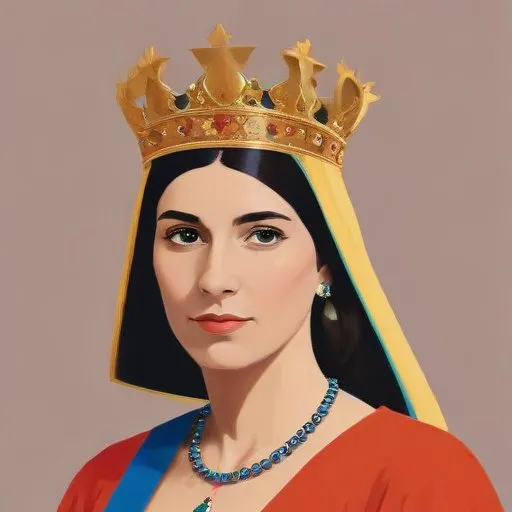
The last queen of Yugoslavia, known for her efforts to modernize and democratize the country during her husband's reign, and for her humanitarian work during World War II.
Queen Maria of Yugoslavia, born Princess Maria of Romania, is renowned for her remarkable reign as Queen of the Serbs, Croats, and Slovenes from 1922 to 1929 and Queen of Yugoslavia from 1929 to 1934. As the wife of King Alexander I, she played a pivotal role in shaping the country's history and earned the love and respect of her people.
Maria was born on January 6, 1900, at Friedenstein Palace in Gotha, Germany, to Prince Ferdinand of Hohenzollern-Sigmaringen and Princess Marie of Edinburgh. Named after her maternal grandmother, Grand Duchess Maria Alexandrovna of Russia, Maria was affectionately known as "Mignon" within the family circle.
During World War I, Maria worked as a nurse alongside her mother and sisters, dedicating herself to the welfare of others. This selfless spirit would become a hallmark of her reign, as she tirelessly worked to improve the lives of her subjects.
In 1922, Maria met the future King Alexander I of Yugoslavia at Pele Castle, and the two fell deeply in love. Their union would produce three sons, including King Peter II, and cement Maria's position as a beloved figure in Yugoslavian history.
As Queen, Maria worked closely with her husband to modernize and strengthen Yugoslavia, fostering greater unity among its diverse peoples. Her efforts earned her widespread admiration, and she became a unifying force for the nation.
Tragically, Maria's life took a dramatic turn in 1947, when the Yugoslav communist regime revoked her citizenship and confiscated her property. Exiled and ostracized, the former Queen remained steadfast in her devotion to her people and her adopted homeland.
In 2014, Maria's legacy was finally rehabilitated, and her contribution to Yugoslavian history was officially recognized. This long-overdue acknowledgment serves as a testament to the enduring impact of her life and reign.
Maria's remarkable life was marked by her innate kindness, empathy, and dedication to others. Her beauty, both inner and outer, earned her a special place in the hearts of her people, and her love for her family and country remains an inspiration to this day.
Maria's life and reign spanned a tumultuous period in Yugoslavian history, marked by war, revolution, and social change. Despite these challenges, she remained a beacon of hope and stability, inspiring generations to come.
Today, Maria's legacy extends far beyond the borders of Yugoslavia. Her commitment to her people, her country, and her values serves as a powerful inspiration to women and leaders around the world.
Born in 1888
King of Yugoslavia from 1921 until his assassination in 1934, known for uniting the South Slavic nations into a single state. He played a key role in shaping the country's politics and economy.
Born in 1923
The last king of Yugoslavia, ruling from 1934 to 1945, known for his attempts to maintain Yugoslav unity and resist Axis powers during World War II.
Born in 1892
The last Empress of the Austro-Hungarian Empire, a symbol of a bygone era, known for her courage and dedication to her husband and family during World War I. She was a unifying figure, beloved by her people.
Born in 1901
King of Greece from 1947 to 1964, known for his efforts to modernize and stabilize the country during a tumultuous post-war period. He played a key role in maintaining Greece's sovereignty and promoting economic growth.
Born in 1926
The monarch of the United Kingdom and its Commonwealth realms, serving as a unifying figurehead and symbol of national identity, while also carrying out various ceremonial and charitable duties.
Born in 1892
The last emperor of Ethiopia, who led the country through a period of modernization and was a symbol of African independence, and is also revered as a deity by the Rastafari movement.
