


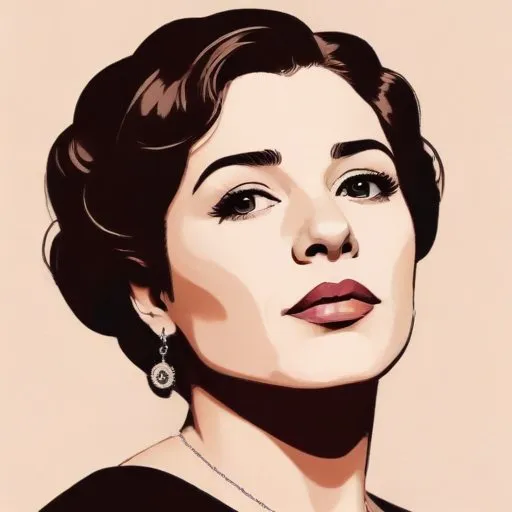
A renowned French opera singer of the 19th century, celebrated for her powerful voice and performances in prominent opera houses across Europe. She was particularly acclaimed for her portrayal of female leads in Verdi's operas.
Marie Roze, born Marie Hippolyte Ponsin, was a French operatic soprano renowned for her captivating voice, dramatic intensity, and versatility on stage. With a career spanning over three decades, she left an indelible mark on the world of opera, earning her a place among the greatest sopranos of all time.
Born on March 2, 1846, in Paris, France, Marie Roze received her early education in England before returning to France to study at the Paris Conservatoire. Under the tutelage of Mocker and Auber, she honed her craft, winning the first prize in singing in 1865.
At the tender age of 16, Marie Roze made her debut at the Opéra-Comique, marking the beginning of a illustrious career. Her success soon led to engagements with the Paris Opéra, solidifying her position as a leading soprano of her time. Bizet, impressed by her talent, even wrote the opera Carmen with her in mind, although she declined the role due to its perceived scandalous nature.
In 1875, Marie Roze sang in Elijah alongside George Bentham, Antoinette Sterling, and Myron W. Whitney at the Royal Albert Hall, further cementing her reputation as a premier soprano. Her collaborations with the Carl Rosa Opera Company, which lasted over a decade, took her to the UK and Scotland, where she performed over a dozen roles, including Carmen and Manon.
In 1878, she made her American debut with the Max Strakosch Opera Company in Philadelphia, followed by a successful tour with the Carl Rosa Opera Company from 1883 to 1889. Her mesmerizing performances of Bizet's Carmen earned her widespread acclaim, securing her place as one of the greatest sopranos of the late 19th century.
In 1890, Marie Roze established a music school in Paris, where she shared her expertise with the next generation of singers. She embarked on a farewell tour in 1894, marking the end of her performing career. Though she retired from the stage, her legacy continued to inspire generations of opera singers and music lovers alike.
Marie Roze's personal life was marked by two significant marriages: first to the operatic bass, Julius Jule E. Perkins, and later to James, a son of James Henry Mapleson. Her son, Raymond, went on to become a theatre composer and conductor, founding the British Symphony Orchestra in 1919.
Through her remarkable career, Marie Roze left an indelible mark on the world of opera, inspiring countless artists and shaping the course of musical history. Her legacy continues to resonate, reminding us of the transformative power of music to touch the human heart.
Born in 1842
A French Romantic composer, renowned for his operas, particularly "Manon" and "Werther", which showcased his mastery of lyricism and dramatic flair.
Born in 1803
A French Romantic-era mastermind who composed iconic symphonies, operas, and orchestral works, revolutionizing classical music with his bold, expressive style.
Born in 1813
A renowned composer of iconic operas like La Traviata and Aida, known for his masterful blending of drama and music. His works continue to captivate audiences worldwide.
Born in 1813
A revolutionary composer who transformed opera with his epic, mythological works, creating a new era of musical storytelling. His iconic operas, such as "Der Ring des Nibelungen," continue to captivate audiences worldwide.
Born in 1818
A French Romantic-era composer and educator, renowned for his operas, particularly "Faust," which remains a staple of the operatic repertoire. His music is characterized by lyricism and dramatic flair.
Born in 1811
A French Romantic-era composer, he wrote operas that blended lyricism and drama, including the famous "Mignon" and "Hamlet", which are still performed today.
