


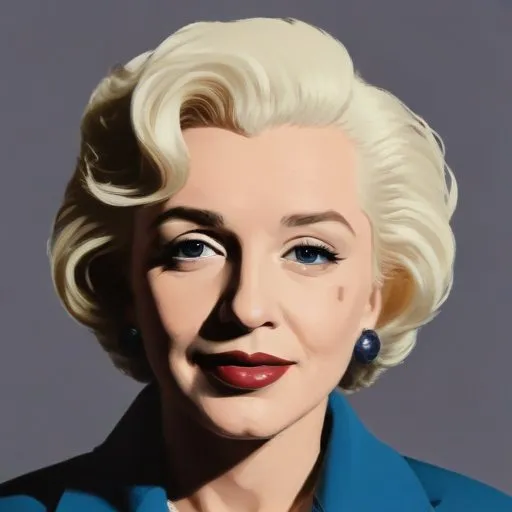
A prominent feminist philosopher and academic, known for her work on feminist ethics, political philosophy, and the intersection of personal relationships and morality.
Marilyn Friedman is a renowned American philosopher, widely recognized for her groundbreaking work in autonomy and feminist theory. As the W. Alton Jones Chair of Philosophy at Vanderbilt University, she has made significant contributions to various aspects of philosophy, including social and political philosophy, ethics, and feminist theory.
Born on April 7, 1945, Friedman pursued her undergraduate degree in political science from Washington University in St. Louis, graduating in 1967. She then moved to Canada, where she earned her Ph.D. in philosophy from the University of Western Ontario in 1974.
Friedman's academic career spans over four decades, with teaching stints at esteemed institutions such as Denison University, University of Western Ontario, Bowling Green State University, Purdue University, and Washington University in St. Louis. Her research focus shifted to autonomy in the mid-1980s, challenging the traditional notion that autonomy is synonymous with selfishness. Instead, she advocates for autonomy as self-determination, devoid of masculine associations.
Friedman's work has explored the intricate relationships between autonomy and familial and community relationships, as well as critical reflection as a means to combat oppression. Her research also delves into topics such as care and justice, partiality and impartiality, gender identity, and multicultural education.
Friedman's philosophical contributions have revolved around the concept of autonomy, which she believes is essential for humans to exercise self-determination and make decisions that align with their values and goals. She argues that autonomy is not inherently masculine, but rather a universal human aspiration that should be nurtured and respected.
Her work has also explored the significance of close interpersonal relationships in shaping our understanding of autonomy. Friedman advocates for a nuanced approach to autonomy, one that acknowledges the interdependence of individuals within families and communities.
Friedman's remarkable contributions to philosophy have earned her several distinctions, including the prestigious W. Alton Jones Chair of Philosophy at Vanderbilt University. Her work has also been recognized through various research grants and fellowships.
Friedman's work has had a profound impact on modern society, influencing the way we think about autonomy, feminist theory, and social justice. Her ideas have permeated pop culture, inspiring a new generation of thinkers and activists to engage with these critical issues.
In addition to her academic accomplishments, Friedman has achieved several personal milestones, including gaining tenure in 1993 and joining the faculty at Vanderbilt University in 2009. Her journey serves as a testament to her perseverance and dedication to her craft.
Marilyn Friedman's contributions to philosophy have left an indelible mark on the discipline. Her work continues to inspire new generations of scholars, policymakers, and social activists, ensuring her legacy will endure for years to come.
"I see autonomy in terms of self-determination, and I didn't think it had to carry specifically masculine associations."
"Autonomy is not about separating oneself from loved ones; it's about exercising control over one's own life."
Friedman's profound insights and quotes have become a guiding force for many, inspiring them to reexamine their understanding of autonomy and social justice.
Born in 1921
Developed the concept of "justice as fairness" and argued that a just society should be based on principles that would be agreed upon by rational individuals behind a "veil of ignorance".
88 Years Old
A renowned philosopher who challenged traditional notions of justice, morality, and the role of government, known for his influential book "Anarchy, State, and Utopia".
Born in 1724
Developed influential philosophical frameworks, such as the Critique of Pure Reason, that shaped modern Western thought on ethics, morality, and human understanding.
Born in 1905
Existentialist philosopher and playwright who argued that humans have complete freedom to choose their actions and create their own meaning in life, influencing modern thought on morality and individual responsibility.
Born in 1908
A pioneering feminist philosopher who wrote extensively on ethics, politics, and gender, famously arguing that "one is not born, but rather becomes, a woman."
Born in 1889
A German philosopher and academic who explored the meaning of existence, time, and human existence, influencing 20th-century philosophy with his concept of "Being-in-the-world".
Born in 1905
Russian-born American novelist and philosopher who wrote influential novels like "The Fountainhead" and "Atlas Shrugged", promoting individualism and capitalism.
